No Stitch Join and Standing Stitches

ScannedImageThe more I play in crochet, the more I realize there really are no rules.

It seems that with colder weather finally descending on my community, everyone wants to crochet hats; most of them first time crocheters. So, as of late I have been teaching how to start circles, all three different ways. I have been teaching how to increase stitches. I have been teaching how to join rounds.

An interesting thing with joining rounds, there are a couple of ways to do it, and it can give you some different results. The method that I have been playing with lately does not actually involve a stitch at all.
1130162014a

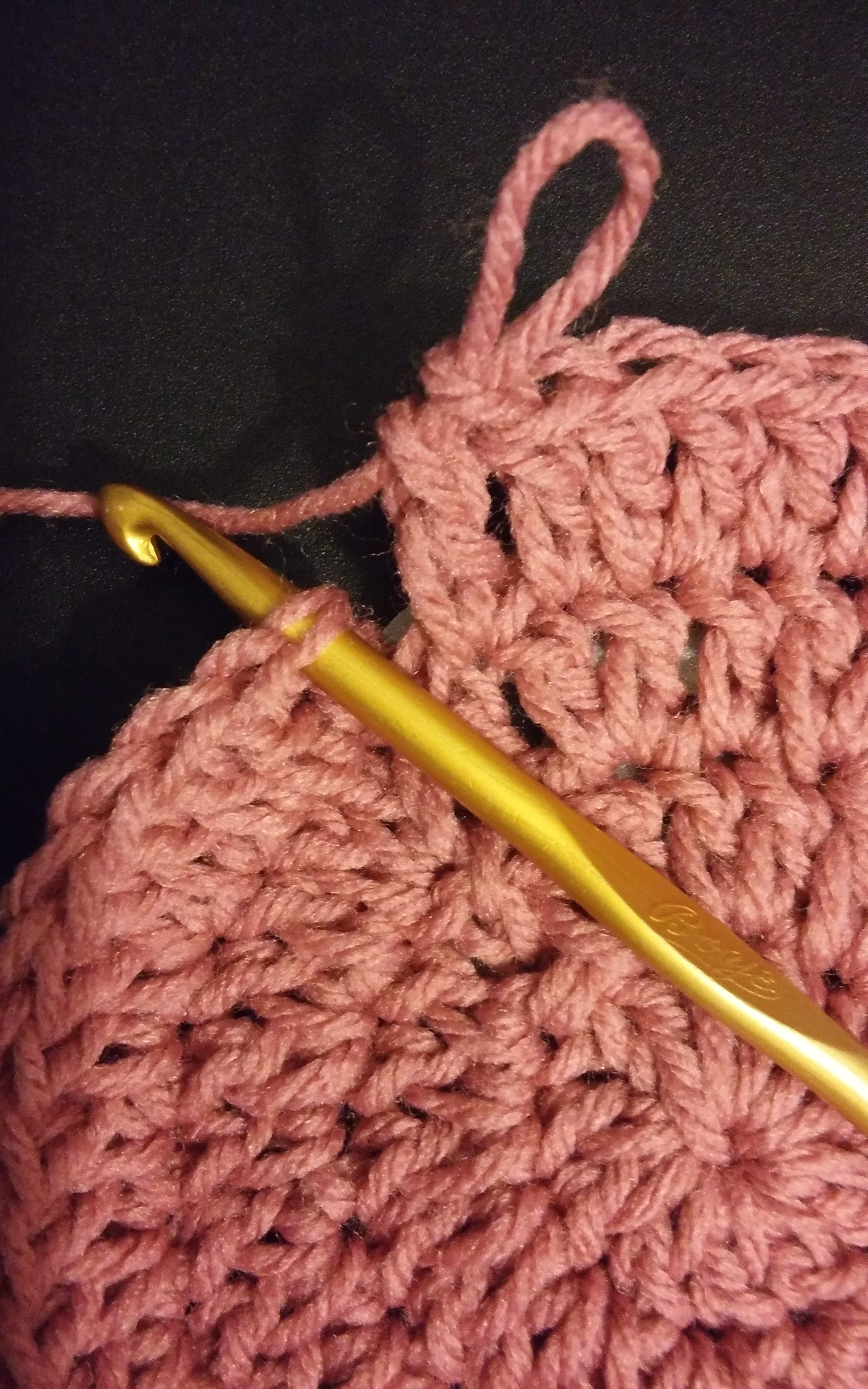
Remove hook from working loop, insert it in the point of the join.
1130162015a

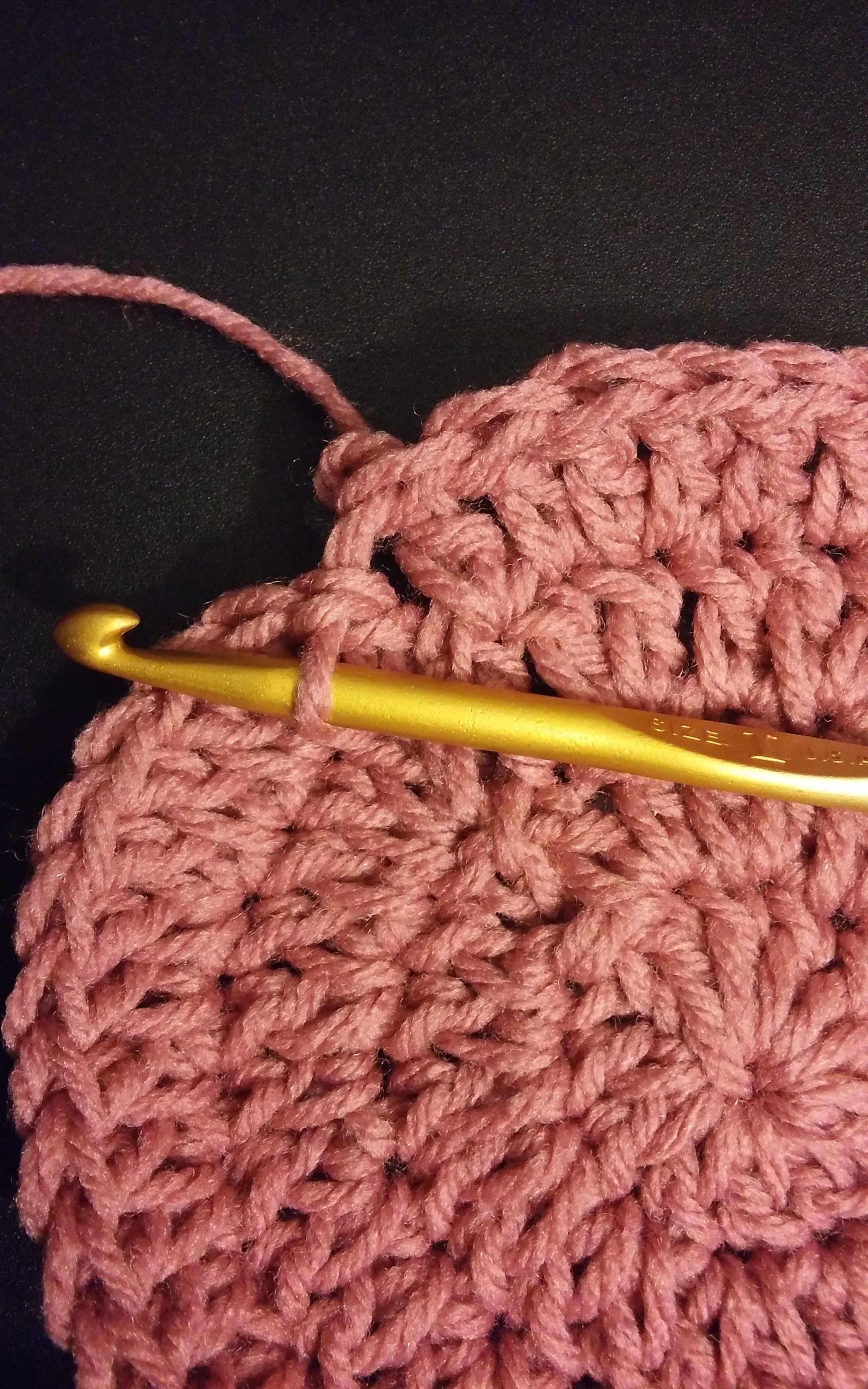
Put working loop over hook and pull it through joining point.

When you get to the point of joining, the hook is removed from the working loop and inserted into the point of the join, the working loop is then slipped back on the hook and pulled through the point of join. This creates a join that has no extra yarn, no extra loops, and does not necessarily flatten out the stitch that is joined to as can happen with joining to a beginning chain.

If this is not enough, I added in a chainless starting stitch. So anytime you begin a new round or when working flat and turning your work, you usually chain a certain number of stitches to equate to the height of the stitches that are being worked. This is because all crochet stitches end at the top of the stitch, and thus the stitches next to it need to be of a similar height or it just pulls the stitches down. When beginning a new round the working loop is at the base poof the new stitches, and if no beginning chain is worked it can pull the stitch over and distort it. However, to get to this height of stitches, you do not necessarily need a chain.
1130162016a

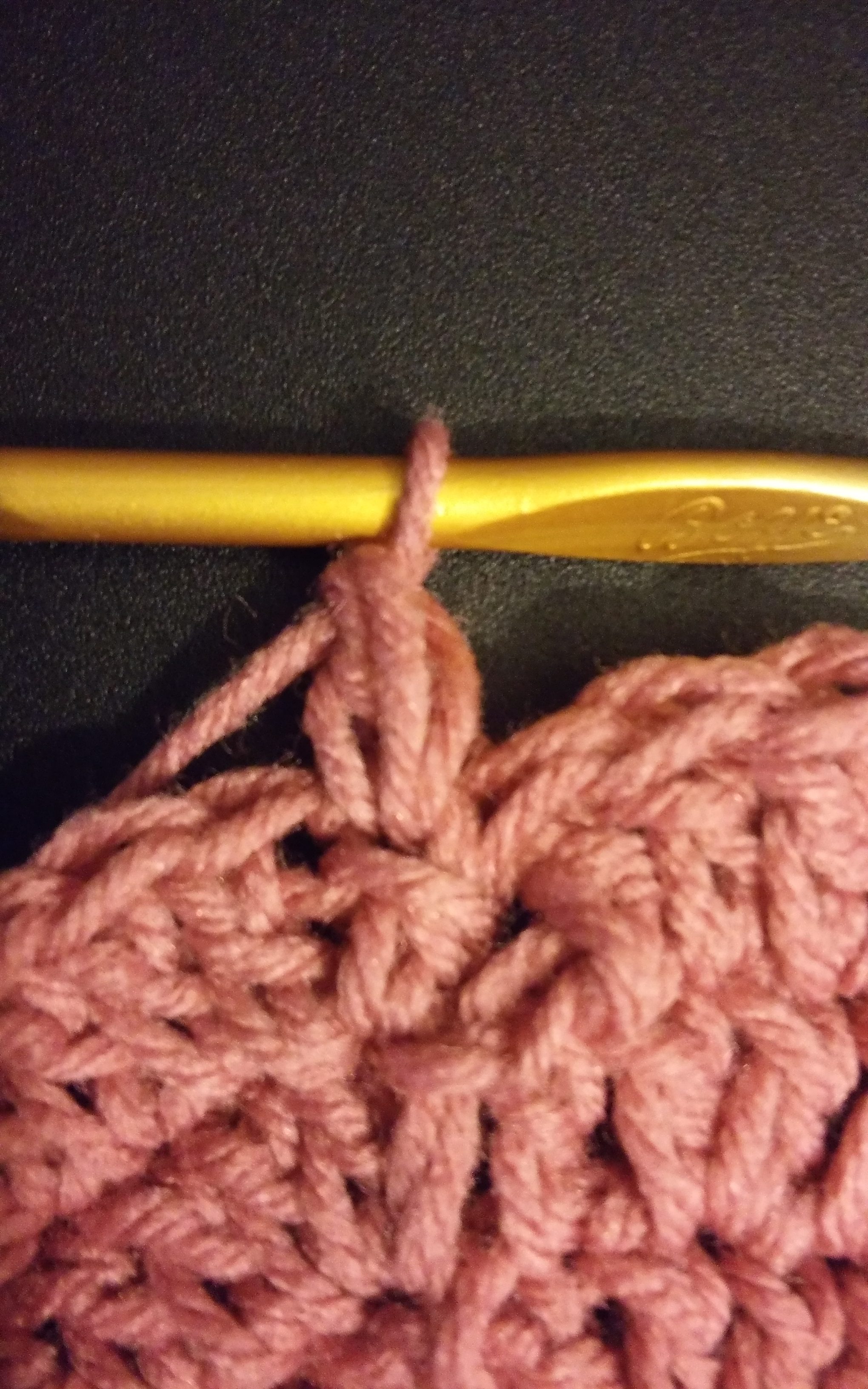
Pull up a long loop and work a double crochet in the same stitch.

Sometimes this is called a standing stitch, essentially all it is, is a long loop. After pulling the loop through the joining point, pull it up nice and tall, then work a double crochet (or whichever stitch you may be working) in the same stitch. You can even work the long loop among the stitch making it even less visible.

There are always pros and cons to various techniques, and with these two I find that the join can create a slight distortion, but in a different manner then the slip stitch; also it is a little slower to work and when I am crocheting along mindlessly it definitely stops my rhythm. One of the things I really like about this join is that it closes any gaps that might be created in my stitch placements at the joining point.

With the standing join, it is nice that everything looks pretty uniform, and there is no beginning chain that looks different than the rest of the stitches, yet there are times that the long loop can get a little distorted and uneven for me, I guess I need to work on getting a more even tension with it.

I guess with crochet there is always more to discover.
An Afghan First for Me- Hand Dyed

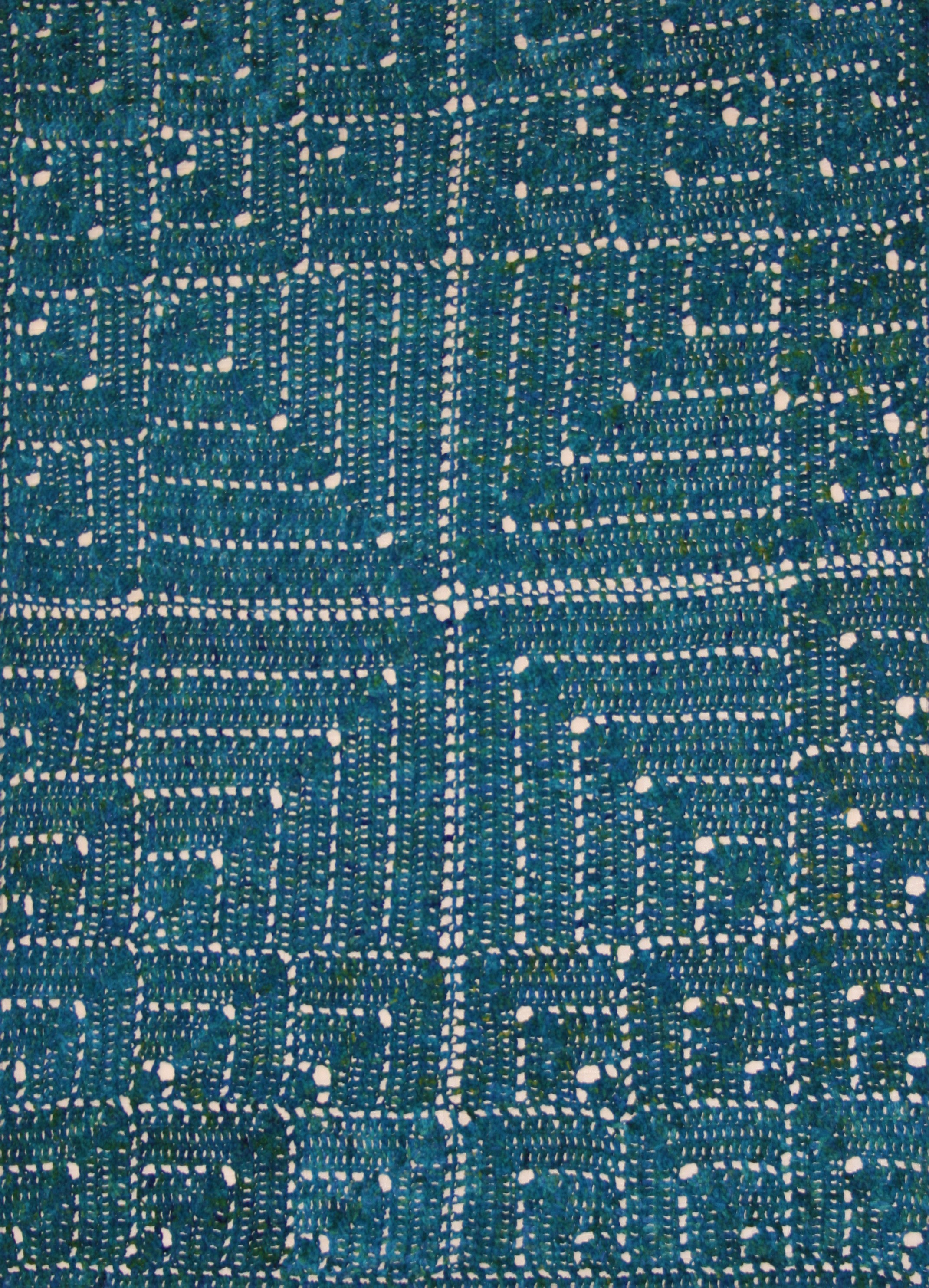
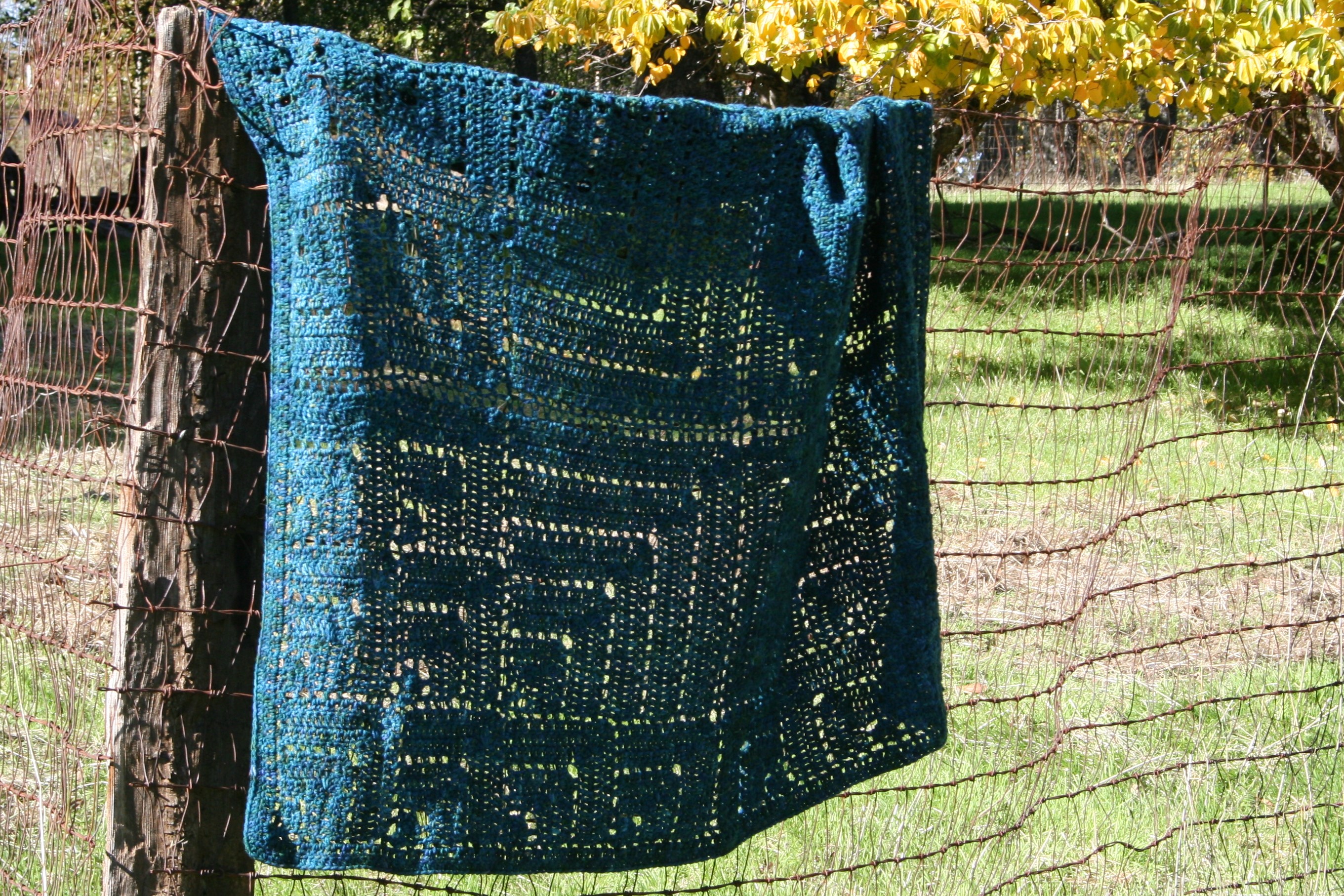
ScannedImageThis is actually a first for me. Now I have made what seems like a gazillion afghans, I have designed several, but Transmute Square really is a first for me; It was designed specifically with hand dyed yarns.

img_7543-2

Transmute Square Throw

Why does that make it so different, well for starters most people feel like hand dyed yarns are out of the price range, and thus an afghan is really not affordable. So I managed to create Transmute with only 6 skeins of yarn.

The unique thing about this yarn, Lisa Souza Targhee, is that is 100% Targhee wool. Targhee wool is an American breed, please note America is not known as a very large producer of wool, most of the world’s wool comes from New Zealand and Australia. Yet Targhee is a new heritage breed in the United States, so for me, it is local. Granted being 100% wool it may felt, so it care for it I use the delicate setting on the washing machine and I hang it on the clothes line to dry (or you could use the dryer with an “air only” setting, or little or no heat). This yarn will create a throw that is warmer than its acrylic counterpart, even with open work.

img_7494-2

Transmute Square Throw

So aside from the yarn characteristics, the fact that it is hand dyed creates a different effect in designing, the color repeats of this colorway, Deep Sea, is subtle, but as with most of these yarns the color repeats are not exceptionally long. I broke up these little sections of color with open work, to allow the eye to continually find visual interest.

Created with miter squares, this throw is completely join as you go, so you do not have to sew any squares together. This allows for a carefree kind of project, in a design that can easily be used in a masculine or feminine setting. By varying the square size this throw has a dynamic impact on its surroundings while having a very modern flair.

So consider opening your experiences to some yarns that you may not have thought of, you never know what gem you might find, and check out my Transmute Square pattern to put them to use.

Astral Flowers Throw with Humble Beginnings

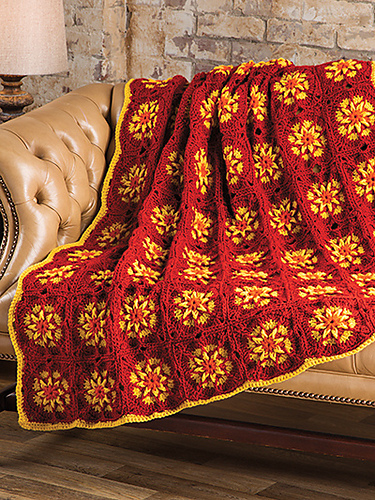
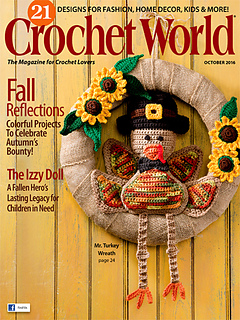
ScannedImageI fell in love with the Astral Flowers Square the moment it came from my hook, and still enjoy It as a throw in the October 2016 issue of Crochet World MagazineAs with much of my design style I happened upon this by playing and a little bit of a challenge, however the story of its beginning is not a happy one.

M01232_15_medium

Astral Flowers Throw Photo courtesy of Annie’s

A friend and fellow designer lost her daughter last year, and as a way of letting her know that she was the hearts and minds of vast community a fellow friend organized a formation of a friendship afghan. She asked for six inch squares in various colors that had significance to members of the suffering family. She selected a certain type of yarn, so that everything would work together nicely, and agreed to sew all the squares together. When all was said and done enough squares were created by various crochet designers, and others in the industry, that in the end there were at least 3 afghans created, the Astral Flower Square is among them.

I originally sat down with the three colors and just began putting them together without thinking of the stitches themselves, but the difficult time my friend was going through. I created a total of 6 squares, no sense in having partially used skeins when more squares could be created. In this methodical challenge of working squares I worked one with post stitches, this grew into this square.

133005_small2I will admit that I was a bit taken aback by the way the color can be so deceptive and making the square appear to have more going on than it really does. At one moment I can see a star in another I can see a flower, there seems to be depth and volume in the work, yet it really is just a couple of rounds. The only magic that happens is that the post stitches create an illusion of the color being worked in other ways.

The other thing that I find striking with this square is that the sides are not actually straight. The corners are slightly higher then than the center of each side, creating a little “key hole” type effect. I really like how this shape works at bringing a little something extra to the throw overall, and seaming the squares in the back loops only of the stitches creates a simple framed edge. The one drawback to the square, used in the fashion that I have, is that it really does need to be hand sewn together, no join as you go…but maybe if I play with a different edging…no, I think I like it the way it is.

Masters Day Teaching….Learning Too!

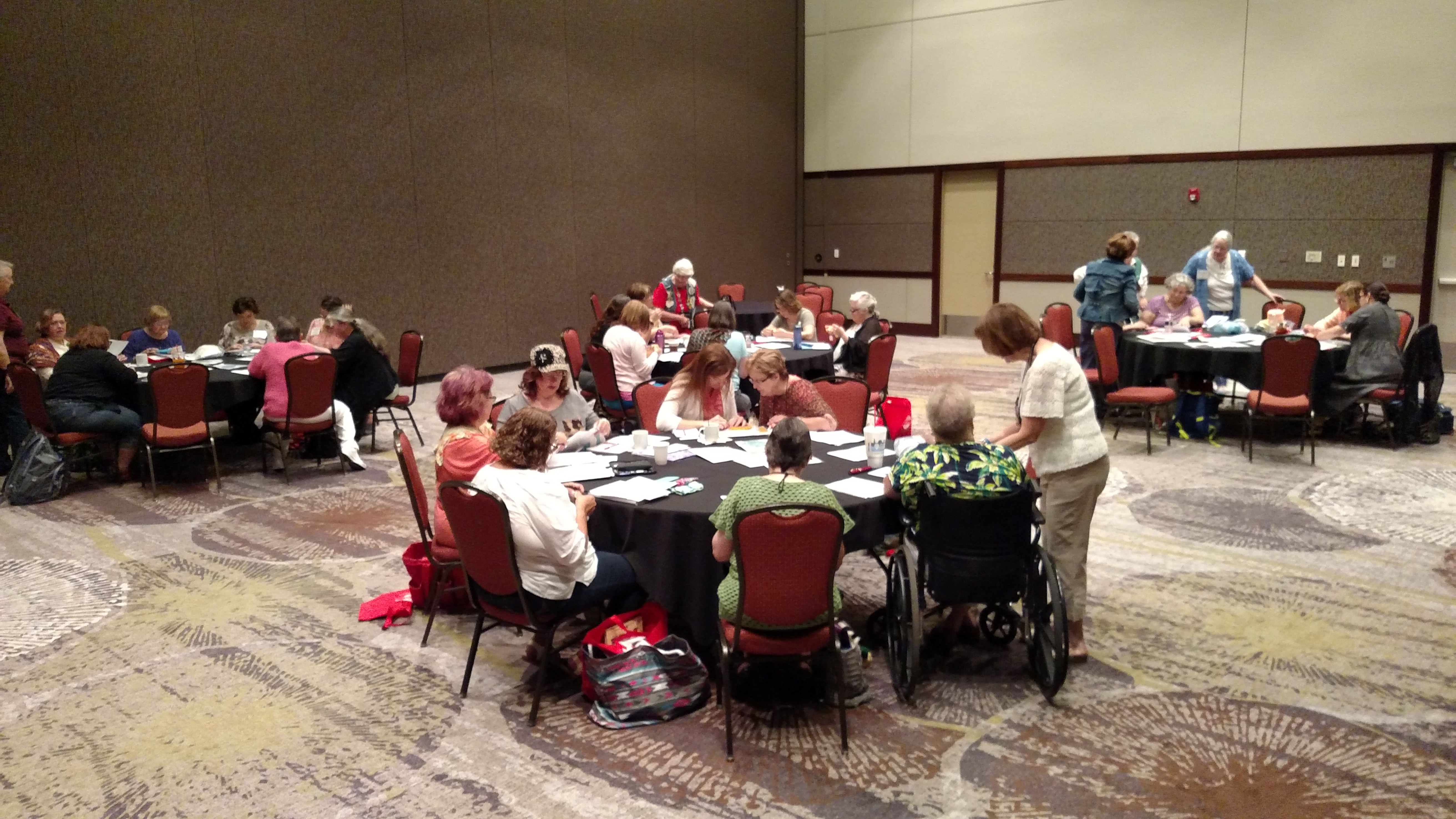
ScannedImageI have been meaning to write a post about my experience at the Crochet Guild of America’s annual conference last month in Charleston, SC, but I keep putting it off. I finally have realized that it is because it was too overwhelming, so I have decided to break it down into more “bite size” posts.

IMG_20160713_064736569

Masters Day, Charleston, SC 2016

There really is really just so much going on at this conference that I could not participate in everything, and feel like I hardly saw anyone, as I was running from event to event. And another confession, I was horrible at getting photos of, well anything…

So I left a month ago for Charleston, SC, and have new found respect for air conditioning. Living in California I live through days of hot temperature, but the humidity is something that I do not experience. Deplaning at 1:30am and finding that it was 85° F and 55% humidity outside, was a completely new experience for me. California nights cool off while we drink water, not breath it. Even though the hotel and conference center were only a couple of blocks from dining options, I did not venture out, physically I never really adjusted to the climate.

IMG_20160713_064906271

Masters Day, Charleston, SC 2016

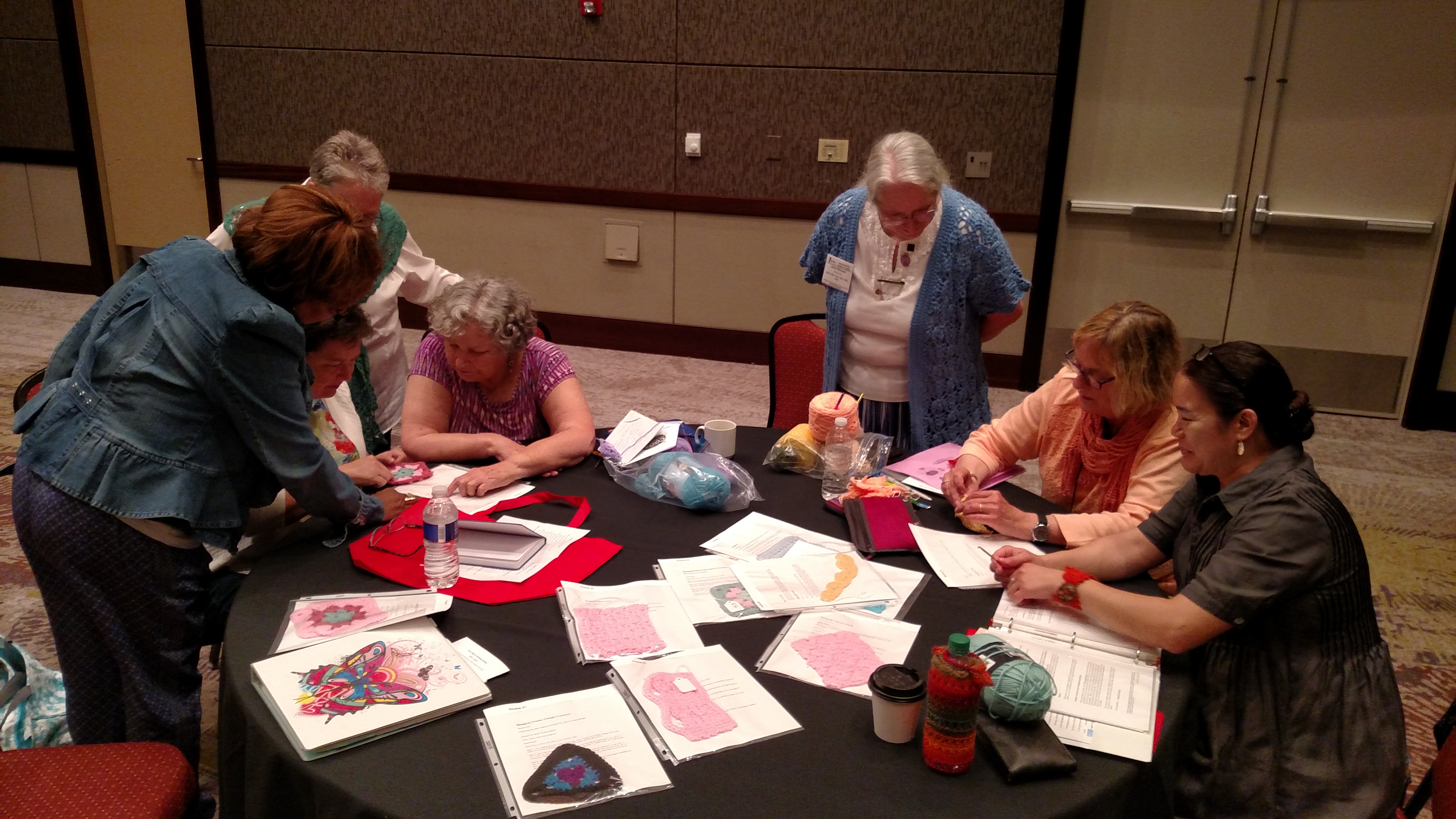
However I arrived a day early to ensure that I would be up for my new adventure of teaching at this national venue. I was officially teaching 4 classes; Re-Invented Broomstick Lace, What the Pattern Doesn’t Tell You, Yarn Overload, and Beads Three Ways, yet in addition I also help teach all day at the Master’s Day. These all over the course of 4 days are a bit of mental gymnastics, I become completely submerged in all things crochet, even more then the everyday.

The Master’s Day was the first event. I helped facilitate this all day event with other reviewers of the Master’s Program offered by CGOA. The Program consists of 48 swatches and 13 questions that is completed via correspondence, I successfully completed the Masters of Advanced Stitches and Techniques in the summer of 2010. Essentially it was this program that began my career in crochet design, and teaching, but that is another story. Since completing the program I have been a reviewer critiquing the work of others, as well as help organize and teach the Masters Day at the annual conference, with the one in Charleston being our third such event. In addition, I am currently combining the work of many talented teachers and writing a new Master’s program, so in a sense I am completely immersed in all things Masters.

I believe the event was successful, and I even came away learning things myself. The students began applying the various techniques that were taught; linked stitches, foundation stitches, gauge, finishing work, reviewing your work and such, while they were coming up with new ways to approach all of these techniques I had an eye opening moment of how Tunisian Crochet is really just linked stitches combined with Foundation stitches. It is amazing how much of crochet is built upon other skills that are really just other versions of the same other basic techniques.

The other highlight of this day was getting to catch up with some of the other reviewers that I only get correspond with via email. They really are a great group of women that have a great passion for crochet, and I always find time spend with them to be rewarding.

Arya Ebruil Yarn Has Some Definite Possibilities

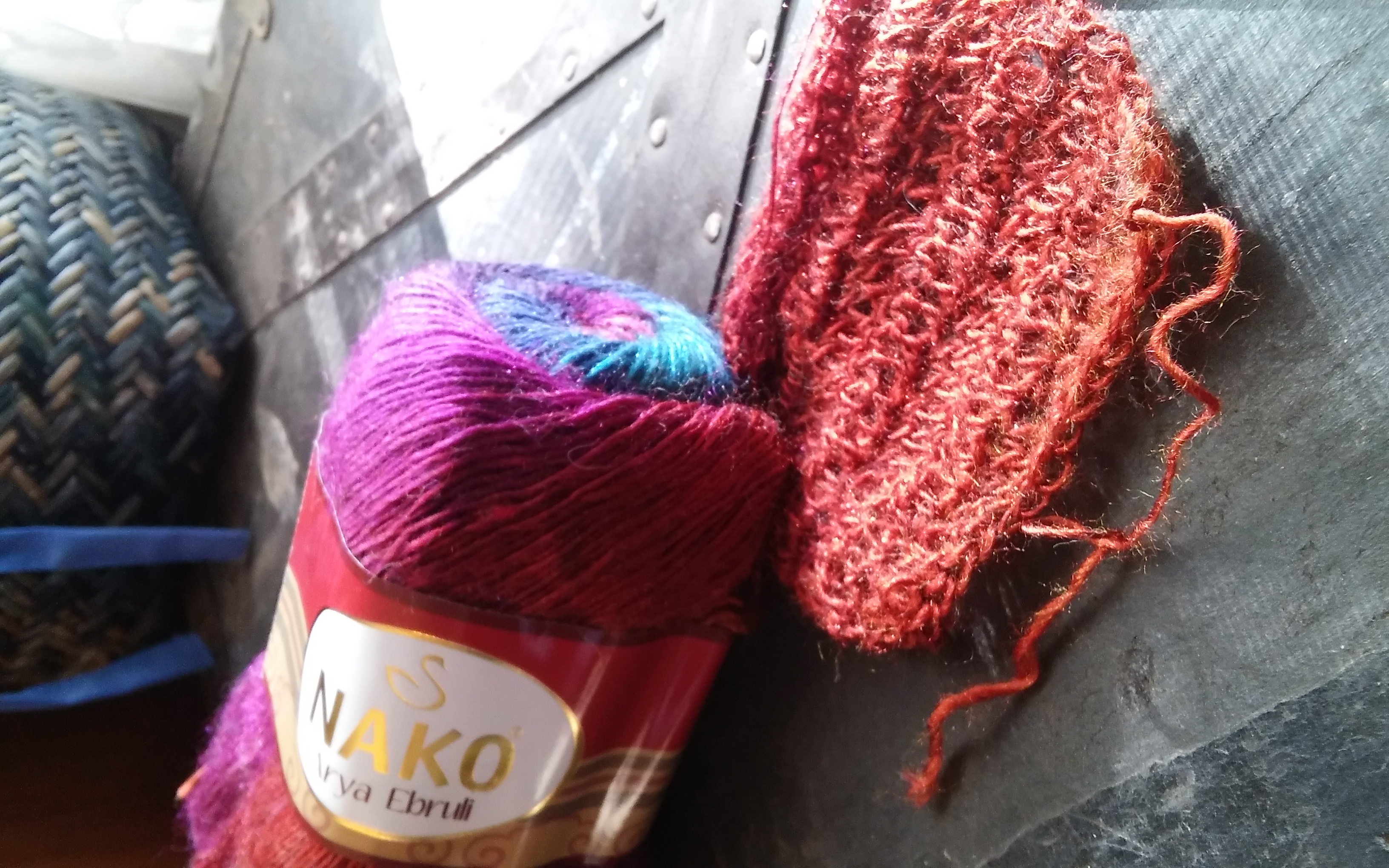
ScannedImageYarns with only a single twist can create a unique stitch that is well defined and full, but there can be some draw backs. I experienced these with a new yarn, Nako Arya Ebruil.

0707161840c

Nako Arya Ebruil yarn

The yarn has beautiful colorways, with long gradient color, so long that it maybe that only the beginning and end use of the skein will share the same tones. It is lovely lace to superfine weight yarn comprised of 80% Acrylic, 10% wool, and 10% Alpaca, so it is not only durable, but has a little extra warmth. The feel is quite soft, and the single strand has a nice twist.

So what is a single strand? Well yarn is usually made up of multiple strands of twisted fiber that are plied together, meaning they twisted together in the opposite direction than they were originally created, it is this tension that creates a study yarn. A single simply means that it is only one, being the initial twist of the fiber, there is no plying with others to create a tension. This does cause some definite positives as it creates a nicely defined stitch, and can easily highlight various stitch work, but there is a drawback, it tends to pill, and is not a yarn that you want to rip back often as it usually snags on itself. This is due to the fact that the individual fibers are not as securely “locked” into the yarn structure and can break free of the twist. All of these characteristics are present in this yarn.

That being said, it still has a nice drape and feel that encourage me to put it to use. I can see where this yarn would lend itself very nicely to a wrap of shawl, possibly even a garment (I would suggest sleeveless, to avoid underarm pilling).