Learning the Hank (part 2)

IMG_5567

From Hank to Skein with Blue Heron Yarn
ScannedImage(Continued from April 19, 2013 post)…. So I finally understood the concept of a “hank” of yarn, it was intimidating me anymore, so I would simply open it up and roll it into a ball. Needless to say I had nothing but a tangled mess. After freeing the large loop of yarn so that I could unravel it from its loop, I learned that it might want to hold on to its neighboring thread and pull it ever so slightly with it, moving the neighboring thread from where it sat and growing into a mess. It took me hours, and even then I needed to cut places and work out knots that I had made, it was a head ache.  But this time I was not discouraged. I would find a process.
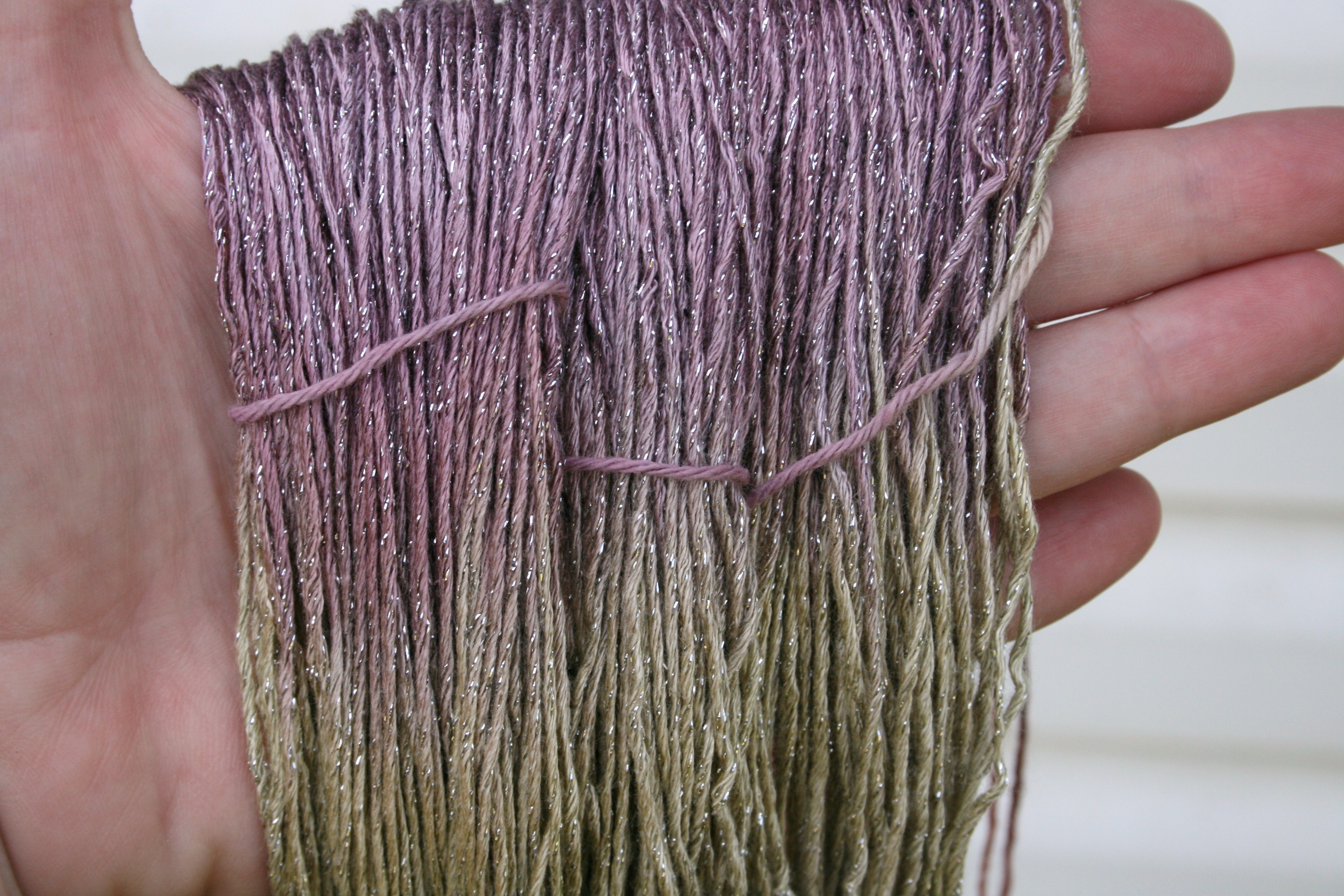
IMG_5571

Let the loops hang smooth, note the yarn that ties to loop together, keeping the yarn in place
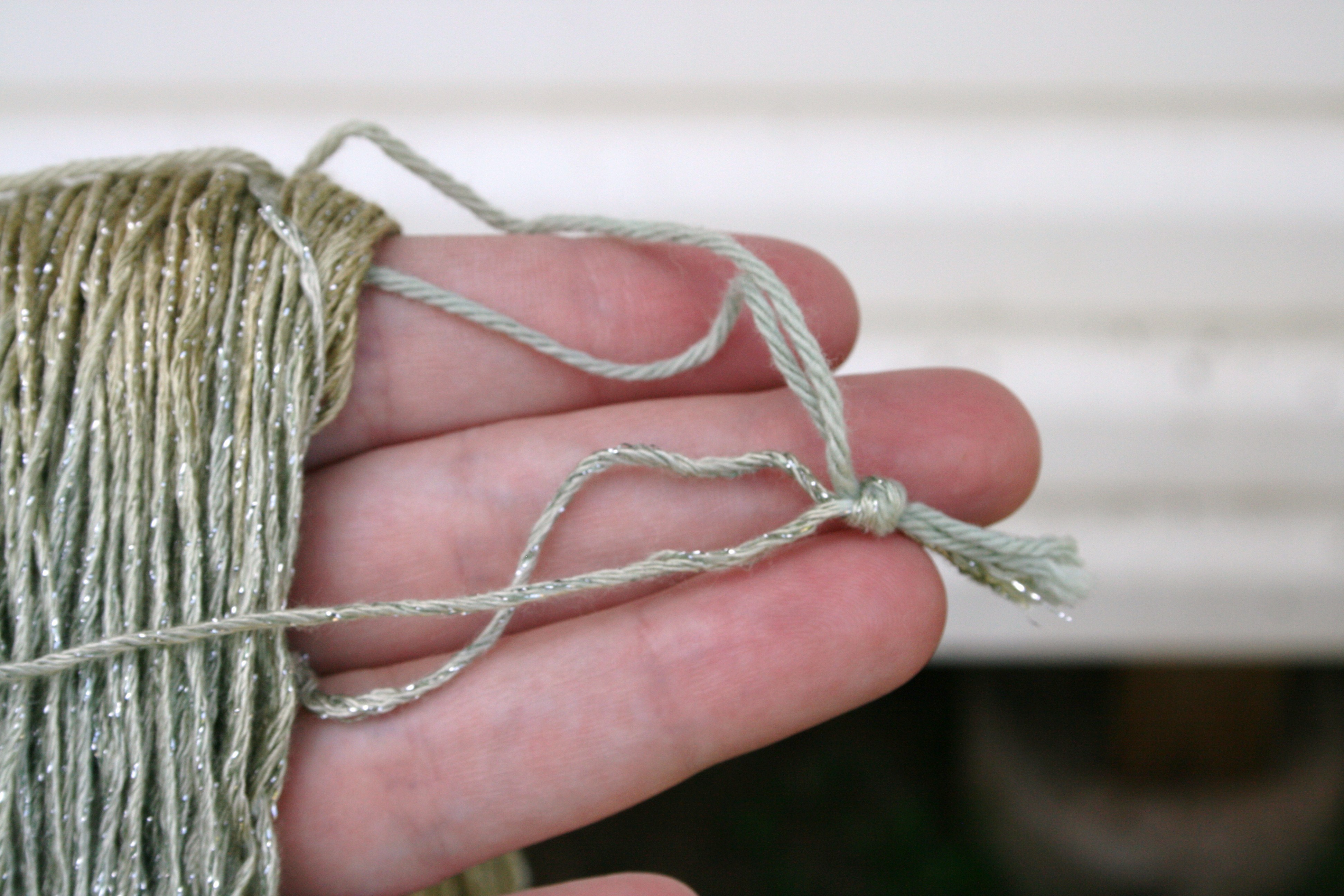
IMG_5572

Usually you can fond the end of the yarn tied to a securing yarn, that holds the loops in place

After playing with some hanks I learned that before I even attempt “freeing” the yarn from its loop, I need to make sure the loop in smooth, not twisted, that it hangs nicely, this will definitely help. Then I need to place it somewhere that will keep it taunt, maybe over the back of a dining room chair, but I found that I use my knees (not very lady like but effective for me), I have learned that some people use a swift…it reminds my somewhat of an umbrella, but without the fabric. This expands to the size of the loop and will spin as you pull the yarn). Then I can make it into a ball, if I want to pull it from the center I can wrap the yarn around an empty toilet paper tube (open finishing wrapping it up, I can pull out the tube and use the middle yarn, as pulling from  the center means that the yarn will not be rolling around that floor as I use), or there is a little tool called a ball winder that you place your yarn end in and crank its little handle and it spins it onto a tube, to make a pull from the center skein.

So why is yarn placed in hanks? Is it just to give you a little more of a work out, or to look fancy? Actually it does have a reason; it places less stress on the yarn. By being in that “loop” it helps the yarn to relax, where putting it into a skein or ball, the yarn in the center is under more pressure than the yarn on the outer edges. This may be a subtle thing, but it can make a difference in some processes and designs, especially if the fiber has been sitting in this more pressured state of a long while. If you think about it you have seen this with a basic skein of yarn, when you pull out the beginning end, it is often bent of twisted, where by the end of the skein it is smooth. So if you want to use a hank of yarn, only wind it into a ball when you feel you are ready to use it. It will help the yarn stay consistent.
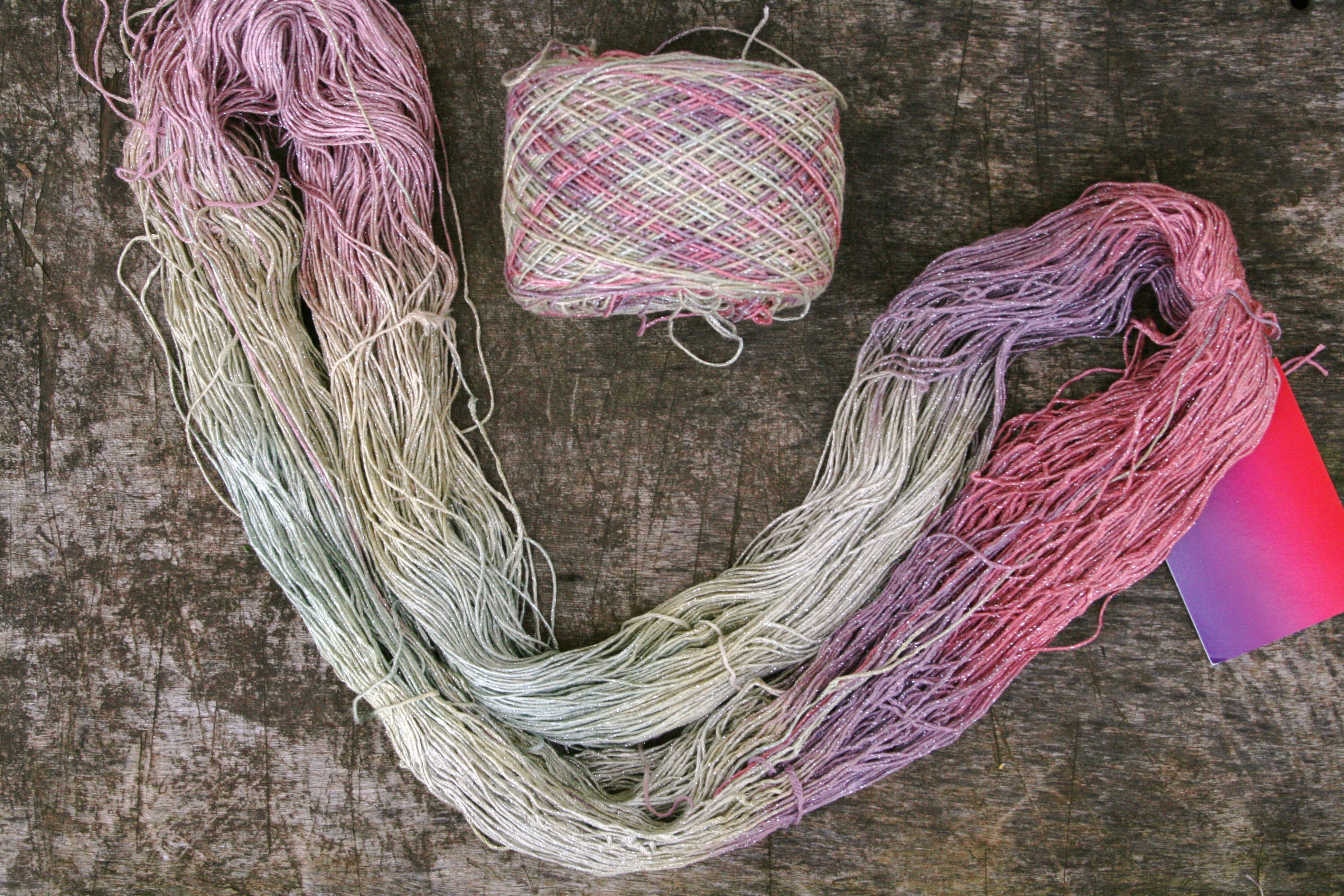
IMG_5569

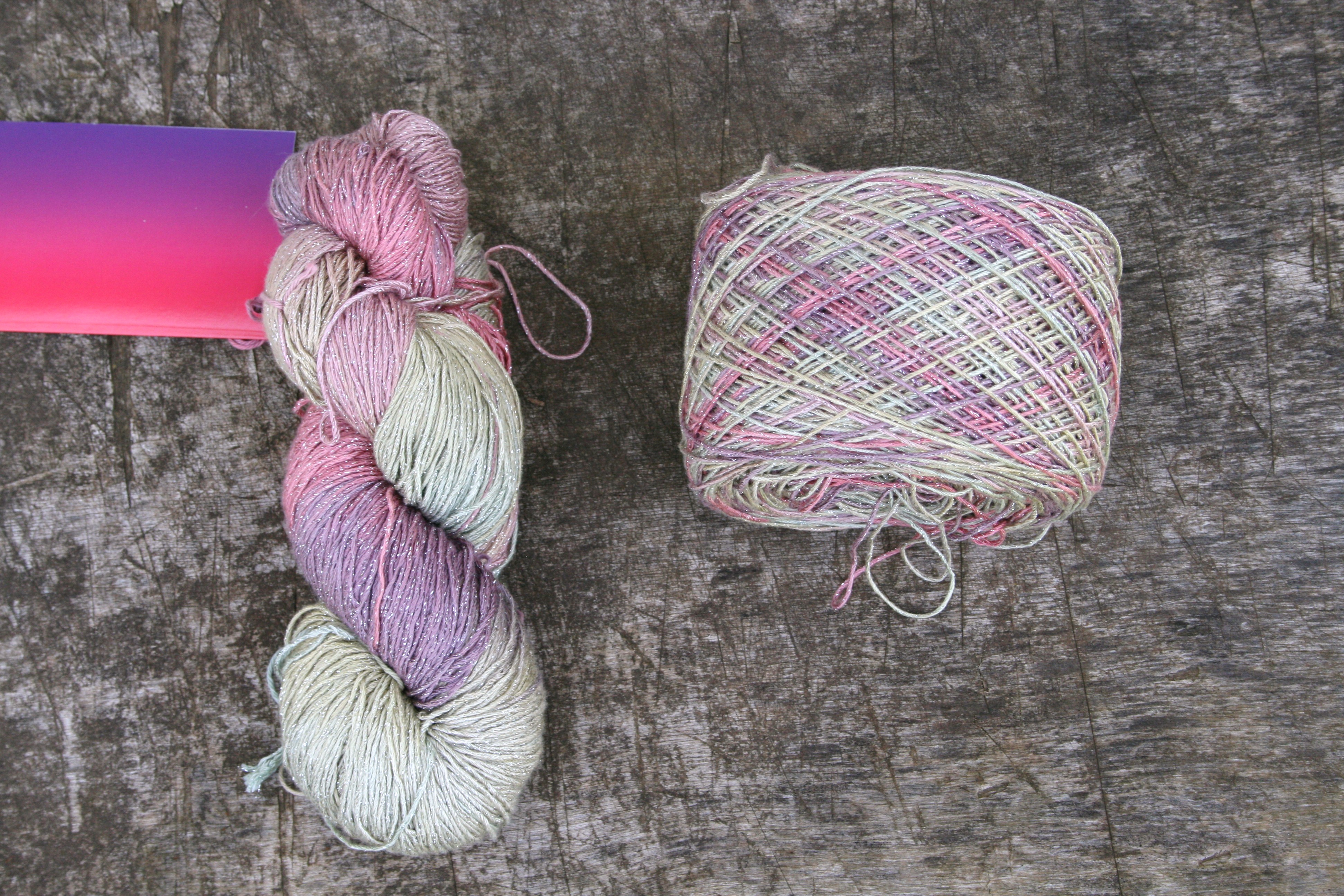
Notice the hank lets you view the length of the color change, whereas the skein it is less obvious

One of the benefits I have found with a hank, it a purely visible one, I can open a hank to a loop, and see how long the color changes are for a variegated yarn. This is something that I have difficulty seeing in a skein.

I have found that I am not alone in my understanding of this “yarn hank”, so I hope my experience will help you take the step to attempt a yarn you may not have used because of the way it is presented. (And I have since learned, that most of these Local Yarn Stores, will in fact wind the hank into a skein for you at purchase, you just have to ask). Take the plunge and explore the world of fiber!
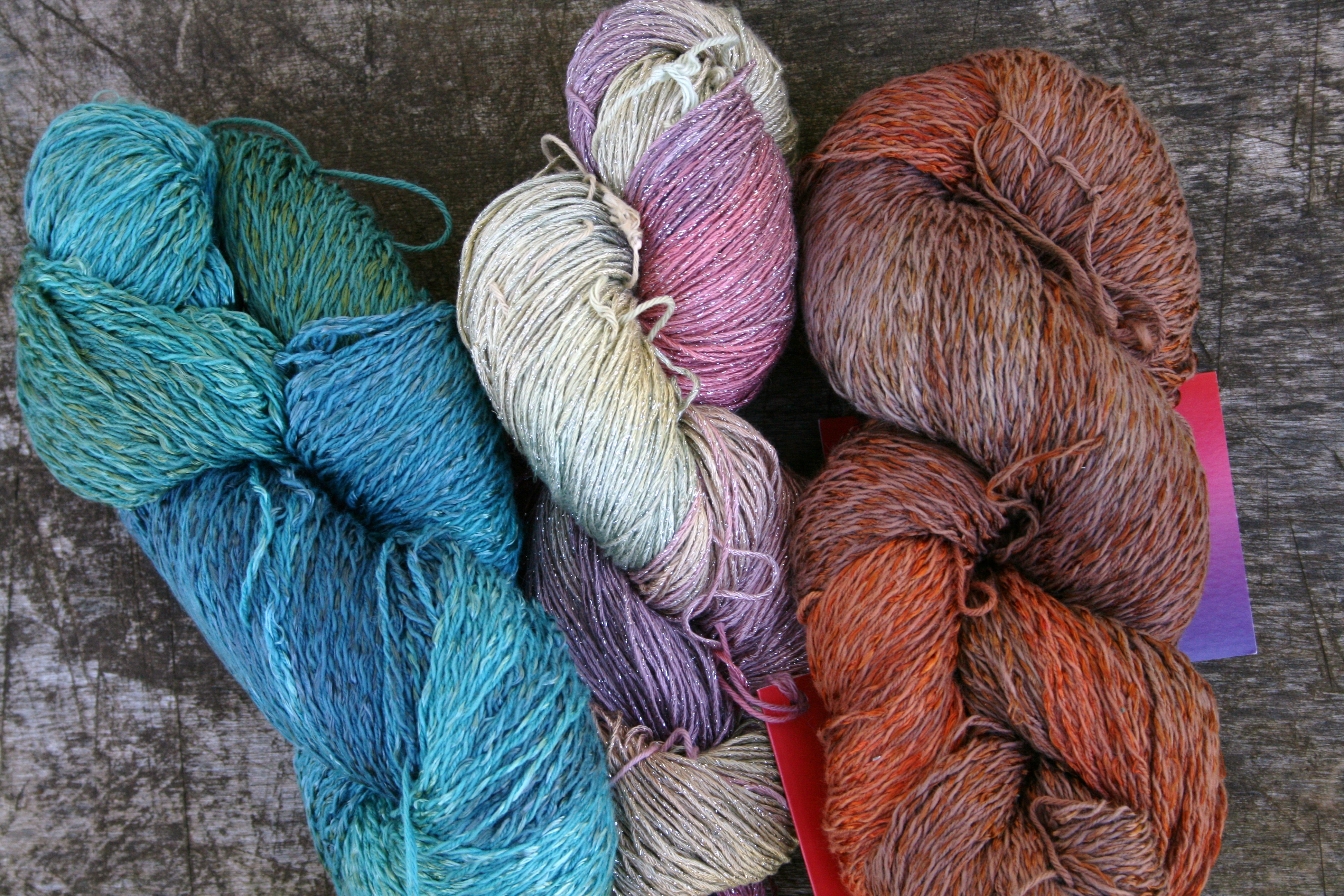
Learning the Hank (part 1)

IMG_5574

Hanks of Blue Heron Yarn

ScannedImageOne of the more challenging aspects of my personality is not really wanting to admit that I don’t know something, especially when everyone around me thinks it is common knowledge…This probably caused me not to grow in my crochet abilities as early as I could have, but everything happens in their own time for a reason. So what is this that held me back? Understanding a hank of yarn.

I grew up with all of the big name yarns, I can probably identify most blind folded, and just by feel. These are the yarns that are most readily available for me to buy in larger stores, with a nice skein that has a “pull the yarn from the center” string. They are easy to use, come in a wide arrange of colors, and there are many projects to tackle with them.

IMG_5577

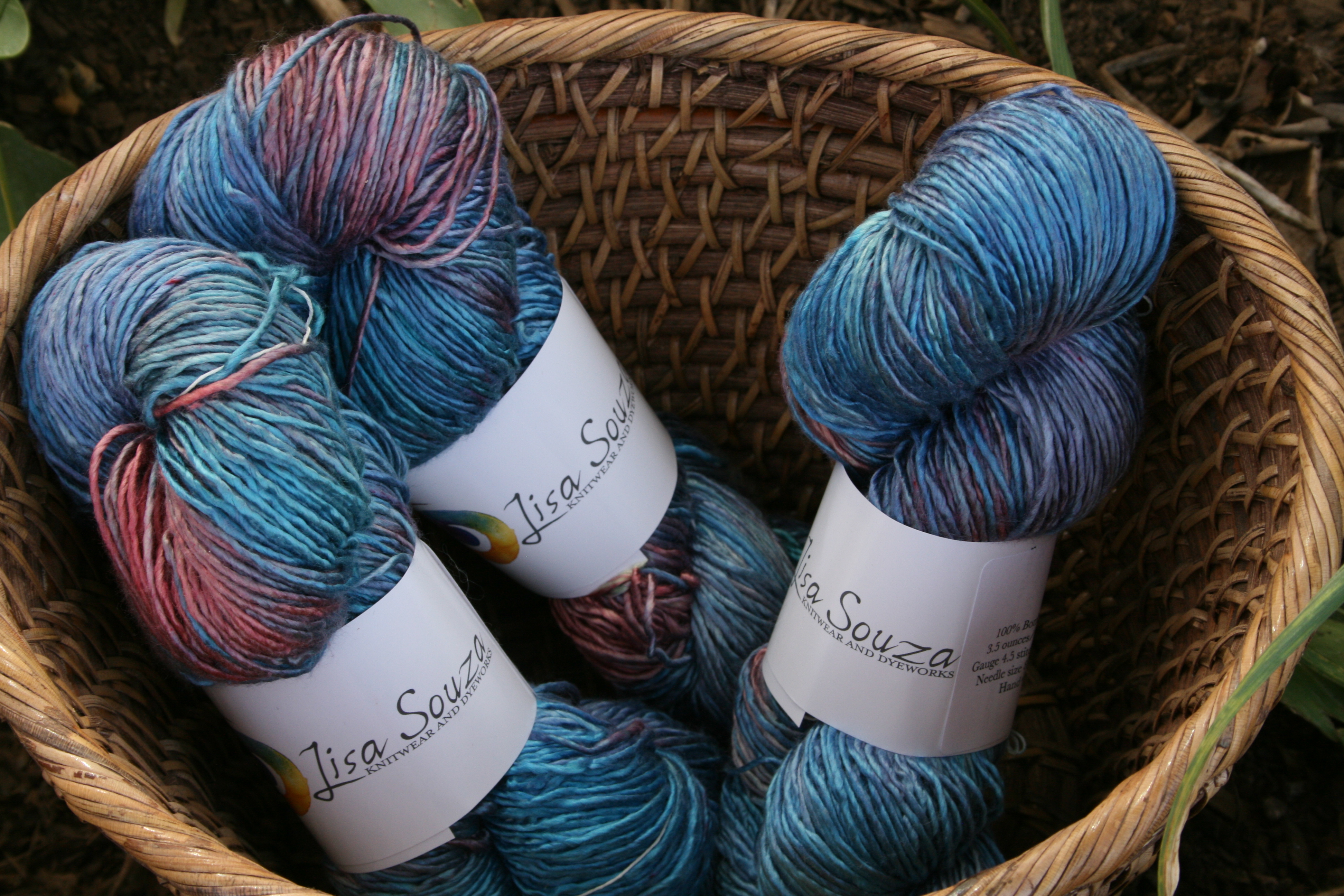
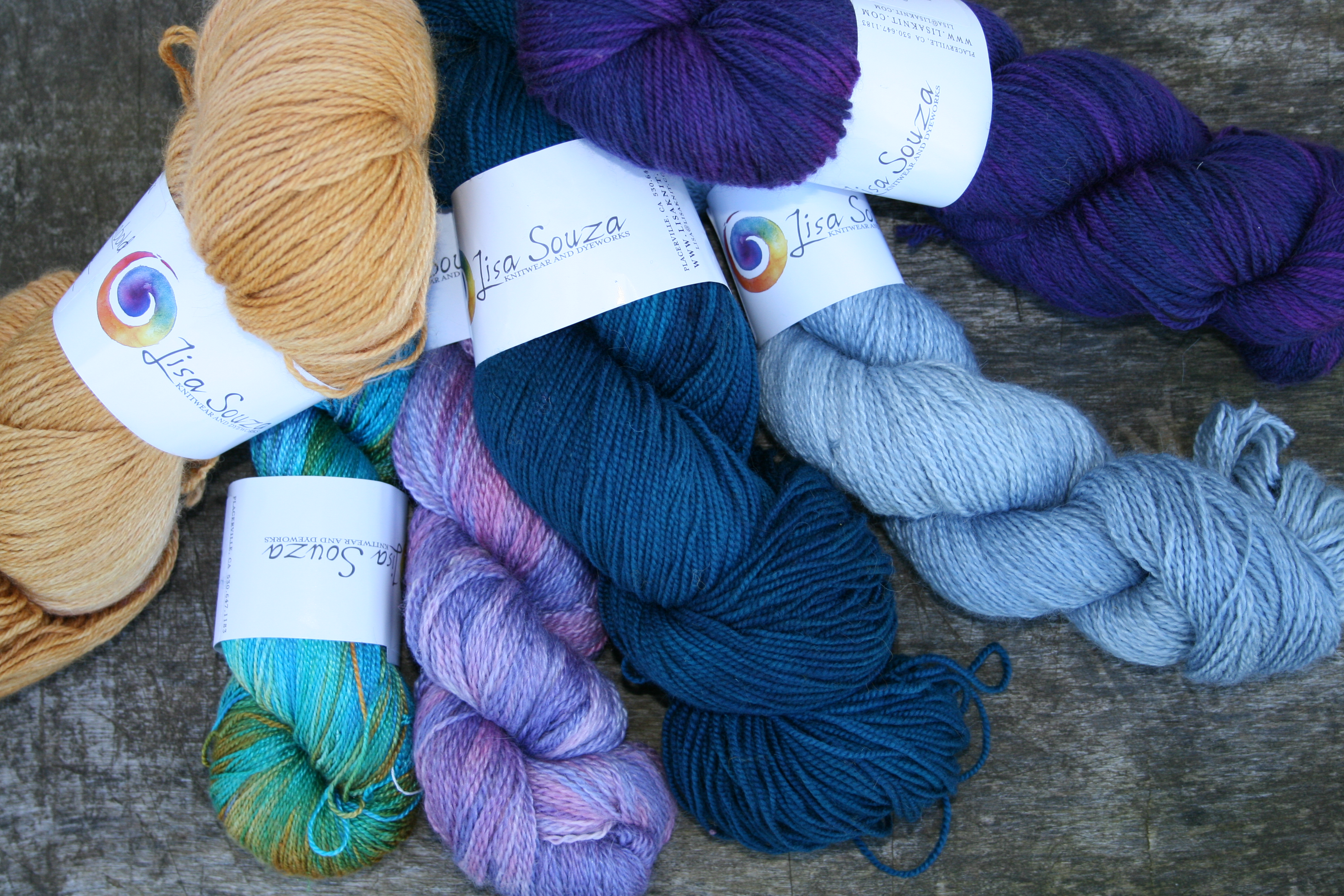
Hanks of Lisa Souza Knitwear and Dyeworks Yarn

I had received a gift certificate to a Local Yarn Store (a.k.a. LYS), and went to check it out. There were rows and shelves of yarn, but none of it looked familiar. There were no pretty little ends to pull from a center, most of these were twisted up and I couldn’t even see an end. People in the store were talking about how nice is or that fiber was, and I began to feel a little uncomfortable. People were purchasing these little twisted “hanks” and were talking about the projects they had in mind for them. I did not have the inclination to ask “how do you use that”, since I didn’t want to appear ignorant. So I found a little ball that looked somewhat familiar, though smaller then I was use to , but it appeared to have a pull from the center once I got the band off it (since the band was run through the center and kind of attached like a hand cuff to the round). I purchased my little ball feeling like a complete novice. I thought about those hanks when I got home, but for the life of me could not figure out how they were to be used.

The little ball I got was nice, and introduced me to new fiber types, but it wasn’t until I took my first spinning lesson that I got a firm understanding of the hank, and the light bulb when off in my head. Basically the hank is a twisted loop if yarn, like I saw in old movies where little Jimmy was having a circle of yarn held between his arms as grandma as knitting. These hanks just have to be opened up, find and end and roll into a ball! Then I could use it fine. Damn my pride for standing in the way for so long… or was it that easy….(to be continued…..the saga continues on the next post)

Old Fashion Empowerment

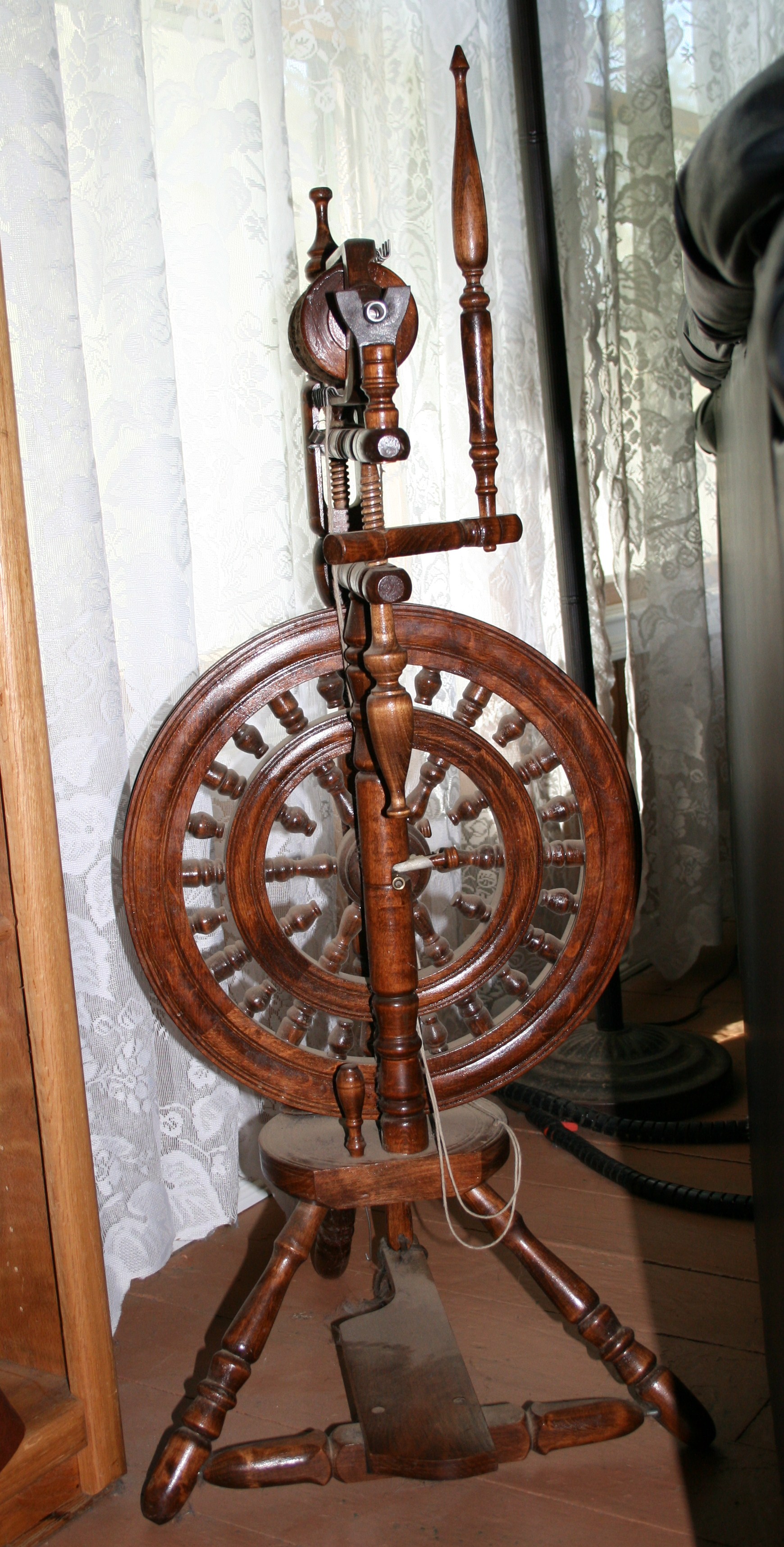
ScannedImageFunny my husband has no complaints about me being “a little old fashion”. He often jokes that if the end of the world comes that he’d be set. Sure I make my own jam from our fruit trees, I make my own bread (which does not help any diet plans), I have a spinning wheel and can spin my own yarn (I just have to dust it off) and I crochet like a crazy. But does that make me “old fashion”?

I like to think it makes me practical. After all I have the fruit trees and should do something with the fruit, besides feed the deer. The bread, well I was given a bread machine several years ago and found that it was cheaper to make my own then to buy it, so that is just me being thrifty ( the fact that the smell of homemade bread from the oven is so delicious is just a perk). I got the spinning wheel after winning spinning lessons from a silent auction…actually this event changed my life…..IMG_5566

Interesting how life changing events turn up when you least expect them, but I can trace back my career in crochet to winning these spinning lessons. I thought that spinning my own yarn would slow me up some; I crochet so much, and so often that I was always in constant need of yarn. So I thought that spinning my own yarn would at least keep me on a project longer, which it did, that isn’t the life changing part. The change came from the people I met. The instructor was an older lady that lived about 30 minutes from me, Jean Franklin. She lived next door to her daughter and was raising little Shetland sheep and was passionate about spinning and weaving. Obviously she was an expert in both, and she kept telling me I needed to join the local fiber guild (as I mentioned in earlier posts, I wasn’t too receptive to “guilds”). Under her instruction I learned more than I ever thought possible about different types of wool, and plying and fiber composition, drafting and basic yarn construction. Finally after about a year I took her up on her invitation to attend a meeting.

At this meeting I learned I wasn’t “old fashion”; I was fashionable. This little group was nearly 100 in membership and all dabbled in various aspects of the fiber industry, some raised the animals with the wool, others processed it for spinning, some dyed it, almost everyone spun it, then there were the weavers, the knitters, the felters, and the crocheters. They all lived in harmony encouraging and promoting each other. Everyone was a teacher (whether they realized it or not), and it is from here that I have gained the confidence to move my craft onward.

There is nothing wrong with being not so tech savvy, and understanding the lifestyle that is a couple generations removed. There was value then, and is value still today in these crafts.  In knowing that with your own two hands you can keep yourself warm and feed is a wonderful feeling.

Old fashion=empowered.

Fiber Art in Community Exhibits

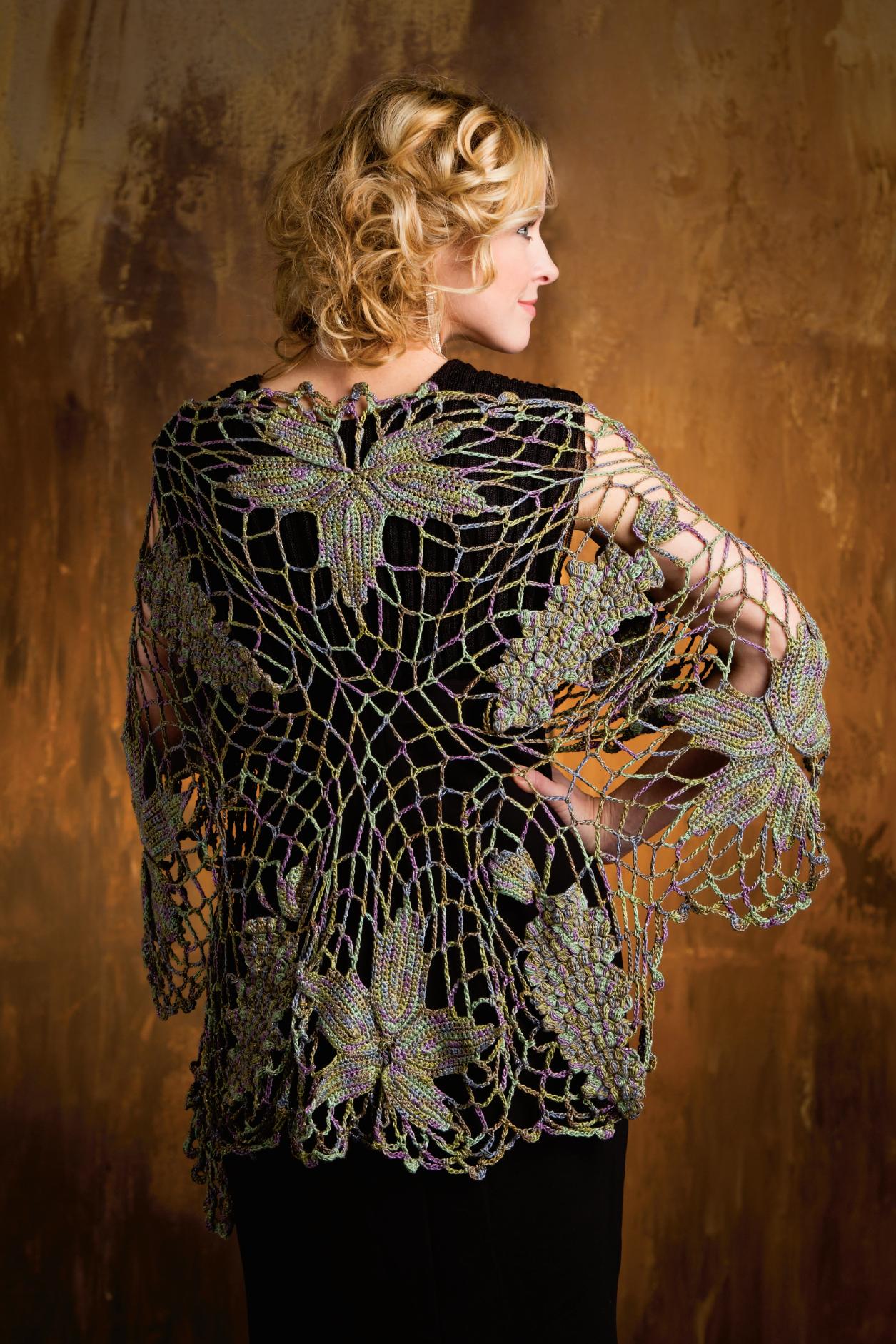
ScannedImageI have had a unique opportunity to have some of my work in a museum for a special exhibit featuring the fiber arts for the months of April and May. What makes me smile about this, besides the obvious, is that recognition of the fibers arts seems to be on the rise in our world (or at least my part of Northern California).

Vineyard at Dawn Shawl (back), Crochet! Magazine Spring 2013 Photo courtesy of Annie's

Vineyard at Dawn Shawl (back), Crochet! Magazine Spring 2013
Photo courtesy of Annie’s
On display March 30-May 19, 2013 Folsom Historic Museum, CA

Last year a local art gallery was featuring art that was created with fibers; woven, crocheted, knitted, or felted. Then a nearby museum has an entire exhibit for nearly 2 month focused on the history of fiber arts, ranging from the 1800’s to modern day works in a wide variety of mediums; crochet, knit, basketry, weaving, hand spun yarns, and felting. Then a local winery wants to host a love for fibers and wine this summer at their vineyard.  Granted I know that I have many talented fiber artists, of many specialty areas, in my vicinity, but I can’t just believe that mine is the only area that is experiencing a renewed interest in my favorite arts. Check your local community and support all the fiber arts, even though I love crochet, I can appreciate anything made of yarn or thread!

Folsom Historic Museum(If you would like to see my exhibit piece and are in the Sacramento area, check out the Folsom Historic Museum, March 30- May 19, 2013 (open Tuesday through Sunday 11-4).

Tour Through Crochet Country

ScannedImageWow! A whole month of focusing on crochet blogs is almost to an end; but I might just have to follow along with some that I have visited over the past 30 days, and I hope you will consider doing the same. (here is a list of all the participants)

First I would like to thank Amy and Donna of Crochetville for putting this tour together. They are very supportive and encouraging of all things crochet, and help all of us with a hooking habit feel at home and welcome. I can’t wait to see what new ways to support crochet they have up the sleeves. Another supporting factor I have found in the world of crochet is the Crochet Guild of America (CGOA). Becoming a member and taking the opportunities that it has presented has changed my life…and that is not just a figure of speech. I am a crochet instructor, but only started having students after I passed the Masters of Advanced Stitches and Technique. I am a new designer; I only sold my first design at the Summer CGOA conference in Minneapolis, July 2011, and now at this moment I have 7 designs in 3 magazines that are currently at your local news stand.  All of that is possible because I took the opportunities that CGOA offered, including meeting many supportive and encouraging people.

IMG_5539

Lisa Souza Glacier Yarn (100% Bombyx Silk) that will find a new home on April 2!


Unfortunately I do not have a local chapter of CGOA (there is one an hour drive away, and the meetings have never worked in my schedule), but I have found a local “non-denominational” fiber guild in my community, so I know the benefits belonging to a supportive group that enjoys the same things you do. If you have never considered visiting a guild (it took me a while, I thought that they were trade unions from the middle ages, at least that is what I remember from history class), the opportunity to make new friends, that actually understand crochet terms, is invaluable. Definitely finding a crochet community makes a difference. You can check here to see if there is a CGOA guild in your area. These groups help ensure that crochet is not just featured one month of the year, but throughout and open you to new ideas and approaches. They also usually help in the community (like this blog tour, helping Project Night Night, look here for more information), and make a difference in a variety of ways.

When writing this post, I had many thoughts of knowledge and tricks I have learned and would love to share with you, but the most important thing I can impart is to get involved, and find a supporting network of crochet lovers. (If you want to hear some of my knowledge and tricks, feel free to follow me on my crochet journey).

IMG_5531

Tunisian Mini Shawl- Free pattern download

One of the things I have learned from my local guild is the expanse of fibers available in yarn and how to use them, so I wanted to share an opportunity with you to enjoy some yarns you probably don’t have in your stash.( I find it amazing to me how different the same pattern can look with a different yarn or fiber) So, I am giving away a skein of Lisa Souza’s Glacier Yarn (100% Bombyx Silk) to 3 lucky winners (just simply leave me a comment on this post about what you enjoy about crochet or what it means to you, I will randomly select 3 comments on April 2, 2013 at 9:00am PST).

From the CGOA I have learned many new techniques and I would like to share my free Tunisian Mini Shawl pattern (created out of 1 skein of the yarn being given away) as a tribute to those that have encouraged me. Check out my free pattern download from either Crochetville’s Free Pattern Library or by using this  Free Tunisian Mini Shawl Download

Don’t forget to check out the other featured blog today…Kristin Dragos and don’t forget tomorrows the last day of March, where has the time gone?

March 31 Karen C K Ballard Gwen Blakley-Kinsler