Sharing a Secret…Lotus Yarn, It is Fantastic!

ScannedImageSo I have been keeping a secret, not really intentionally, but because I have been caught up in the use of a really great yarn.
The yarn fits my climate, it is a cotton rayon blend, so it is great for warm weather, the biggest problem I have with it is figuring out what project to work next with it. I have even worked on projects at knitting and crochet gatherings and had several people go out of their way to ask me what yarn I am using. The yarn you ask, well it is Lotus by Designing Vashti.
I should mention that the yarn was developed and created especially for crocheters by my friends Vashti Braha and Doris Chan, but that has not influenced by words about the yarn. They did not ask me to give a review of the yarn, they do not even know that I am writing this, but I felt that I should let the cat out of the bag about this little secret.
Lotus

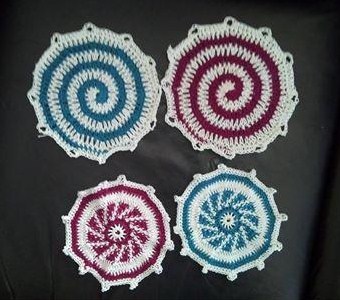
Swatches I worked up in Lotus, as I was playing with circles. The colors, white, teal and grenadine are beautiful!

The yarn is created with a “Z” twist, this means that the yarn is plied in the opposite direction as most yarns that have an “S twist” (basically it is the direction that the threads are spun together). This may not seem like much of a difference, but as a long time crocheter, I can tell you that there have been many yarns that always seem to slip when I use them. I never really thought about it, I just accepted this has the norm. So why did the yarn split? I never really investigated it before, but when you really pay attention to the way the yarn works, I am right handed, and by working yarn overs it actually works the yarn in the opposite it is plied for traditional yarns, removing twist. But Lotus holds up very well, as working a yarn over actually is in the same direction as the twist and firms up the yarn instead of twisting it a part. So that is a bonus, but not my favorite part of the yarn.
This is also the only yarn I can think of that I actually prefer after it is blocked, or washed. It seems to actually get softer and the strand feels like it fluffy up without distorting the stitch, it is quite a perk. It also has a nice gleam to it. It is not so shiny that it feels limited, but it is definitely not dull. It reminds me of an expensive fabric, but a fabric that carries the heavy lifting of everyday wear and is not so delicate that it hides in the closet.
This yarn is only available on-line, but it seems quit to ship and is in my hands impressively fast. There is a vast array of colors that will inspire many ideas. Classic jewel tones and flattering pastels are easily accented with the nice selection of neutrals, including white, grey, pearl, and black. I will admit, the hardest part of ordering for me it choosing which color, so I often left the family make a vote and I have never been disappointed with their choices.
The combination of cotton and rayon, seem to perfectly complement each other and create a fabric that has really nice drape, yet is very breathable in my California weather. It is a fine weight yarn, listed as #2, which is another thing I actually like. Finding a cotton yarn that is smaller than a medium weight or #4, and greater then thread can sometimes be difficult. I find that hand of this yarn very versatile. It has a recommended hook size of F/5-3.75mm or G/7-4.5mm, but I found that I enjoy working it with an H/8-5mm and even at time a J/10-6mm.
If you are feeling like trying something new, check out Lotus yarn, I am sure you will find it as noteworthy as I have.
(If you happen to attending the Knit & Crochet Show, Saturday, July 26, 2014 at Manchester, NH stop by the show floor at 12:30 and try out Lotus at the “Cented Flower” Make & Take demonstration I will be giving).
Small Shifts, Big Differences…Where is Your Yarn?

ScannedImageSimple things can make a huge difference….I was reminded of this just the other day, as I was putting together some “join-as-you-go” motifs.

IMG_6330.1

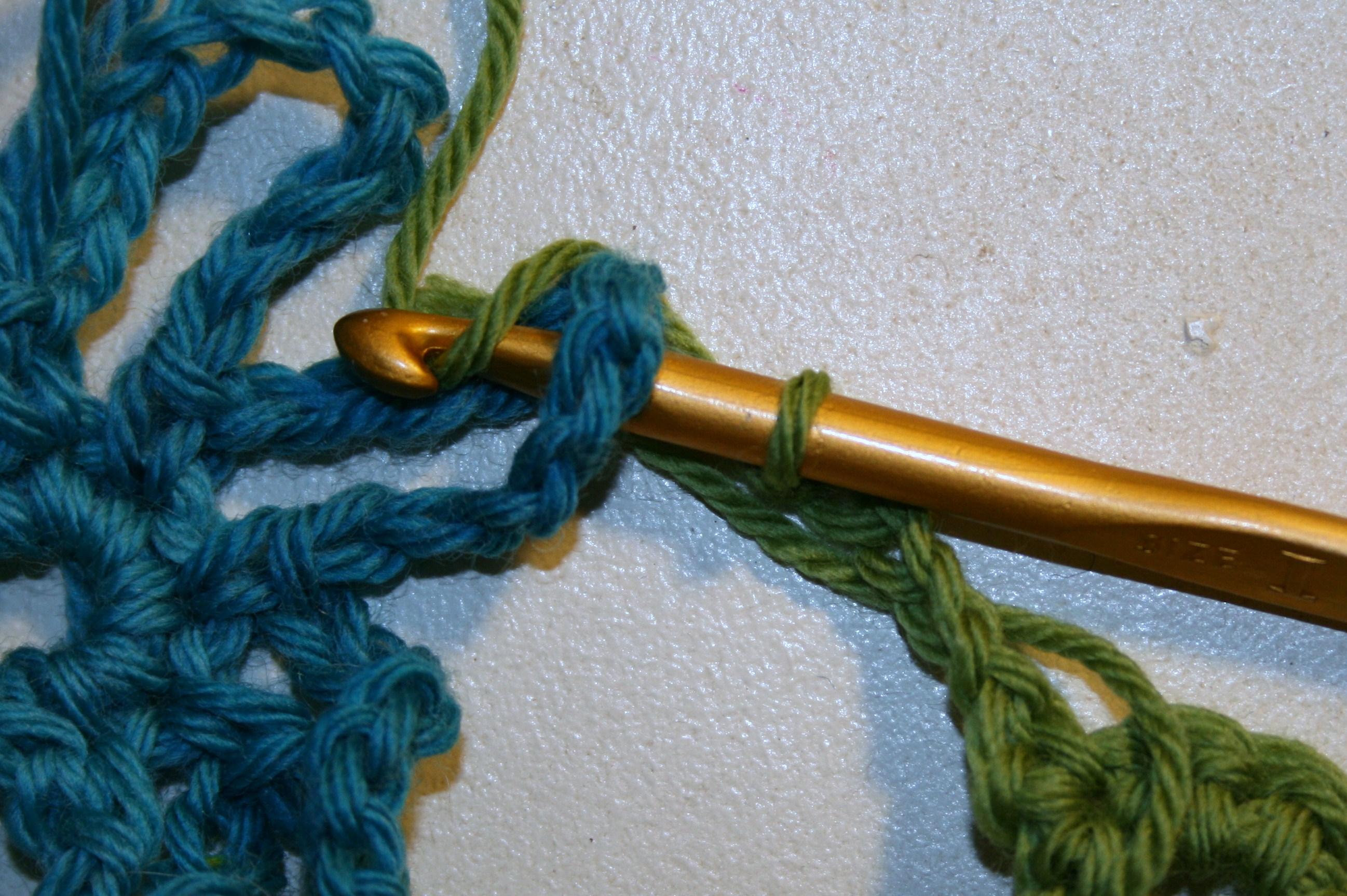
Working yarn behind the hook

They would join at through chain loops, and I found that I was working along splendidly, then put things down and come back and have the joins twisting. I could not for the life of me figure out what was causing this difference. I was entering the chain in the same direction, I was making the same number of stitches, and so what was my hold up? Was I distracted? Were my fingers and hook no longer obeying?

IMG_6332.1

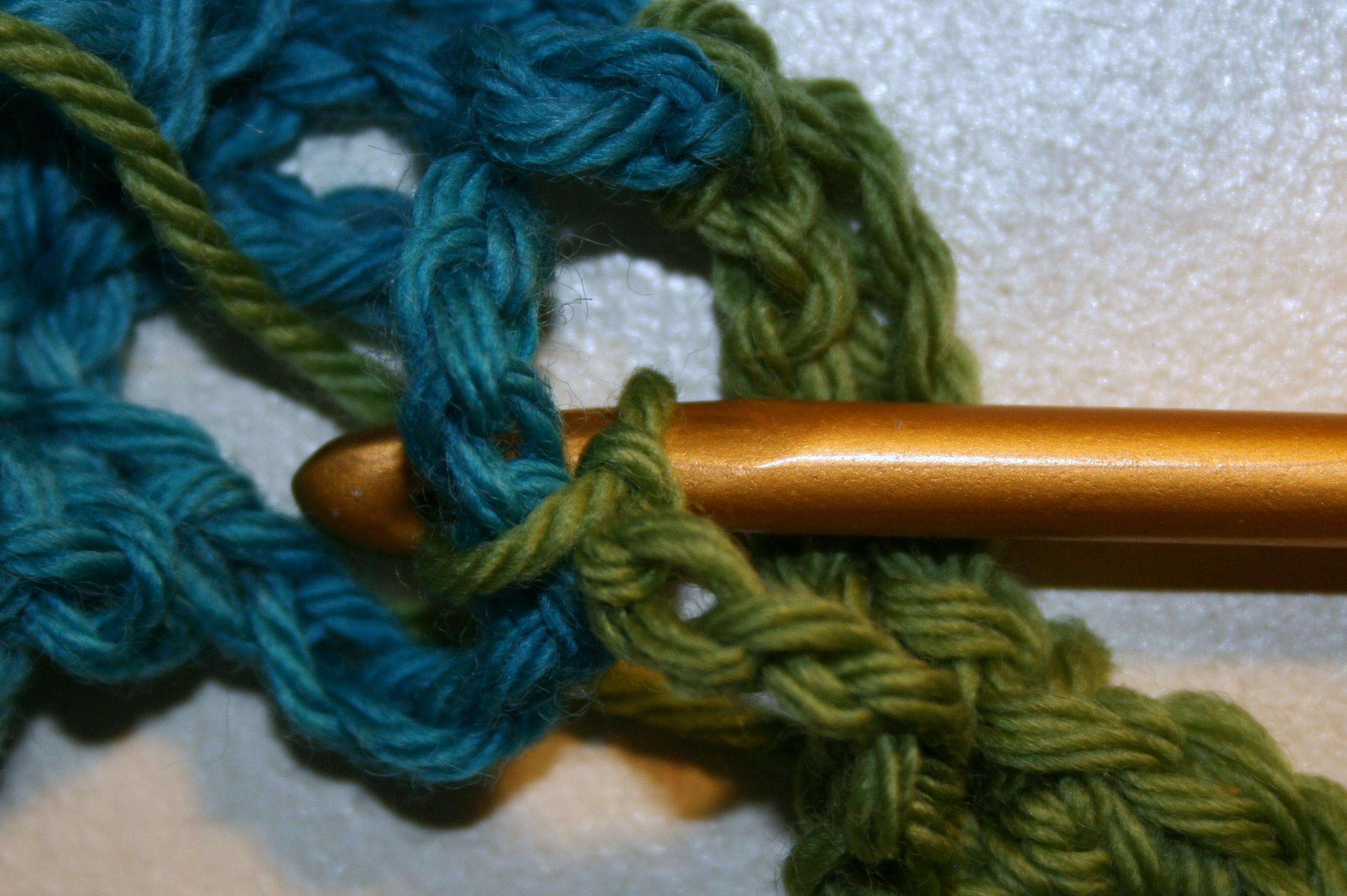
Working yarn in front of hook, being pulled into chain stitch

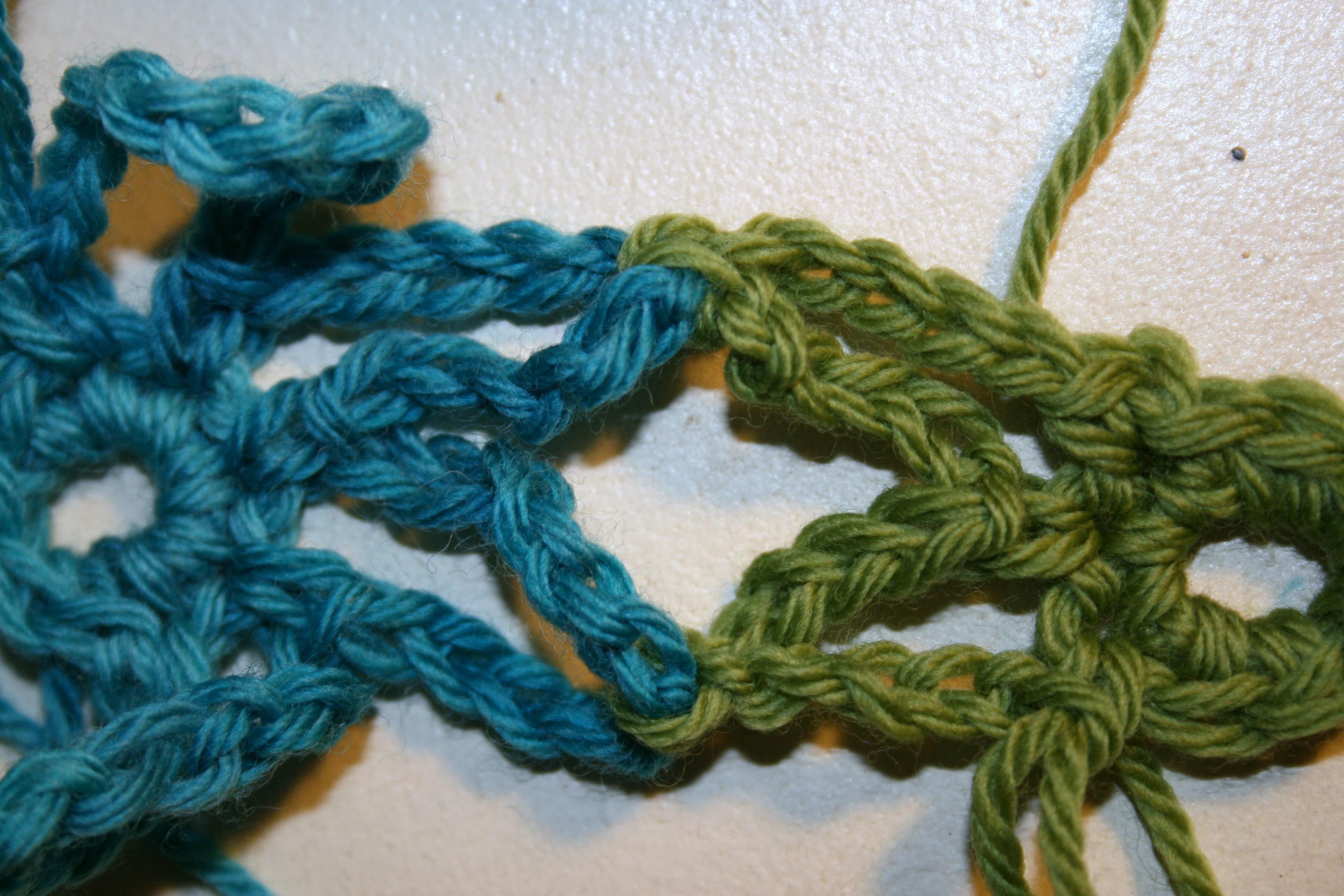
Then, I noticed a very subtle difference….where was the working yarn drawing from? In every instant that I had a problem with the join twisting the working yarn was in front of my work, in front of my hook. This was the cause of the difference. Usually my working yarn is always behind my hook, this makes for a smooth fabric and joins that behave, but the simple acts of letting the working yarn get in front of the hook and everything goes backward.

IMG_6333.1

Top join is worked with working yarn behind hook, and bottom join is worked with working yarn in front of hook. Notice the twist of the loops in the bottom join.

This is similar to the effects of how you “yarn over”, the placement has very subtle and telling results (for a description of that post check out “How do you YO?”). The working yarn in front of the hook creates an extra twist to my join and, though creates a more textured fabric, is not necessarily the effect I am looking for.
So I put a little extra knowledge of how crochet stitches work in my basket, and will have to play with it in the future and see what effects it can create, that I actually intend for.

Adding Stitch Extentions

ScannedImageThe world of crochet seems to be ever evolving, and one technique that I have seen recent renewed interest in is the “extended stitches”. Extended stitches are essentially the same stitches as are regularly used, single, half double, double, treble, etc. however they have an extra pull through making them slightly taller.

IMG_6325.1

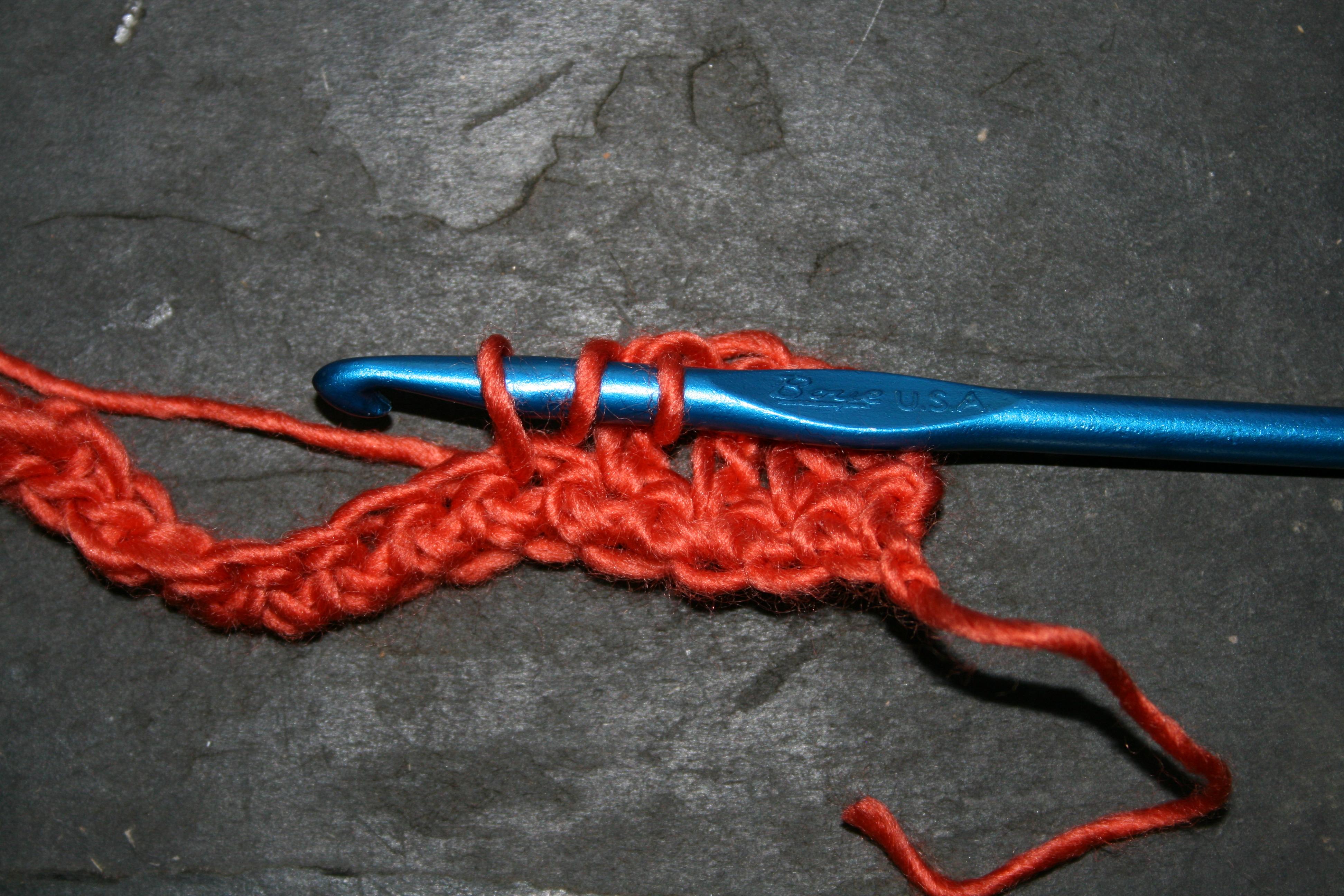
Begin an extended double crochet just as you would a typical double crochet; yarn over, insert hook in indicated space, yarn over, pull up a loop

This stitch type is really nice is you are created a fabric that has gradual height changes as an extended single crochet is slightly taller than a single crochet, yet slightly shorter than a half double crochet, creating a very nice gradient of height by using the three stitches together.
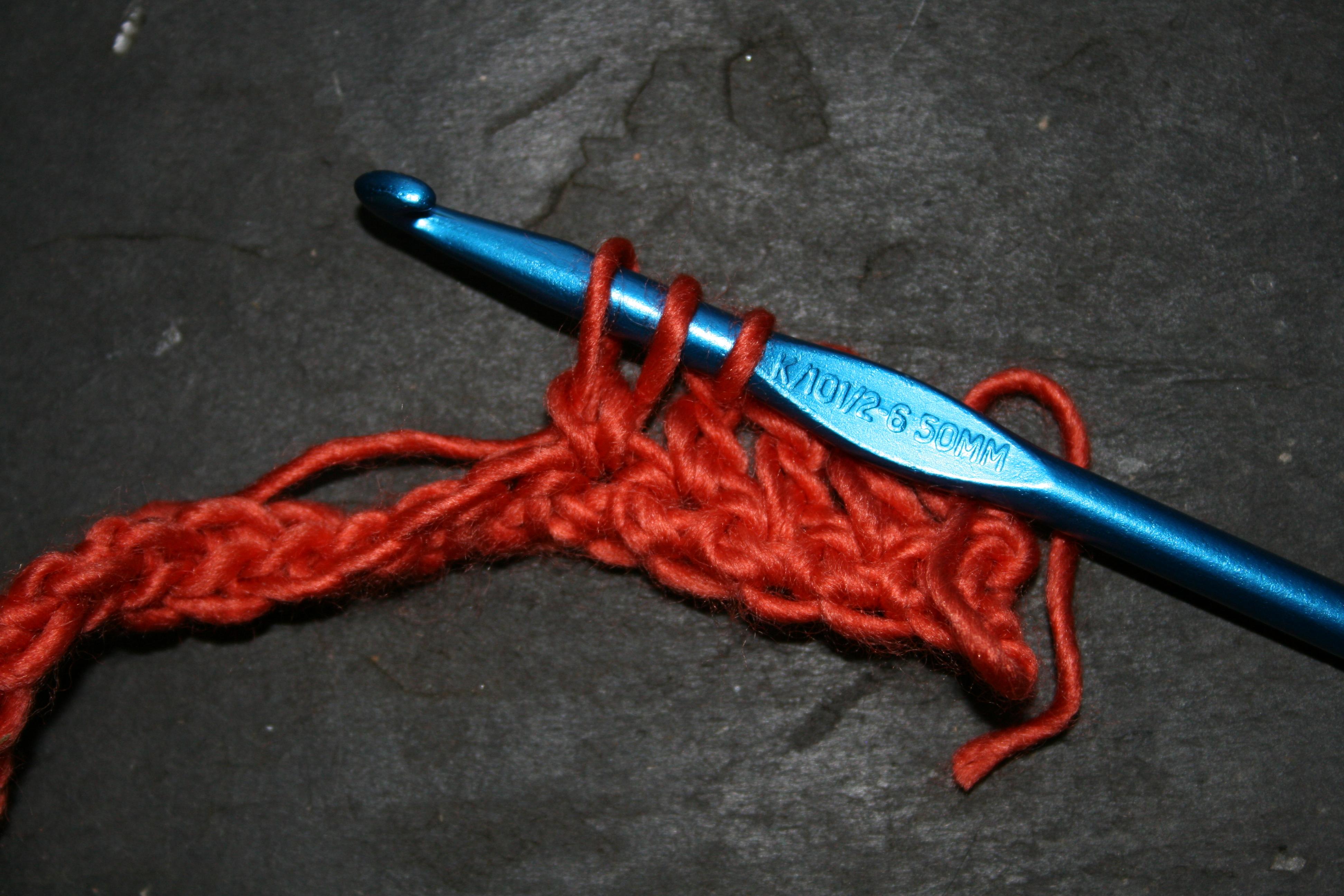
To create an extended stitch, you begin as you do for the standard stitch, for example for a double crochet and an extended double crochet you; yarn over, insert hook in indicated stitch, yarn over, pull through up loop. Now, this is where the only difference now takes place, for an extended stitch, you chain 1, then continue as you would with the remainder of the stitch, yarn over pull through 2, twice.

IMG_6326.1

Next, Chain 1, then complete the stitch as normal, Yarn over, pull through 2, twice

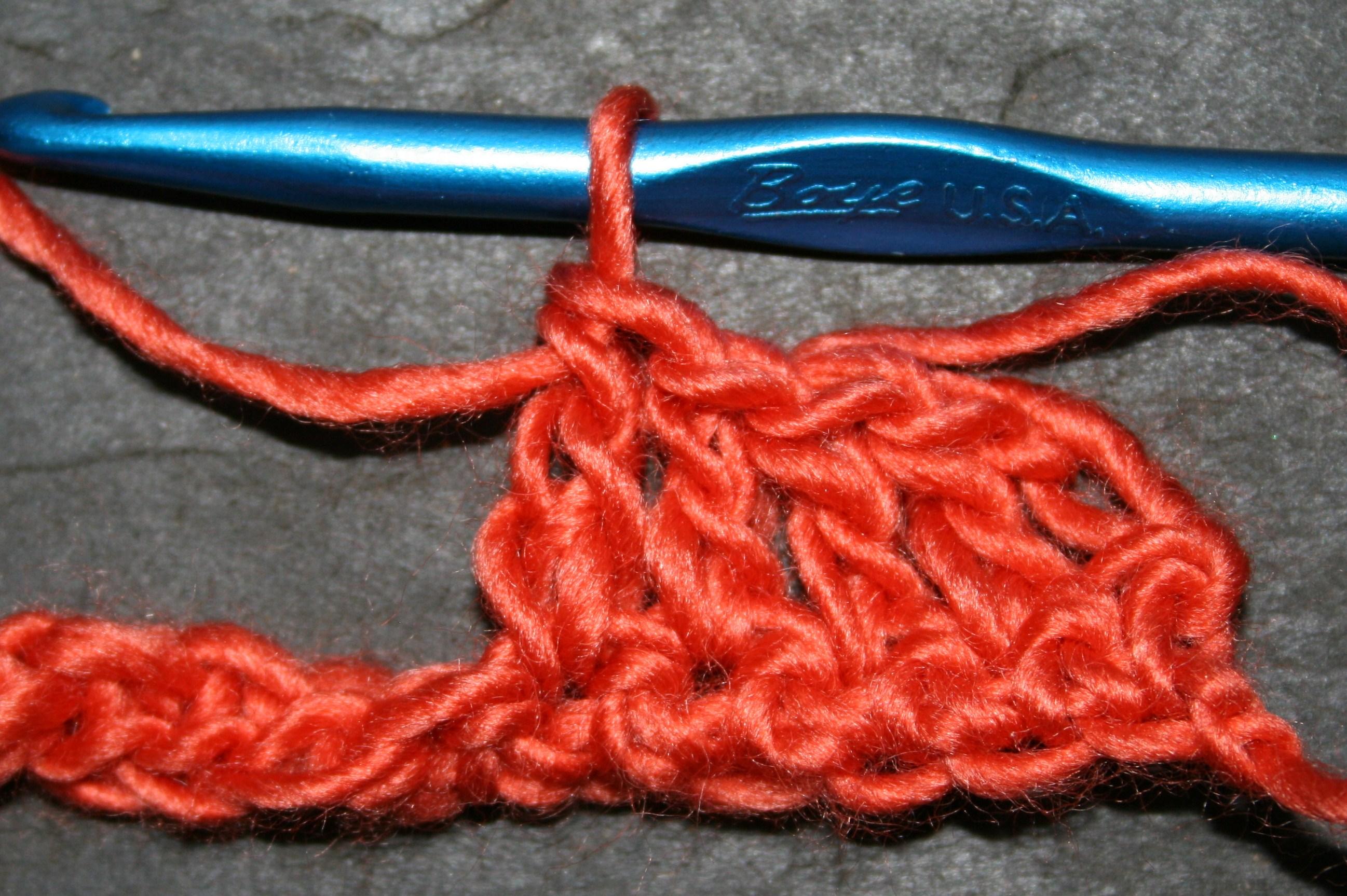
By simply creating a chain stitch at the very base of the typical stitch you create this extra height. Another interesting creation with this stitch is that it creates a fabric that is a little more “stretchy” than the traditional stitch, while giving a very similar appearance. I often mix this stitches in items that I create in a free form style to allow for smoother transition of styles, and I also use then mixed with more traditional stitches to create fabrics with subtle texture changes.

IMG_6328.1

See the subtle difference between the stitch on the left and the one adjacent, the bottom of the stitch as a little more height before the first bar in the post

I hope this clears up any mysteries about this simple adjustments to everyday stitches, that can easily be added to you foundation of stitch knowledge.

Hot Weather Crochet…It Keeps Me Cool

ScannedImageAs the hot days of summer arise I had a question asked of me; “How can you crochet in this heat?” I actually find it quite easy, and when I look back over time I think I understand some of the reason for this.
When I was in my youth, summer was when I had my free time, unlike some of the childhoods of today, mine was a time of being at home, playing outside. There was no differentiating the days of the week, Monday was just like Friday which was just like Wednesday, there were no camps or classes, just finding a way to play with my brother and sister, without fighting and getting on mom’s nerves. So during this time creativity had a time to bloom and picking up a book and working a project was readily done.Rising Temperature
As I grew older and the relaxing days of no responsibility and laid back summers waned, I was crocheting in my down time to actually stay cool. I know that thinking of temperatures at or near 100°F doesn’t sound like a time when picking up a skein of yarn sounds like a cooling off event, but in my home, which has never been comprised of air conditioning, sitting in front of a fan is the greatest pleasure. It is this sitting still, yet being productive that crochet has allowed me, sit right in front of the fan and work away. In actuality most of my leisure crochet has been created in the hottest months of the year. My hands have kept busy while my hands keep creating. In most recent times the yarn in my hands have been bamboos and silks, then just seem to speak “cool temperature”, or maybe even a cotton. This is just a little mental trip I think, but it does the trick and seems to reduce the temperature.
Okay so I might just reverse this argument for reasons way I crochet in the winter, sitting by the fire to stay warm, but it is too hot outside to think of the fire, I just want to think of sitting by the fan, so I guess I will find some crochet and keep cool.

Timeless Crochet?

ScannedImageI have always heard of the “trends in fashion” and how things become “dated”. I will say that I believed this for most of my life. However lately I have been cleaning some closets and finding some “lost” projects, and when reflecting on the time they have been tucked away I find that they may be a little timeless.
This is not to say that you cannot date crochet pieces; usually this is most accurate to date the material used. The composition of some yarns date them better then the stitches used to put them together, but I do not know if the style of crochet really goes out of fashion.

IMG_6312.1

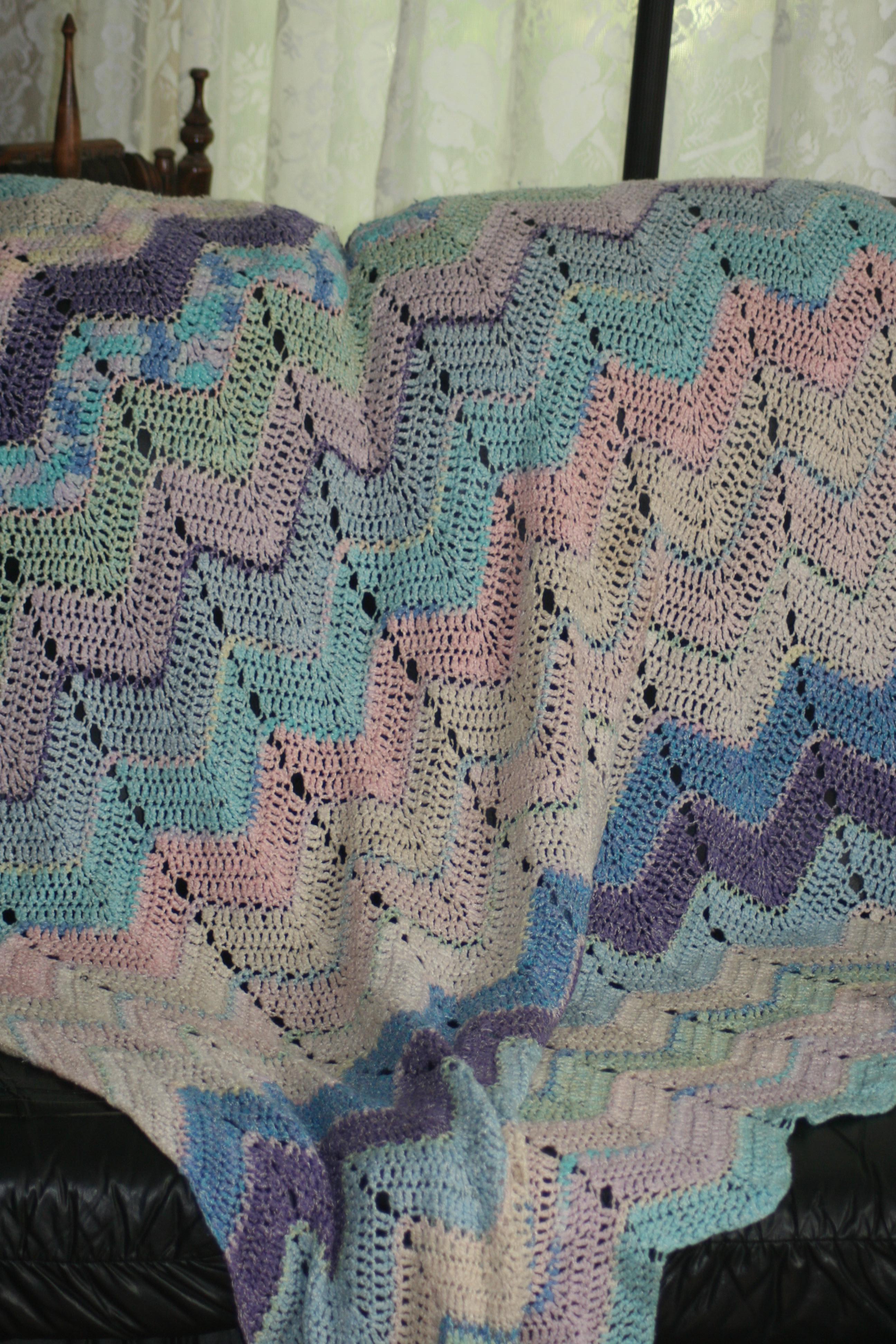
A scrap afghan created with left over baby yarn

A simple reference for this is for me is baby afghans. Since I have been crocheting for most of my life, I have created afghans for the new additions to a family since high school. I have one “go-to” pattern that I have made with the same yarn for nearly twenty years (It is Precious In Pink by Cathy Hardy from the book Afghans For All Seasons by Leisure Arts and Oxmoor House, made with Bernats Baby Coordinates Yarn). I can probably work the pattern in my sleep, and often can complete it in less than a day and a half. The size of the skein has changed since I started making it, it use to take me only 2 skeins and a dab of a third (only enough to finish the last row), while now it takes nearly the entire third skein. But that is a side effect of working a pattern so long. Why I mention this, is one day about 10 years ago, I worked up a full size afghan in a chevron pattern from the remaining “third skeins” of yarn from the baby afghans. At the time, I was able to identify 35 different skeins used, and I know that not every afghan was accounted for. The number has only increased since then, but the effect the afghan has on the recipient is the same; gratitude, and genuine warmth. Some of those “babies” are having children of their own, but the same blanket brings the same response; a proof of timeless.

IMG_6311.1

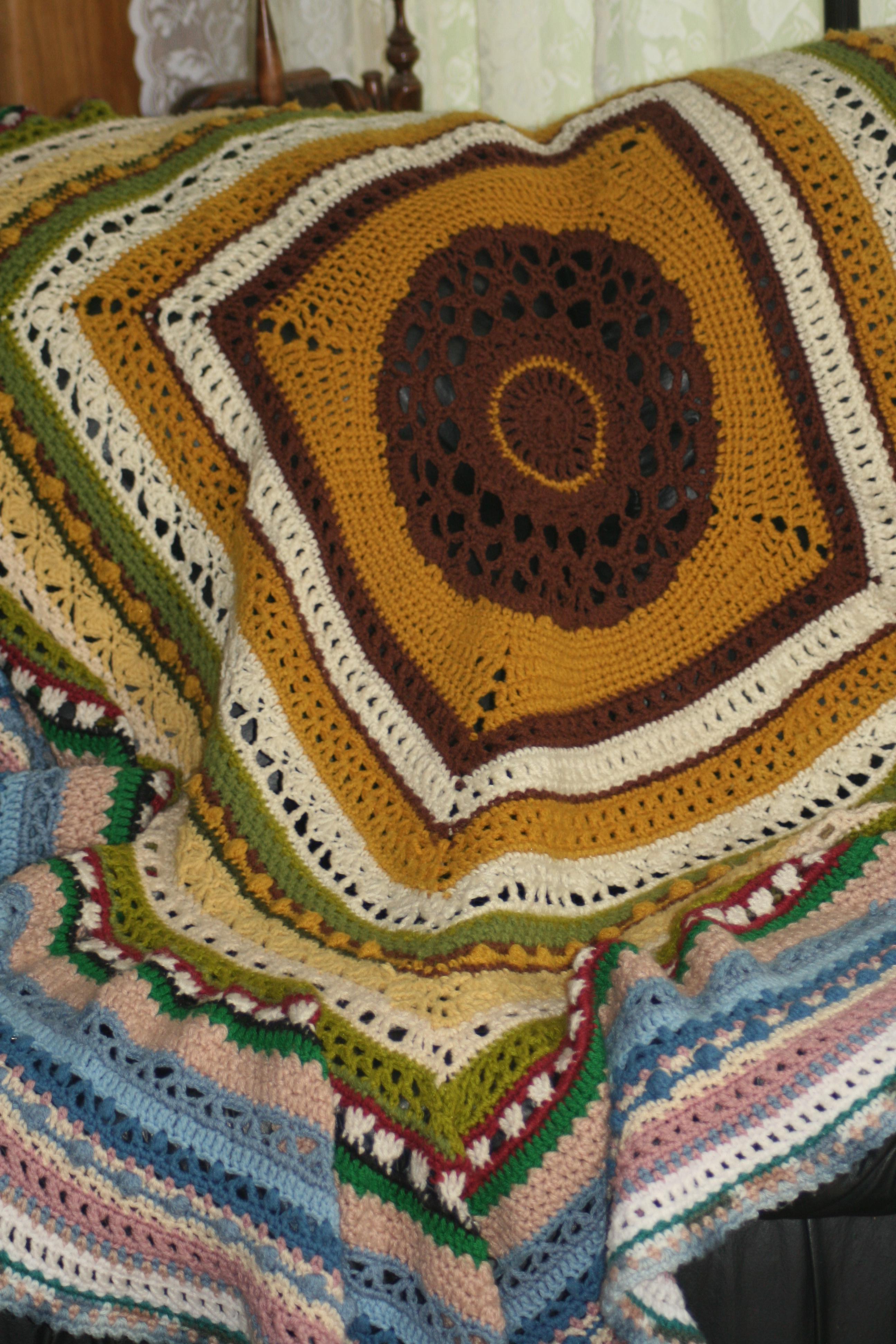
My “Pneumonia Afghan”

Another project that speaks of me of the passage of time, or the lack of recognizing it, is my “pneumonia afghan” (Actually the pattern is Stitch Sampler by Jean Holzman from the book Afghans For All Seasons by Leisure Arts and Oxmoor House). It is so named by me due to the illness I had when finally finishing it (I was sick enough with walking pneumonia that the doctor only gave me 2 options: two weeks of bed rest with heavy antibiotics, or hospitalization….since I lacked health insurance I opted for the former) . To pass the time I completed this afghan with scraps I had, I have since worked this pattern many times as well, almost always with scraps. This afghan is still in my home, after, again nearly twenty years. The only reason I can date it is due to my illness, the stitch work itself is still as recognizable and noteworthy as when I first made it.
Okay, so maybe crochet is not timeless, but in my hands I do not see the time, I can only date it from the context it is worked in. So, if a piece of hand work can still be honored in your home for a quarter of a century (heck, I know people that treasure handiwork from their grandmothers, and it looks appropriate in their home as well), then maybe it is a timeless treasure. Some may only think of crochet, from the 1970’s and think that it is only representative of stiff yarns and granny squares, but if you really look around you see that it does not really have a date, not in most cases.