Knit It! Crochet It! The Converse Shawl

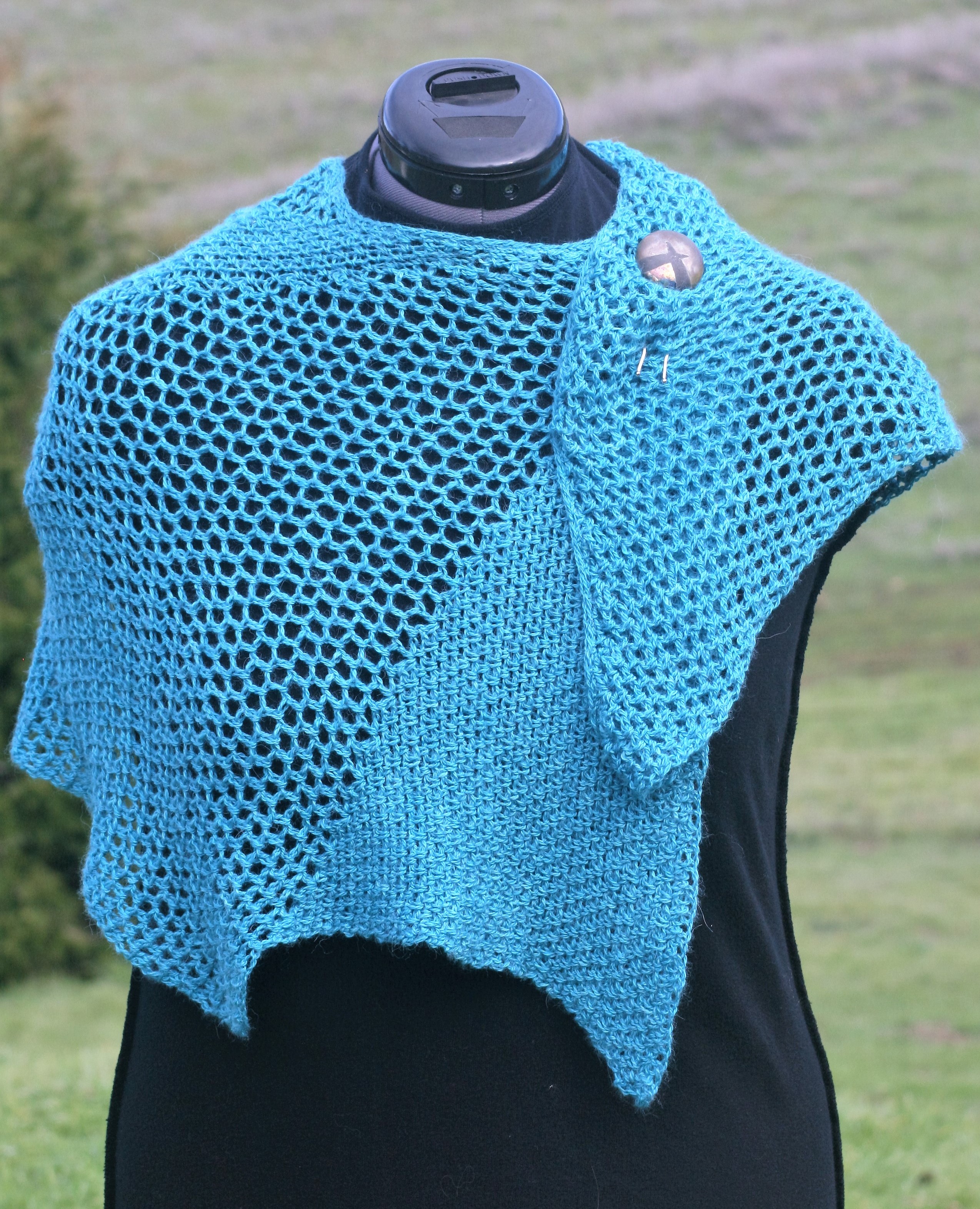
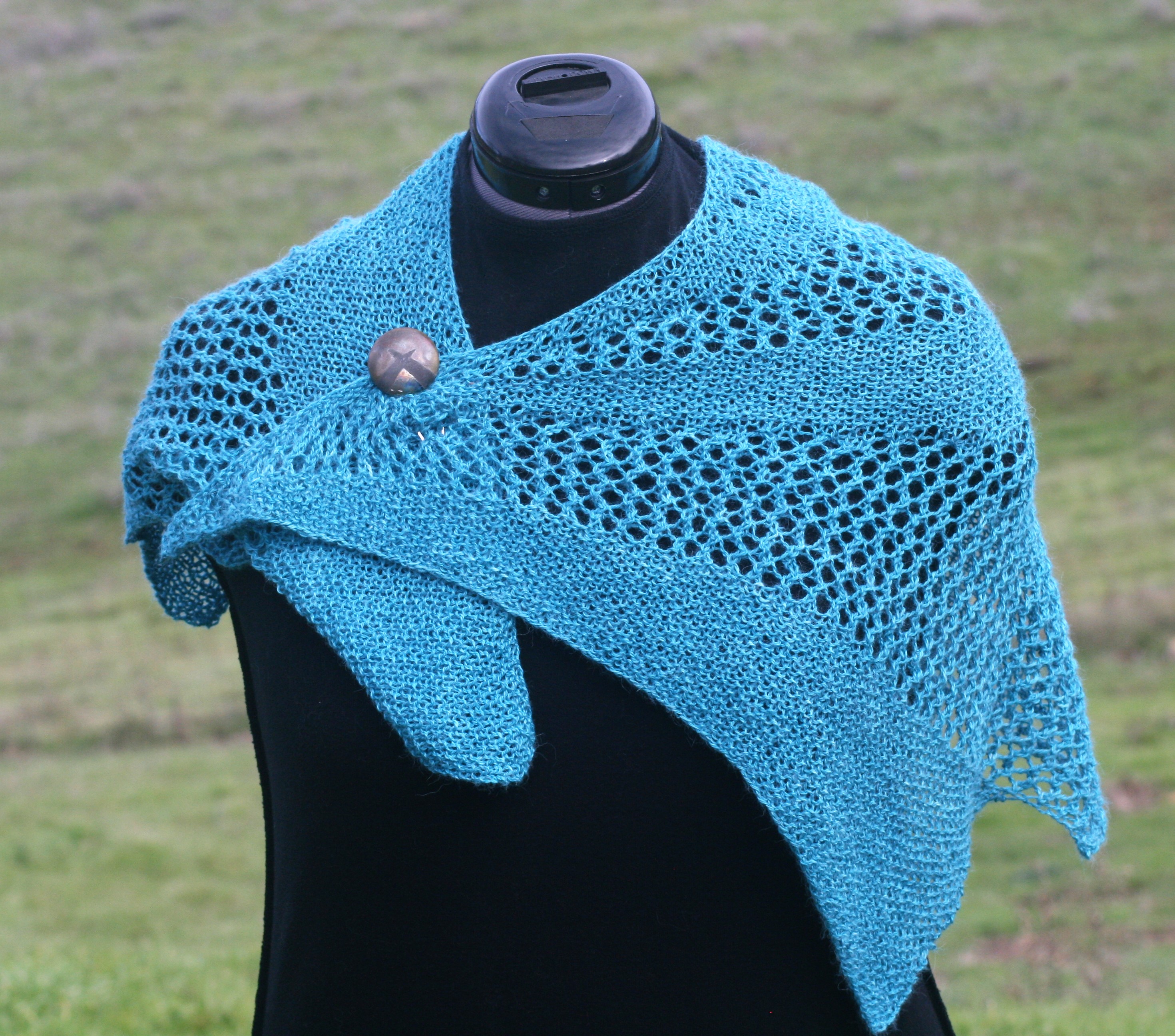
My latest design, or should I say designs, once again grew out of the challenge of a one skein project worked in both knit and crochet. Unlike some of my other knit/crochet designs, this one does not as closely resemble each other.
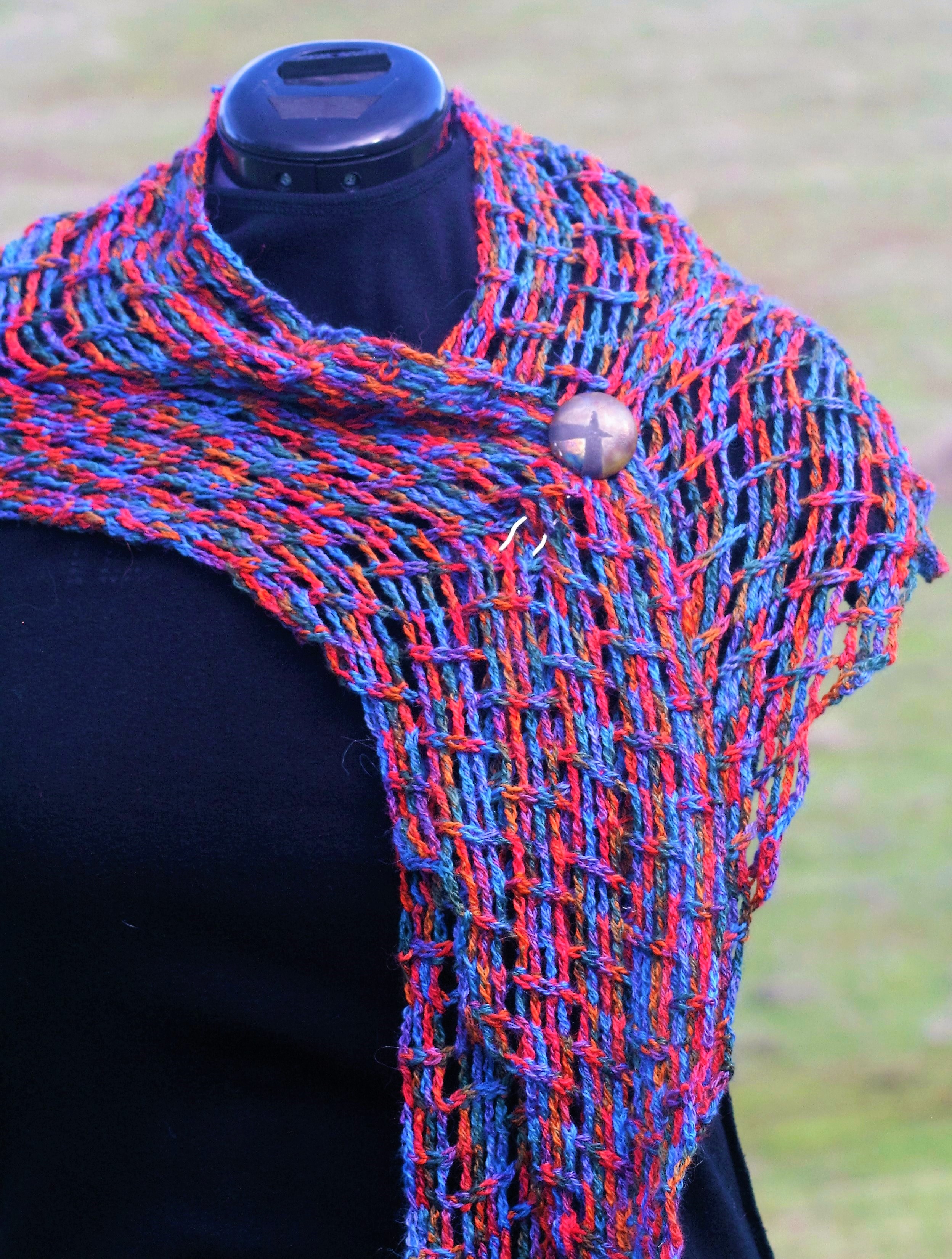
Converse Shawl by Linda Dean www.lindadeancrochet.com

Converse Shawl Crochet version

The visual effect of this design is really more about how the color moves around and comes together. Not really like color pooling, but more like paint on an artist canvas. So Converse Shawl is the latest addition to my design collection. (1 pattern and you get both the knit and the crochet version).

The crochet version of Converse is worked from one side to the other, or otherwise known as vertically, while the knit version is worked basically bottom to top or horizontally. Yet they both have a line of color that then runs a vertically creating this artist affect. I feel like it is this slight line, or visual break that really makes everything come together.
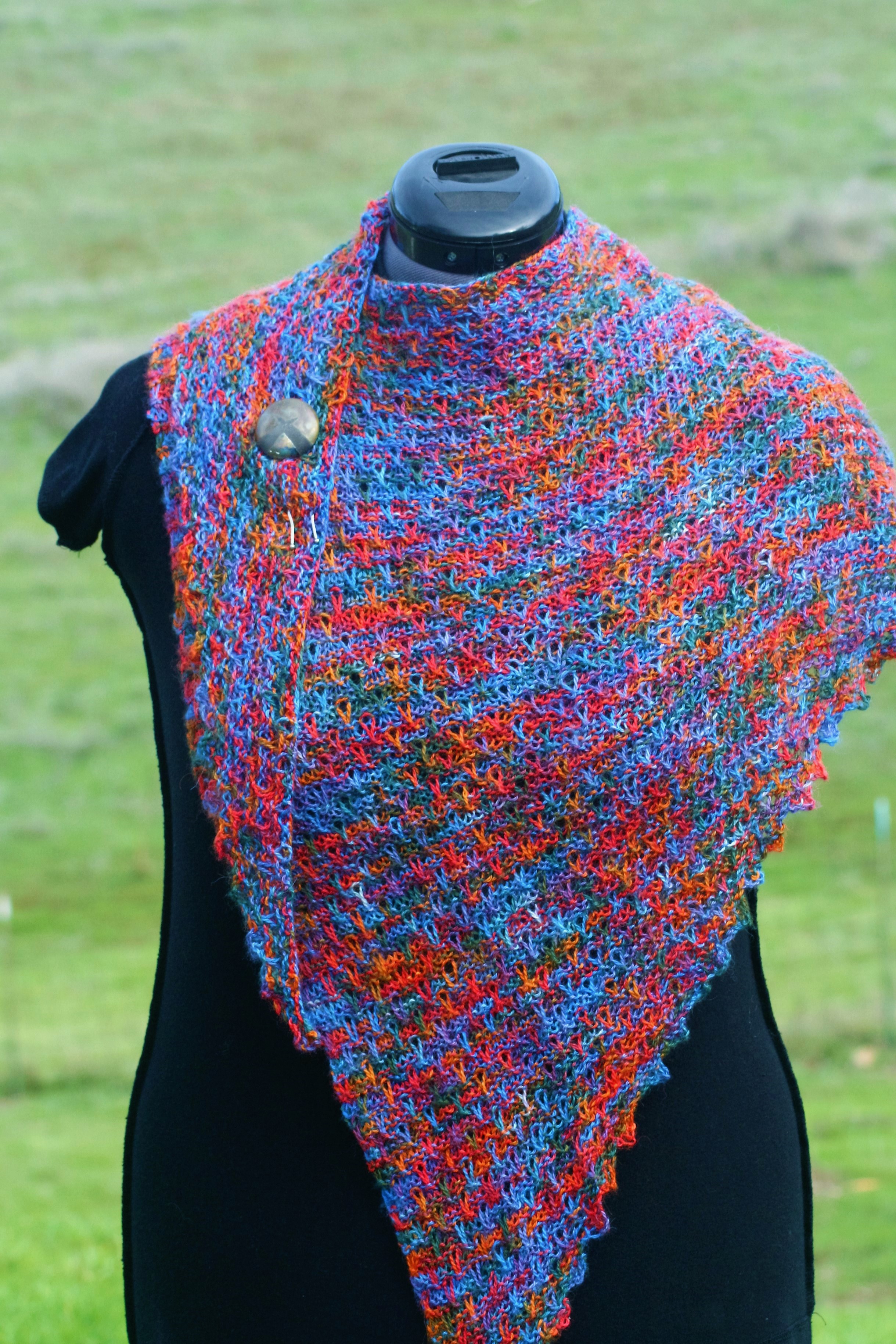
Converse Shawl by Linda Dean www.lindadeancrochet.com

Converse Shawl knit version

The skills for working either of these shawls is not advanced. The crochet version utilizes post stitches, and works what is known to many as a basket weave pattern. It features tall stiches to give an airy feel that can mimic a woven inspiration. The knit version features drop stitches that are carried over a couple of simple rows allowing the color to “drip” down.

I cannot take full credit for this design. I worked with Lisa Souza, of Lisa Souza Dyeworks to create the knit effect as a compliment to the crochet. Often I work a crochet design from the perspective of recreating a knit, this time I created the crochet and the structural technique I had for the knit would not come together properly. Lisa helped me to create a knit version that was structurally sound while still sharing the same vision of the crochet version.

I have to admit thought, that this design looks great with the featured shawl pin from Lickin Flames. It could be that hand created items, like the hand dyed yarns of Lisa Souza (of which this design is 1 skein of Baby Alpaca Silk Petite in color way Jacob’s Coat), and the hand created shawl pins by Jim Atchinson of Lickin Flames just happen to enhance each other. If that is the case, great! It makes designing so much easier when the materials really work together.
A Bit of Tencel to Join Merino

I am sometimes surprised at the “ingredients” I find making up my yarn. When I began crocheting I treated all yarn as if they were all the same, then as I began to get a bit more serious about working in crochet for a living I found that I needed a better understanding of my material in order to make my designs a bit more practical, and understand how my materials could affect the outcome.

Over the last several years I have taken in vast amount of study and research in yarn and the fibers that create them, yet there are still times that I pick up a skein admire its feel, admire its texture and then look at the label and I am a bit taken aback as to its contents.

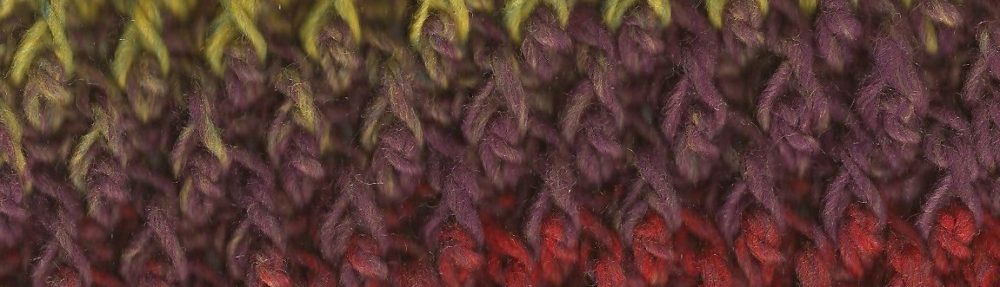
Valley Yarns Coltrain www.lindadeancrochet.com

Valley Yarns Coltrain

One such yarn is Valley Yarns Colrain. It is a simple soft yarn that has a slight sheen, which lead me to think that the label would look much like most yarns on the market a wool mixed possibly mixed with an acrylic, so I was a little taken aback when it stated “50% Merino/50% Tencel™”.  The Merino did not surprise me, it is a well-known wool that is known for its softness and warmth. As a drawback it is also known for its great tendency to felt (that is shrink), but it is readily found in the markets and a fiber that most esteem to be like.

It was the Tencel™ that caused me to give a bit of a pause. It is a synthetic material that is created from wood pulp, as is rayon. Tencel™, as you may have noticed is a trademarked name, this is because the process which creates this material is trademarked, so all I really know about how it is created is that the base is wood pulp that uses a dry jet-wet spinning method to create this filament.

The properties of Tencel™ are vast.  It is recognized as being soft, as well as strong (even strong when wet). It is often cool to the touch and feels silky, while being able to wick moisture from the body. Like most synthetic materials it can also be created to imitate many other textiles and textures, in this case suede, leather or silk.

The combination of these 2 materials creates a pretty stable yarn. The Tencel™ creates the smooth feel while the Merino causes for the warmth. Each4 ply  ball is 50 grams and 109 yards, so one skein may create a hat or something small, so consider picking up a few extra balls for almost any project.

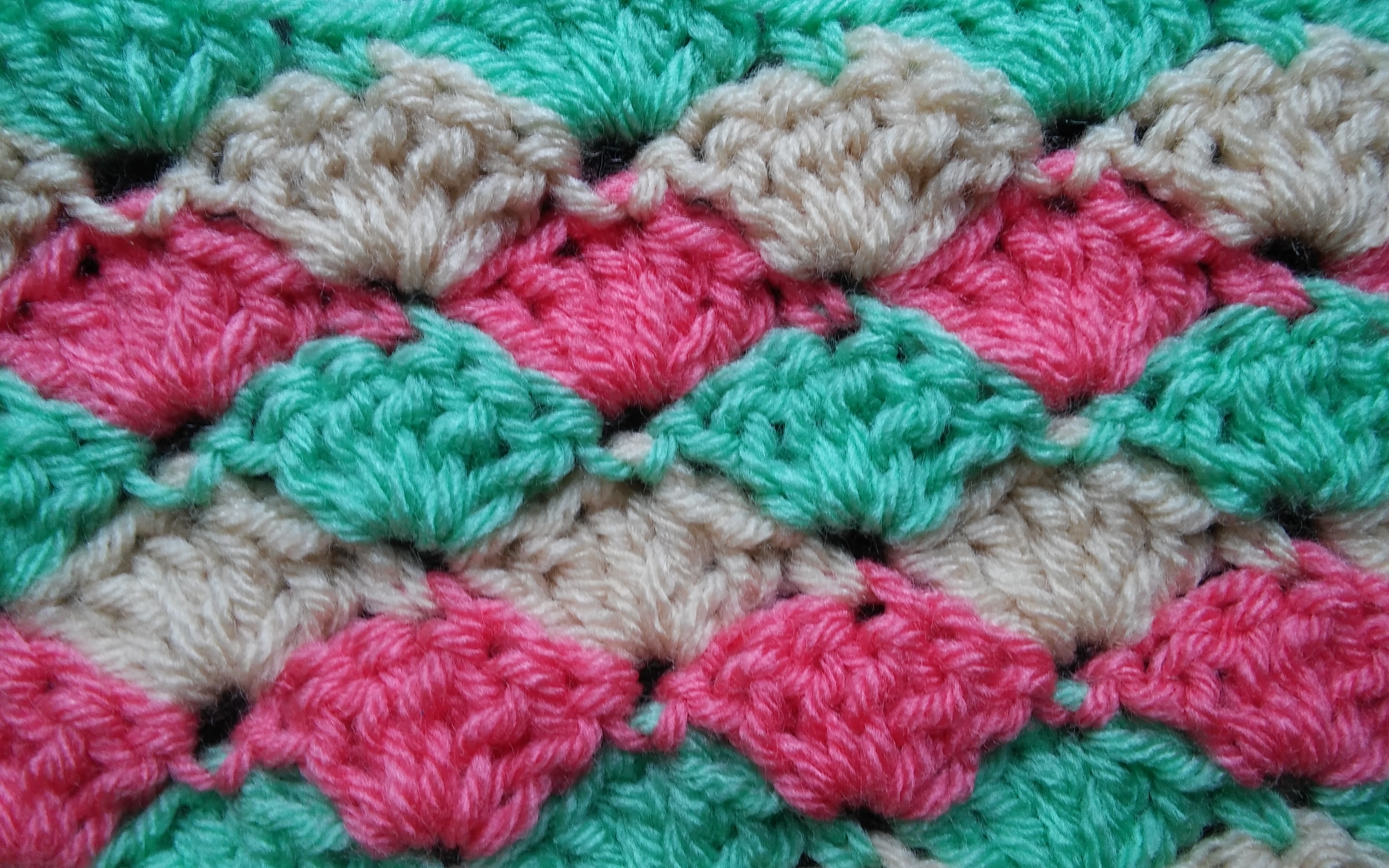
Staggered Shells-Crochet for a Difference

Some crochet stitches appear more difficult then they may actually be, Staggered Shells I believe is one of these. This stitch is essentially comprised of single crochets worked between shells that are made up of five double crochets.

New crocheters sometimes do not realize that what creates a different look may simply be where you place a stitch, and that you can work more than one stitch in a location. However like all crochet stitches the name “shell” doesn’t tell you the entire story. “Shell” essentially means that there are a number of stitches worked in the same location, without looking at the Special Stitches section of a pattern there is no way to fully understand how this stitch is worked, what number of stitches, or which stitch for that matter is worked. For this shell pattern I have used five double crochets worked in the same stitch.

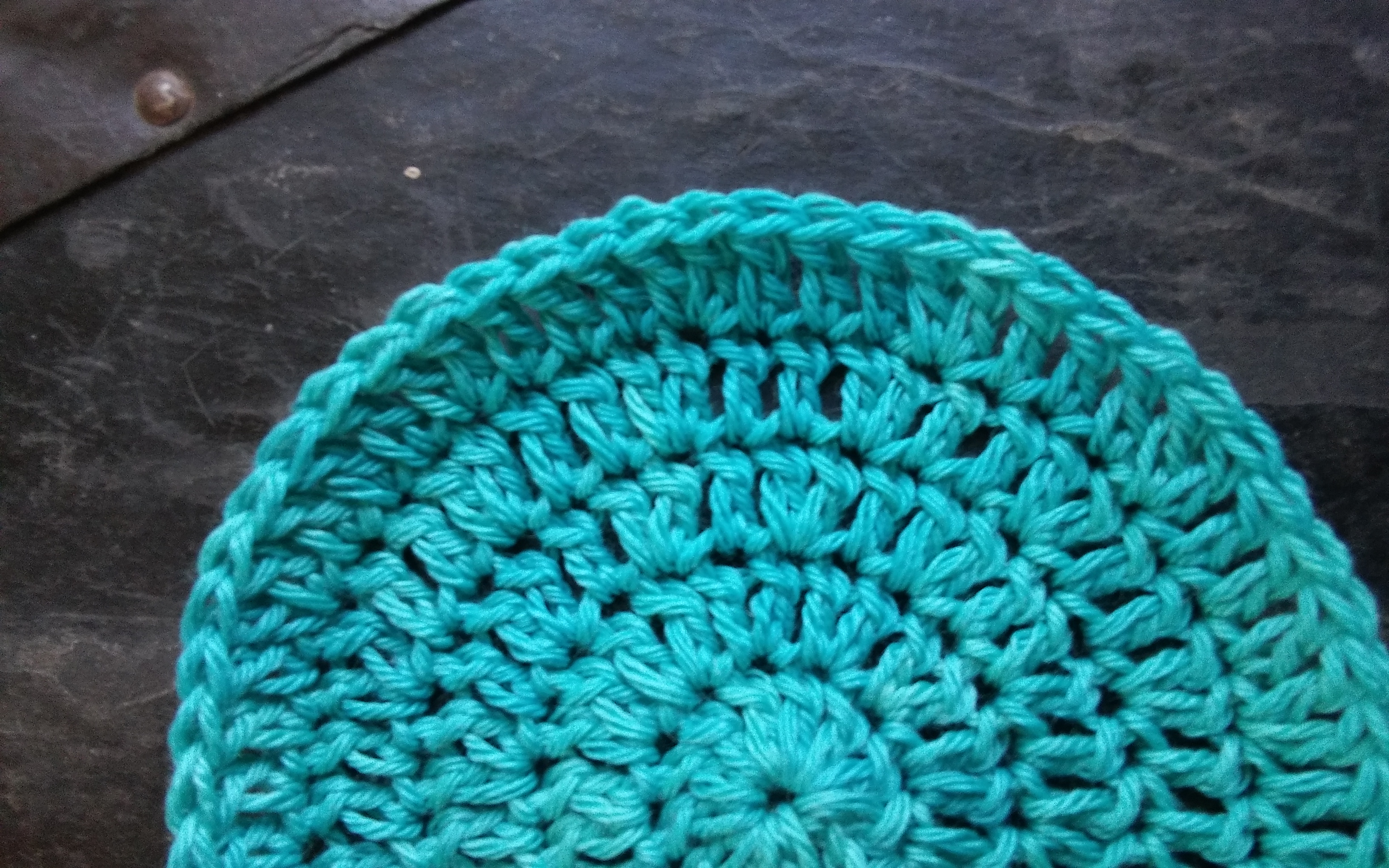
Staggered Shells www.lindadeancrochet.com

Staggered Shells, changing color every row.

I have written this stitch pattern out in an untraditional method to attempt to help in understand how to better read your stitches. In my teaching I have found that crochet can be very forgiving if you have learned how to read your work and not worry so much about counts. Seeing the pattern can free up your work (at the end of this post the stitch pattern is written in a traditional format).

Row 1: To begin you create a chain that is a multiple of 5, then add 2 more chains. Single crochet in the second chain from the hook, [skip the next 2 chains, work a shell (5 double crochets) in the next chain, skip the next 2 chains, single crochet in the next chain] repeating everything in the [ ] across, turn.

Row 2: Chain 3, 2 double crochet in the same stitch as the beginning chain, this creates a half shell at the edge of the fabric, work a single crochet in the center double crochet of the next shell, [then work a shell in the next single crochet (between shells), work a single crochet in the center double crochet of next shell] repeat everything in the [ ] until you reach the top of the last shell, after working the single crochet in the top of the last shell, work 3 double crochets in the last single crochet stitch (this is another half shell at the other edge of the work, turn.

Row 3: Chain 1, single crochet in the same stitch, [shell in the next single crochet, single crochet in the center double crochet of the next shell] repeat in the [ ] across, turn.

Repeat Rows 2 & 3 until it is the desired length.

I always like to practice new stitches and feel like I am accomplishing something at the same time, so I find places that may be interested in receiving a handmade blanket donation, you may want to consider reaching out to your local fire station and see if they maybe interested in receiving small afgahns that they can give to children or others that may be in the need of some extra comfort during a time of trauma. Not all trauma is physical and sometimes wrapping yourself in a blanket, or even having one draped over your shoulders can add comfort during difficult times.

The traditional pattern:

Shell: 5 dc in same st

Ch a multilple of 5 +2

Row 1: sc in 2nd ch from hook, [sk 2 chs, shell, sk 2 chs, sc] repeat across, turn.

Row 2: Ch 3, 2 dc in same st, sk 2 dc, sc in next dc, [shell in next sc, sk 2 dc, sc in next dc] repeat across, 3 dc in last sc, turn.

Row 3: Ch 1, sc in same st, [shell in next sc, sk 2 dc, sc in next dc] repeat across, turn.

Repeat Row 2 & 3 until desired length.

Knit It! Crochet It! The Dialog Shawl

Creating a design that is both knit and crochet has its own set of challenges, one mainly being that I am not an expert knitter. However I have created a design with the help of a couple of friends that I think is pretty impressive.

Dialog Crochet Shawl by Linda Dean www.lindadeancrochet.com

Dialog Shawl, Crochet version

The Dialog Shawl is created with short rows with alternating panels of a solid and lace fabric. It is a fun pattern to work up as it uses basic stitches but still keeps you mentally engaged, but not so much as to cause stress. The only difference between the knit and crochet version is that the panels of the crochet version are bigger and thus there are only 4 triangles instead of the 6 that are found in the knit version.

I love that this is a one skein project. It is featured in Baby Alpaca Silk Petite Yarn from Lisa Souza Dyeworks, and I definitely draw to the color of Peacock, but I think this design can easily worked up in various colors, and may look distinctly different and fabulous in a variegated yarn. This yarn is really awesome, and I have used it for several projects over the years. It is a light/fine weight yarn that has a beautiful hand and is a pleasure to work. I also feature a shawl pin with this design, it was after all part of the inspiration for the design, and it is actually a Shawl Button from Lickin Flames. Each Shawl Button is handmade, beautiful, and completely unique. The one that inspired me was a Raku button in Bronze with a shiny black accent.

Dialog Knit Shawl by Linda Dean wwww.lindadeancrochet.com

Dialog Shawl, Knit version

I cannot say that I have ever been particularly inspired to create a design from a pin or button before, usually I attempt to create a design that can be worn independently of such items. However, recently I have come to see how this piece of art can really had to the overall effect of my crochet (or in part of this design, knit). It is like a subtle accent point that helps add to the overall effect, bringing everything to a new level.

Overall I am completely thrilled with this design, and I hope you enjoy it too. As is the case with all of my knit/crochet designs one pattern contains both versions, so if you are bi-stitchual you can work both versions, and if you prefer one craft over the other you have it right before you.

Exotic Fibers, Yak by Bijou Basin Ranch….A Fine Yarn

It is amazing how many different fibers can create yarn. When I decided to start writing about features and effects of various yarns, I don’t think I was fully aware how great the diversity was. One of these unique fibers is yak.

Bijou Basin Ranch, Bijou Spun Himalayan Trail yarn has one of the highest quality of yak down that I have found in a yarn. It is comprised of 75% Yak Down, and 25% Superfine Merino, and I can testify that it feels like luxury. The skein is 2oz in weight with 200 yards of yarn, making it a fine weight yarn (also recognized as a #2 weight).

Himalayan Trail yarn www.lindadeancrochet.com

Bijou Basin Ranch Himalayan Trail yarn….created with Yak Down

Yak is probably not a fiber that most crocheters have had the pleasure to work with, one of these reasons is that it is not readily available everywhere, and the other is it usually falls into a price point that discourages some. Yak is a very soft fiber, it has a fine micron count, meaning that the individual fibers are very thin. The finer the micron count the softer the fiber. This fiber is not only soft, it is warm. If there is any doubt to its warmth, this fiber is the undercoat of a large mammal that lives in the high country of the Himalayan Mountains, where weather is cold and draining. This is the fiber that keeps these animals warm.

Collection of Yak fibers is typically labor intensive, as it is usually collected after it is shed from the animal, these animals are not sheared, but in some cases maybe combed to collect the shed fibers. This is one of the primary reasons for the cost factor of the yarn, the supply of yak is not easy to obtain and thus not overly plentiful.

This fiber is then paired with just a bit of superfine Merino, another fiber of fine micron count, this helps to add a bit more stability to the overall yarn while still keeping with the very soft and almost pillowy feel of the yarn. The four plies of this yarn are smooth and consistent resulting in a yarn with very little halo, and a much defined smooth tubular yarn that enables great stitch definition.

I think this yummy yarn would look excellent in some cables, or texture stitches, as well as great with defined open work. One skein can easily create a hat or scarf, possibly even a short pair of fingerless gloves. If you have the opportunity to treat yourself a bit, do not hesitate to try Himalayan Trail, you will be glad you did.