Differing Yarn Weights…what are they really…

ScannedImageI was asked a question the other day, of something I kind of take for granted; yarn weights. You hear a lot about different yarn weights, and as a crocheter I have always had a grasp of the traditional worsted (medium) weight acrylic yarns, but when you hear phrases like “I need to get some DK”, or “ I really enjoy this fingering”, there is a smile and a nod, but not a full appreciation of the statement.

So I will address my perspective of yarn weights (note; this is not about threads, that is a whole different discussion, but the same conclusion applies). The Craft Yarn Council of America has been attempting to help standardize many things in the yarn industry for consumers, including yarn weights. But that doesn’t mean that all worsted weights are created equal.

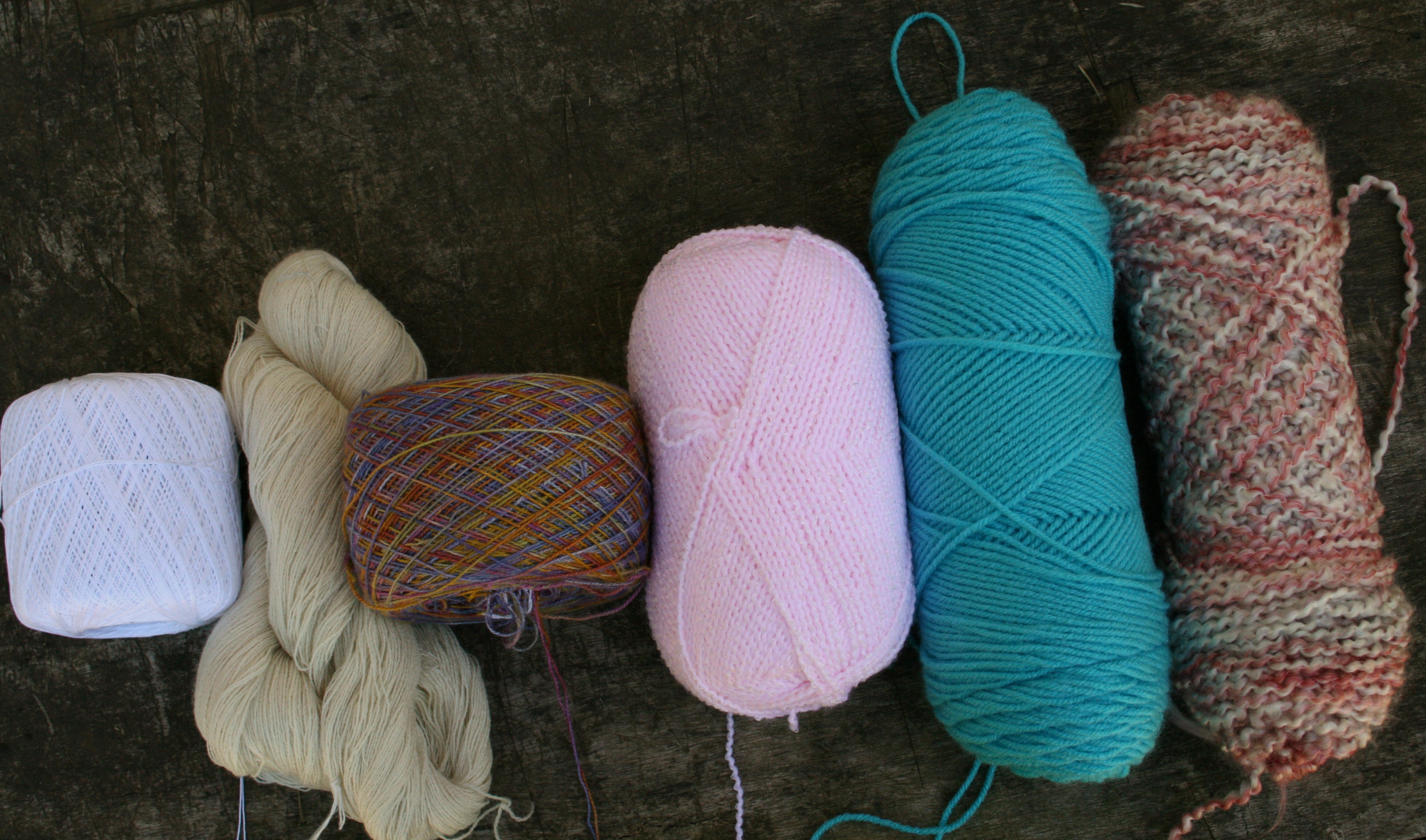
You have probably noticed numbers listed on the skeins of many commercial yarns, these are on a gradient scale with 0 being thinnest and 6 (or greater) being thickest.

So for the 0, listing this is categorized as Lace weight yarn, but has gone by other names such as Fingering, and 10 count crochet thread. While 1 is categorized as Super Fine, and has gone by the name of Sock, Fingering, and Baby. Not to be confused with 2, known as Fine, also called Sport or Baby. Confused yet? Basically the name terms have a more loose interpretation of what they really are. The number scale is devised of by using yarns with hooks that given an even drape and measuring the number of double crochet stitches over 4 inches (just like a swatch, that we are suppose to do before every project…and sometimes realize later that this is good advise). The greater the number of stitches, the finer the yarn (You can find the complete table and all the hooks used, and stitch range used for each category here).
IMG_5620

Yarn weights, 0 to 5- lace to chunky

This may work great when shopping at larger box stores, but not always helpful when buying yarn at some smaller local yarn shops or at larger events such as Stitches, or other venues that small distributors, yarn dyers, and personal yarn spinners. As they may not use the numbering standards and instead using the other terms; Fingering, Sock, Baby, Sport, DK, Light Worsted, Worsted, Afghan, Chunky, Craft, and Bulky (At these large events I don’t usually see a lot of the heavier weights, often it is hard to find what I would consider a worsted weight yarn), or simply give you a number of stitches per inch on certain size knitting needles (not really helpful to someone that doesn’t knit). Often they are using another unit of measure to determine the classification they are using such as the number of twists per inch in a length of yarn (the higher the number of twists the finer the yarn), or the numbers of yards in a pound (meter in a gram) (the more yards per pound the finer the yarn), so don’t feel intimidated to ask. I know you may feel like you will get slighted as a crocheter by knitters for asking, but if the booth wants to really sell yarn they will treat you like the valued customer you are.

A good mental note to use is to close your eyes and gently rub the strand between your fingers, let your instincts guide you. If you were to pick up a hook just now and crochet what hook would you pick up? The other thing to remember, if you like it, you’ll find a way to make it work. The classification only really matters if you want to substitute exactly, but let’s be honest, how often do we follow the patterns to a tee? (Okay I am not suggesting that you can substitute a lace weight yarn for a chunky and not have some difficulties, but reasonably close and you can make it work). We know how to make it our own, even if we don’t feel confident in explaining this. Everyone crochets differently, no two are the same, and we always make adjustments for this, yarn weight is no different.

If you have not left your comfort zone and have not attempted some finer weight yarns, what are you waiting for? There are many beautiful yarns that are finer weight that you can have fun with, remember ultimately you set the rules.
The Tentacle Stitch and the Sideways Skirt

Untitled

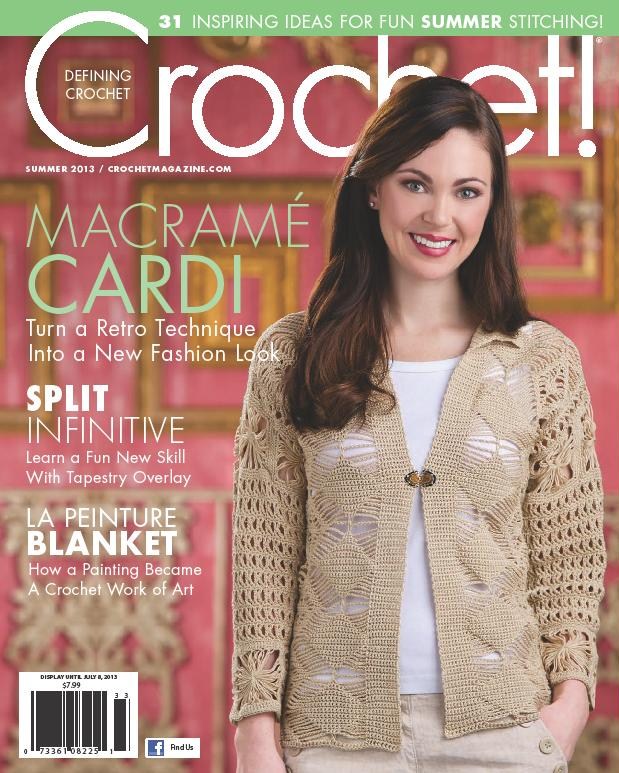
Crochet! Magazine Summer 2013- photo thanks of Annie’s

ScannedImageAmazing how time can come and go so fast. It seems like only last month that I was writing up my article on the Tentacle stitch that is featured in the current issue of Crochet! Magazine.


I know the name might sound funny, but to me it was reminiscent of an octopus arm reaching out to the rows not yet created. Some might

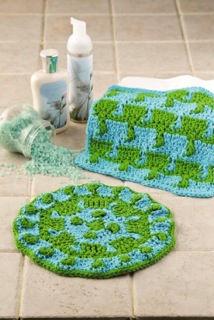
Tentacle Stitch Spa Cloths

Tentacle Stitch Spa Cloths, photo courtesy of Annie’s


wonder how I ever can up with this idea, well ideas come in the most unusual ways. This one came to me while looking at the color patterns on cow hides ( okay, I am a country girl), nature very rarely has color in straight lines, they often curve and bend, and I was envisioning ways that I could create these bends, and thus the tentacle stitch was created, you never know what you find when you play. By working the color over rows already created, like in Mosaic crochet styles I didn’t like the thickness, and working in same rows color change like intarsia or tapestry crochet I didn’t feel free enough to play since I had to plan the stitches by grid, so by free-forming I came up with this technique (and had some fun with it too).

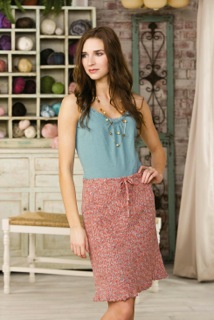
Sideways Skirt_2

Sideways Skirt, photo courtesy of Annie’s


In this issue I also have a Sideways Skirt. This skirt looks straight forward, until you realized that is worked entirely on the diagonal. The reason for this….I really liked the way it fit. When looking at construction I have began to wonder why are all the seams for everything in the same places? Crochet lends itself well to designs that do not need to be seamed or at least only minimally. I felt that placing seams on the sides of this skirt would cause it not to drape as softly over the hip (nothing like an addition of a seam allowance to cause a pucker that makes my hips look bigger then they are), I like a nice smooth feel when I where a skirt, it feels womanly to me. So I designed this skirt completely on the diagonal so that the one seam runs across the body and blends in better. Also the shaping is done by changing hook sizes ( I know it can seem a little tedious to change hook sizes in a row, but it allows for a smaller waist and a flared hem, with very little effort).

Anyway, there are some thoughts on the latest designs I have out in the world, and I hope you are inspired to play a little too.

Encouraging Crochet with a little Courage

ScannedImageIt is that time of year again, when local communities have a celebration of our agricultural roots. I am referring to county, state and various topical festivals and fairs. Often these gatherings highlight livestock, baked goods, blue ribbons and carnivals.Ferris Wheel Glowing at Twilight But few people actually participate in the entry of these events. I really don’t need any ribbons (and there are many talent artisans in my community, so I may not see any), I enjoy the crochet I do; but I enter some pieces in a hope to inspire others with the art of crochet.

Granted this can be difficult, there is a lot of insecurity in the fiber arts. We artists are never confident in our work, believing that anyone can do what we do, and it is really not that special. We constantly down play are skills; I don’t know if it is that we are being polite and wanting to put our work above someone else’s, or if it is the idea that because I learned this skill from….(insert blank, mom, grandmother, grandfather, neighbor lady, friend, ect.) that we don’t know if we are actually proficient in the skill. Well to this I am a strong believer that there is no right or wrong in crochet (or any art/hobby medium for that matter). You may not do it the same way as another person, but that is what makes it yours. No brush stroke on a master piece is identical to another, but that is what makes it a master piece.

Dean Ranch

A Charolais calf at Dean Ranch in California

It is one thing to duplicate a written pattern exactly, and execute each stitch with such precision that the no error can be found; but in honesty, this is a human, free-formish kind of art, and mistakes give character. Now fairs and festivals may judge against others work, and look for precision, but that should never discourage you from entering your work for review. There are some positives to this; some allow the public to be present during the judging- with these you receive immediate feedback about your work, you learn to look at your work more objectively and find ways that you can improve your skills. Another positive is that you encourage others to learn this (or other) hobbies, you help others gain appreciation for the skill, and help yourself to learn the ability to take a compliment.

Find Creativity! Play!

ScannedImageIt is funny, how you don’t necessarily get inspiration from your own work. You may get ideas that you build into something else, but things that make you see the world differently, at least for me, comes from the work of others.

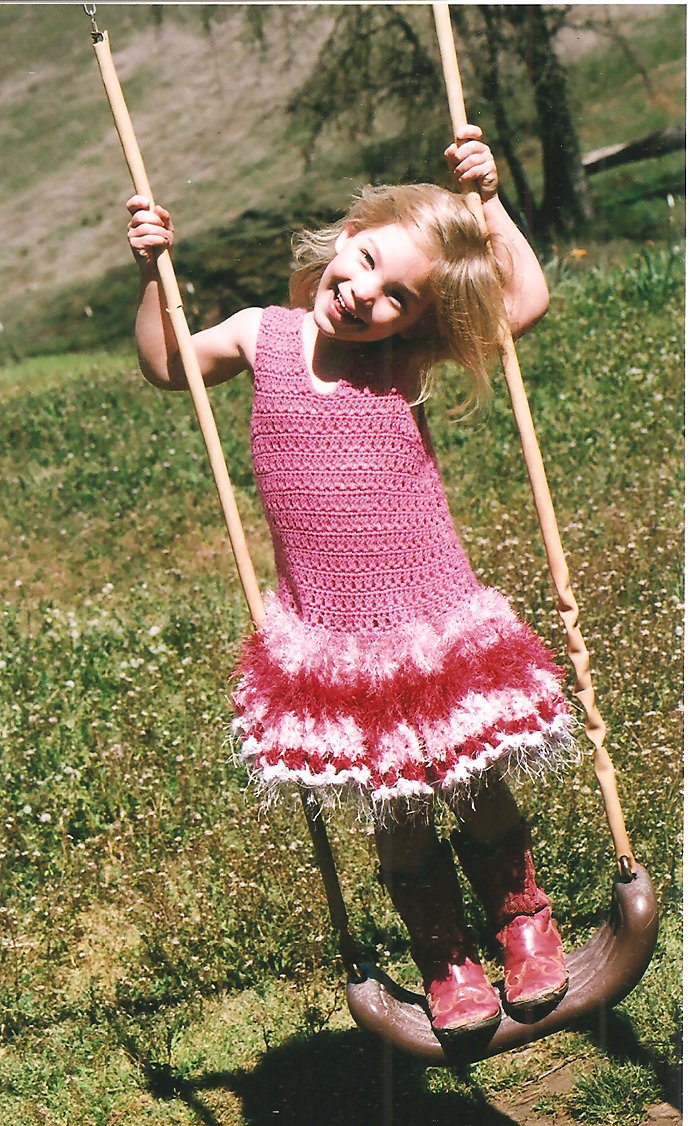
ScannedImage-10

A dress I created for my daughter. I won all the yarn in a raffle drawing.

The other day I was with a friend, and they told me that they never have been creative; they only followed the pattern before them. This got me thinking, because I believe everyone has creativity, they may not express it the same but it is in each of us. I think creativity is born from permission to play. I express some of my creativity through fibers, colors, and texture. I only come to envision new possibilities when I challenge myself to see what a particular yarn might do. I enjoy the challenge, which is where my creativity is born.

Sometimes I win yarn in a raffle from my local guild, and I make it a personal challenge to see what I can create with it (especially since I don’t need to add to my stash). I often find that these projects take me out of my comfort zone; the yarn is something I’ve never worked with before, the color leaves something to be desired, or the texture feels like an old rug. But they do offer a challenge, and sometime I have managed to create something fun, something practical, or something that will never see the light of day (I never said all my challenges were a success). But this is my play in process, I enjoy it.

Another factor for successful creativity is self confidence. I don’t mean the confidence level that causes you to take over that world or anything, I mean the level of confidence to know that you understand that concepts of the skill you are using, enough to “break” the rules. Like cooking, you started with a recipe and followed it, but then as you were cooking more, you made alterations, gave it you own flair. This is a confidence in knowing that whatever might happen, everything is going to be okay. You know basic food safety, you don’t break that rule, but you experiment with different spices, and flavor combinations, to come up with something unique. The same is true in other outlets of life, for me it is in crochet. Funny what a little bit of confidence and permission to play can create.

Framed Peonies and Flowered Up Flip Flops

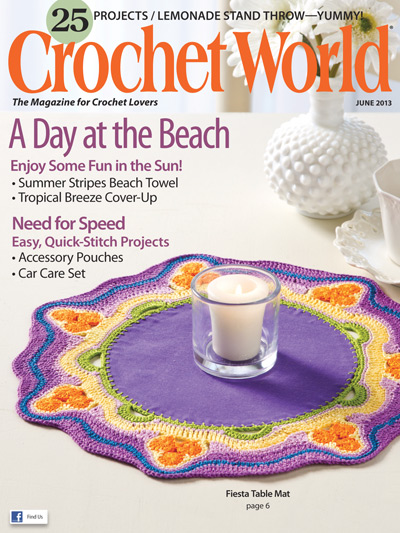
CW.COVER.June2013

photo courtesy of Annie’s

ScannedImageWow! Crochet World, June 2013 issue is out already and I have 2 designs in the issue.

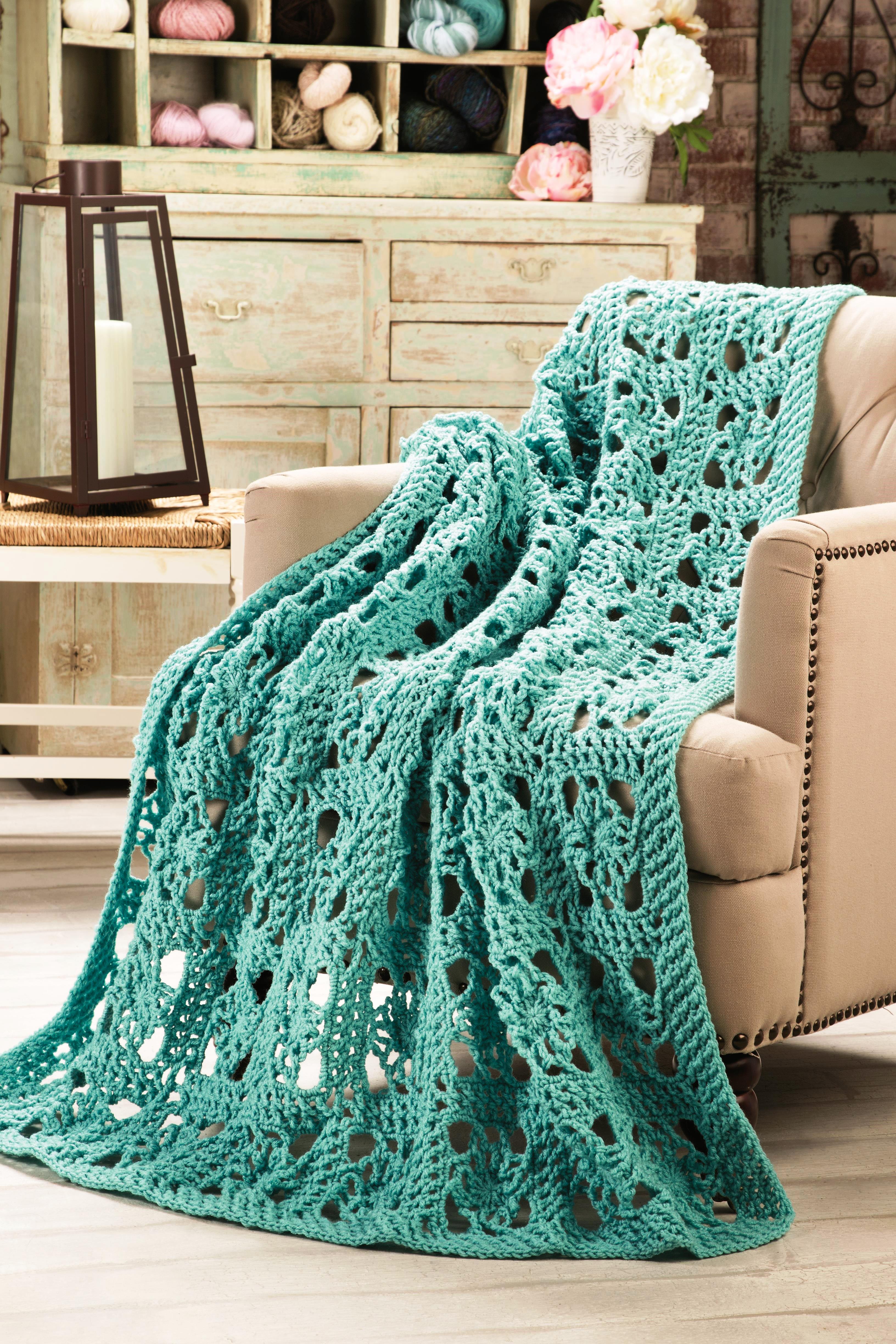
Framed Peony Afghan

photo courtesy of Annie’s

The Framed Peony Afghan was inspired by my garden. Living on an old farm I have some older plants that make up my yard, things like lilac, and those hearty purple iris, some others that I never really know the name of but they smell nice, and peony. It is the time of year again that they are blooming, they have a beautiful scent and just a bright burst of color (red, pink and white…however they never seem to be in bloom at the same time, they seem to stagger, red, then white, then pink). Anyway, I was playing one evening trying to get a stitch to work in a new way for me, and I happened upon this motif, and it reminded me of my peonies.


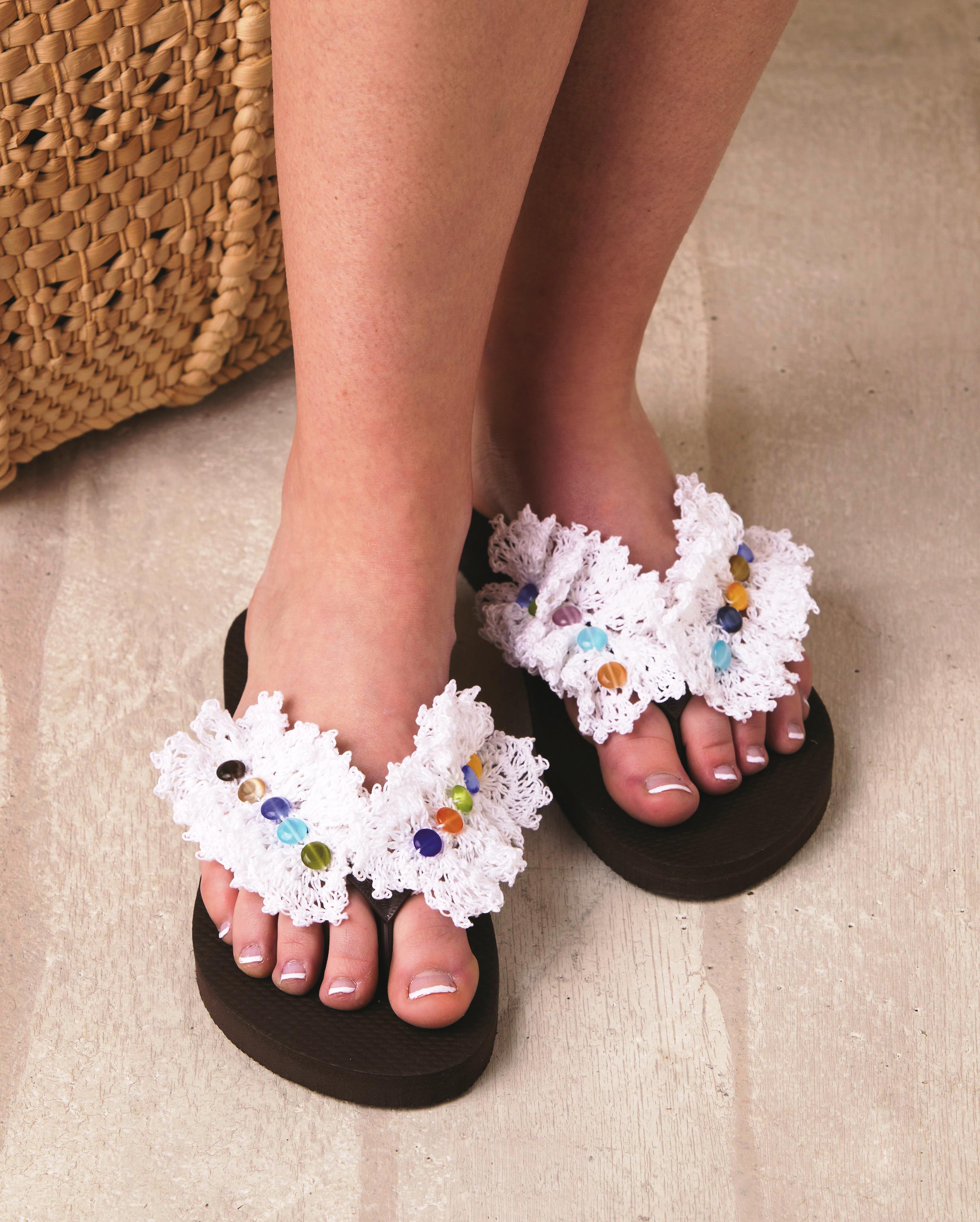
Flowered Up Flip Flops

photo courtesy of Annie’s

Then I have Flowered Up Flip Flops. This design is based out of my thriftiness. My daughter loves shoes, but out grows them so fast. So last summer I decided to embellish some regular flip flops that she already had in her closet and give her a “new” pair of shoes. It was fast and easy, (and the beads added great color!). This was a fun project, and my daughter has already asked for another pair for this summer, as yes she has already out grown the original ones.


Check them out if you’d like, the patterns are available in the current issue of Crochet World (currently available on newsstands, or download on line).