Work Into a Foundation Chain

It is not often considered, how many ways can I work into a foundation chain? The answer can be a bit surprising as it is six.

Typically when you start a crochet project, it doesn’t really matter how you work into the chain. As long as you are consistent and work into the chain the same way every stitch, everything is fine. However the chain has a unique structure and how you work into it can give you a little different result.
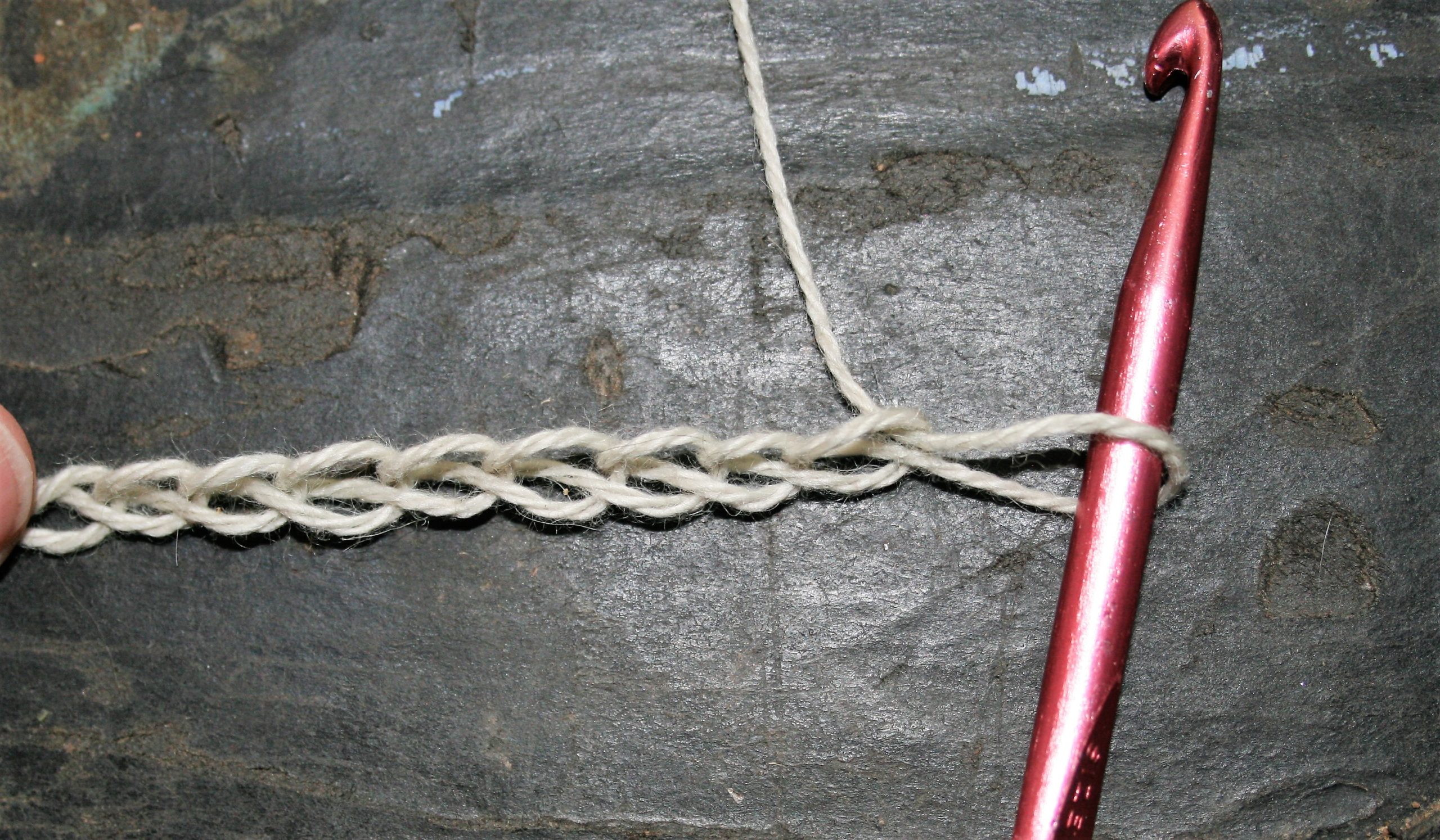
The Foundation Chain…the beginning of all crochet projects.

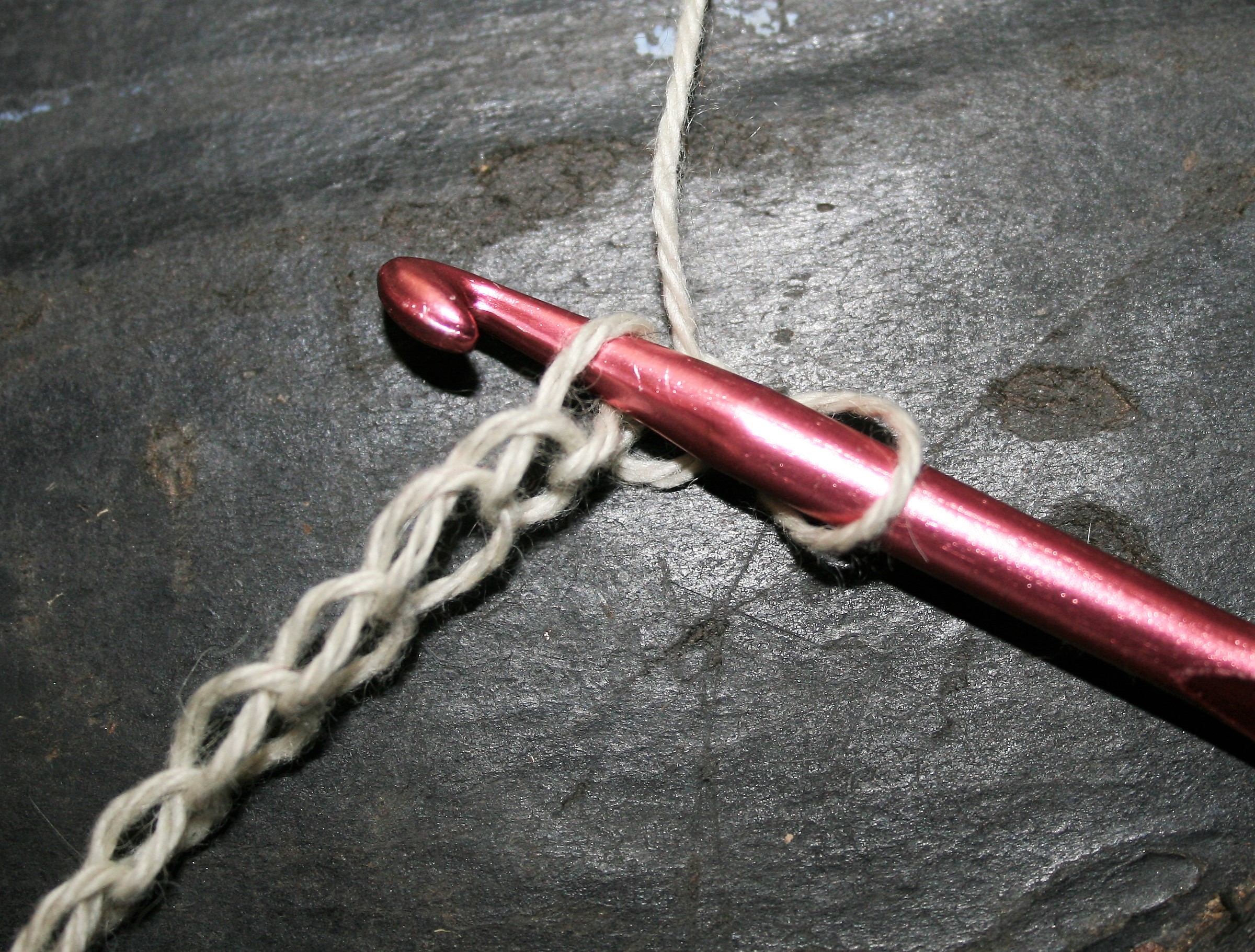
There are 3 parts to every chain. Often these are referred to as the top loop, the bottom loop, and the back bump. This is referenced by looking down at the chain seeing a “V” that looks like the top of a completed row of crochet.

Yet it may make more sense to think of the chain as the top of a crochet row. In which case the “top most loop” would be the back loop. The “bottom most loop” would be the front loop. While the Back Bump would be where the post of the crochet stitches would be located.

The most common ways to start a chain utilize inserting the hook into 1 or 2 loops. Inserting the hook under just 1 loop can be a really good option if you crochet tightly.  Working in either to top/back loop, the back bump, or the bottom/front loop allow for the yarn from the remaining 2 loops to be pulled up. This gives a bit more flexibility in your fabric.

Working in 1 loop of the foundation chain
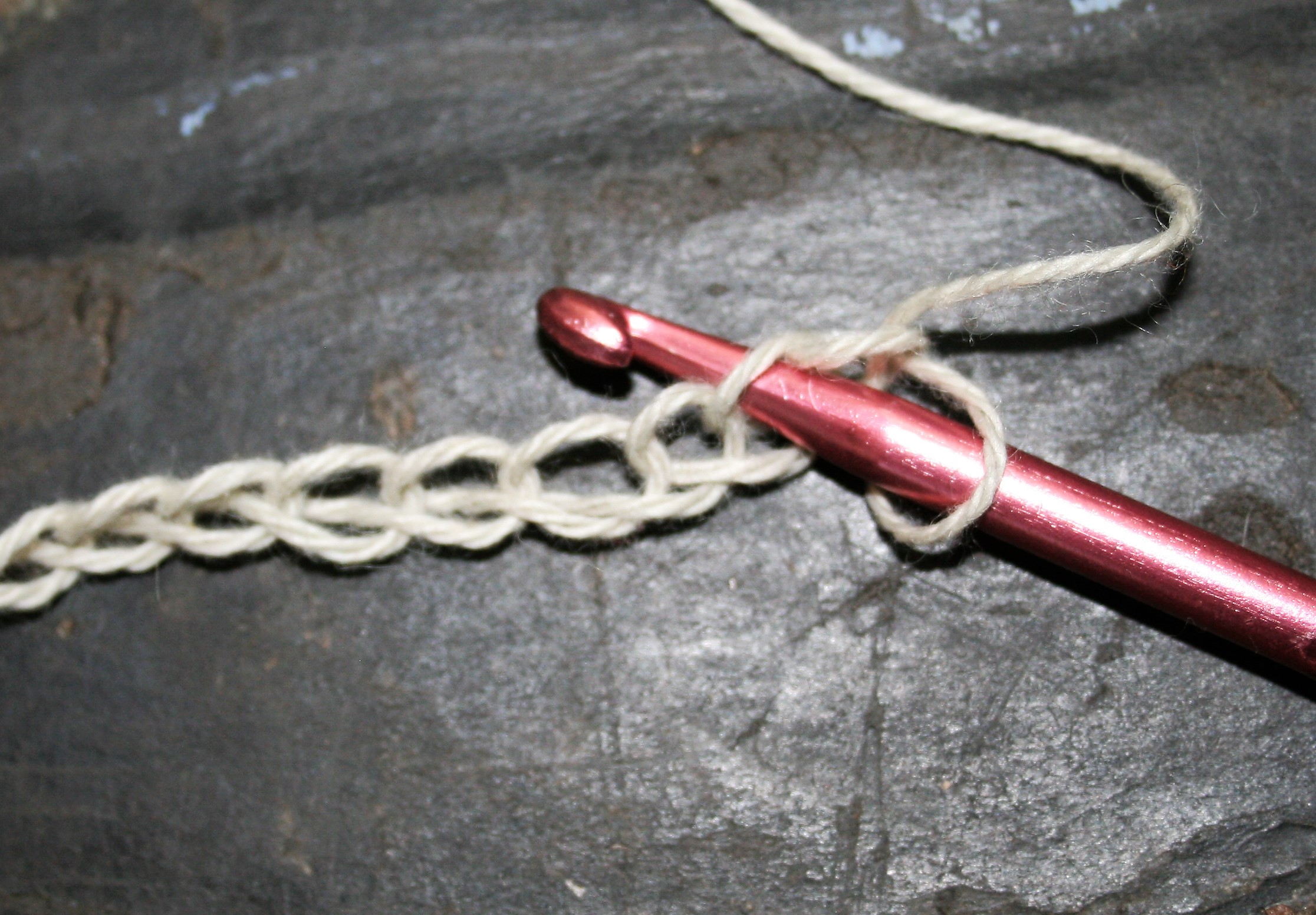
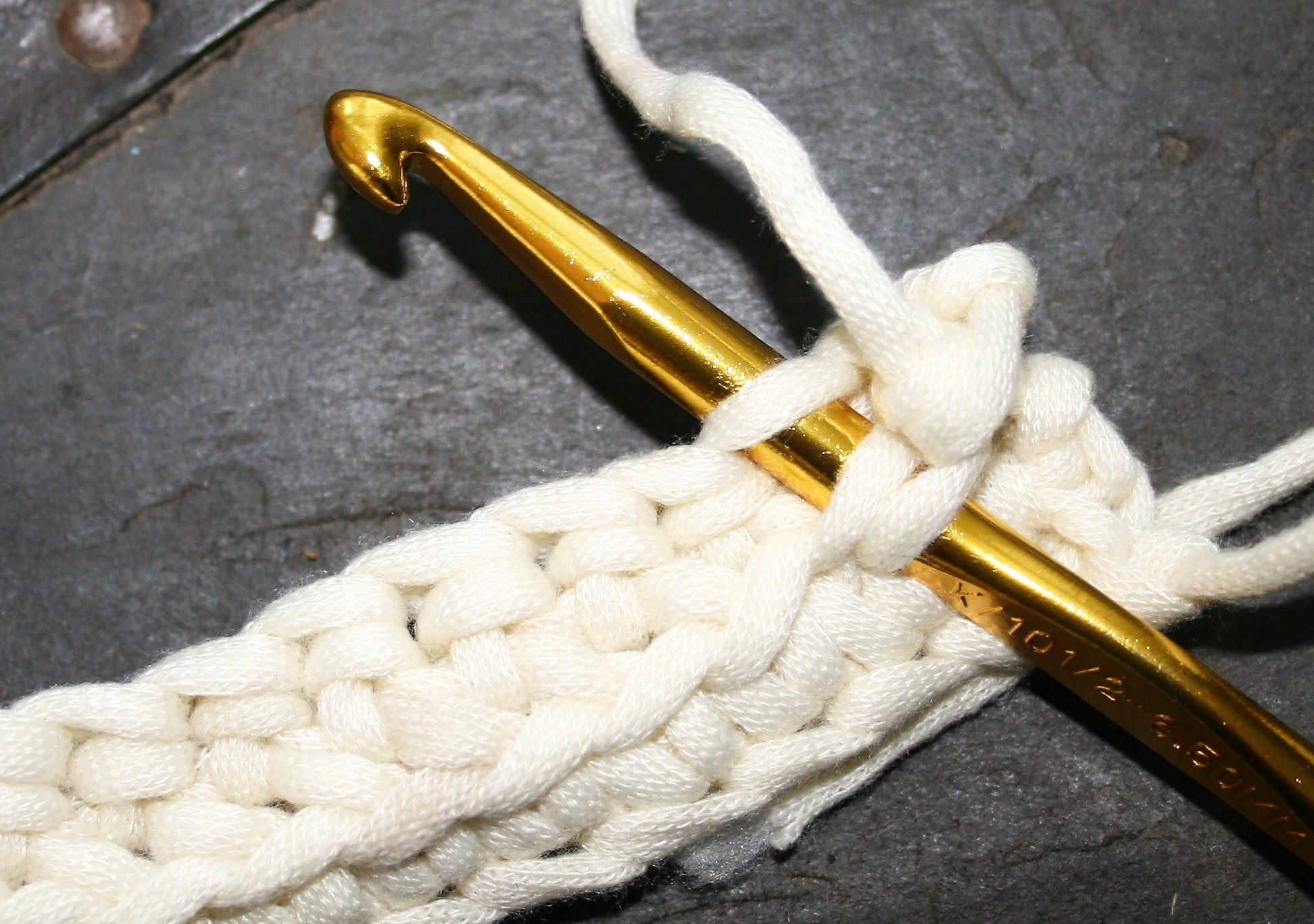
One of the most commonly used, inserting the hook under the top/back loop. This is a great way for tight crocheters to begin their work.
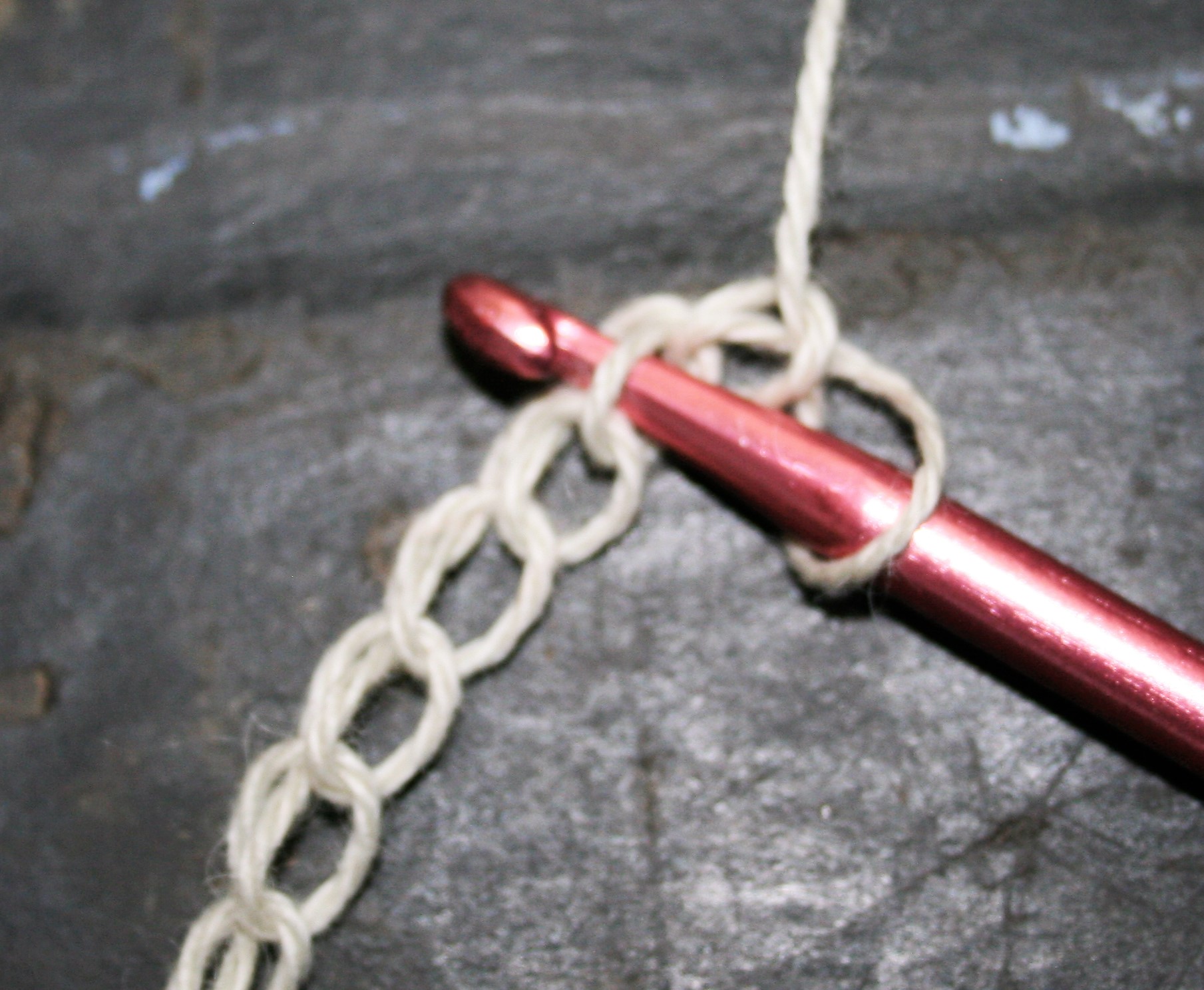
Working in the bottom/front loop is probably the least used. You need to rotate the chain so that the back bump is facing upward and insert the hook under the now top most loop. Rotating the cahin creates a different effect.
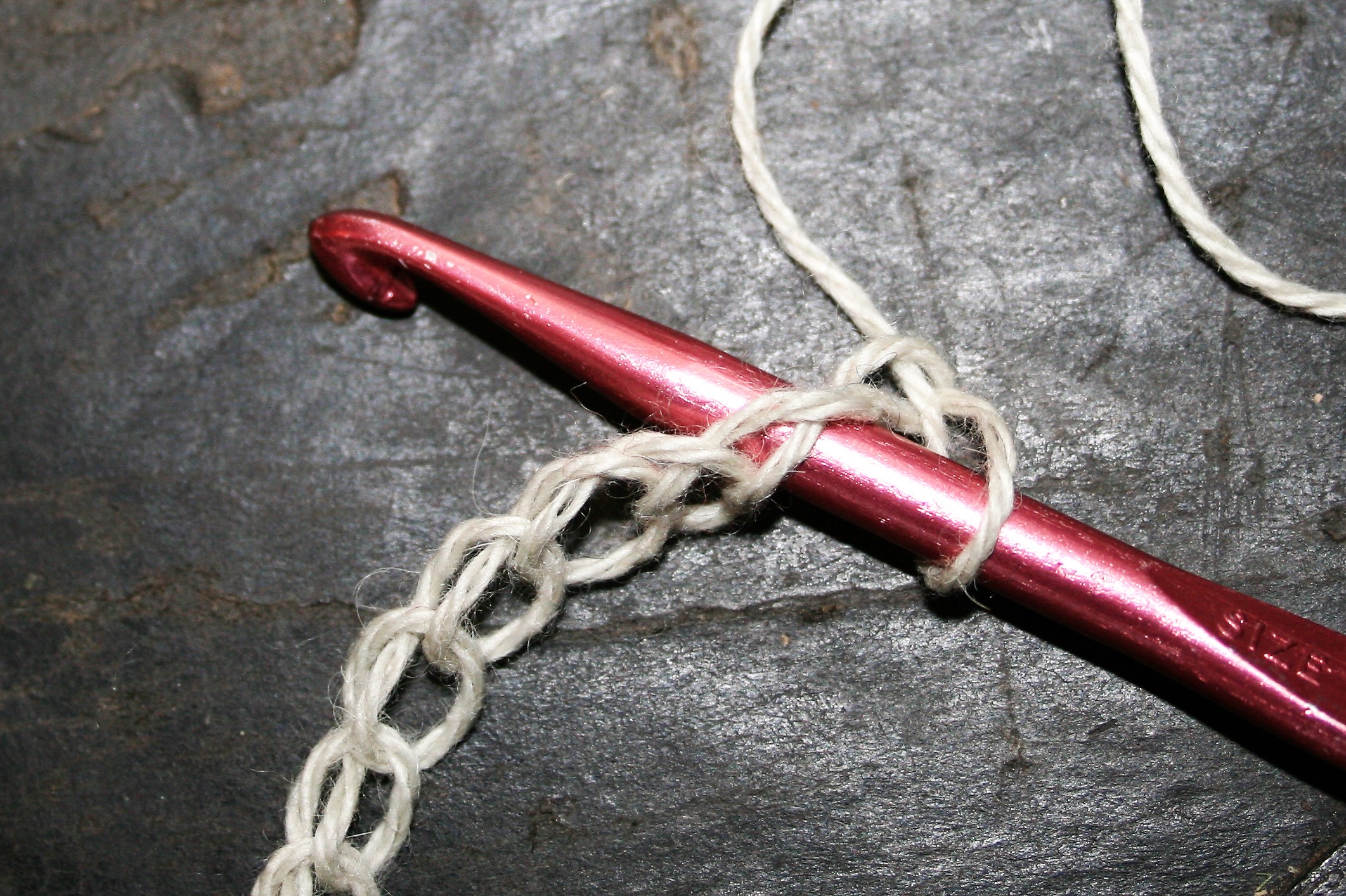
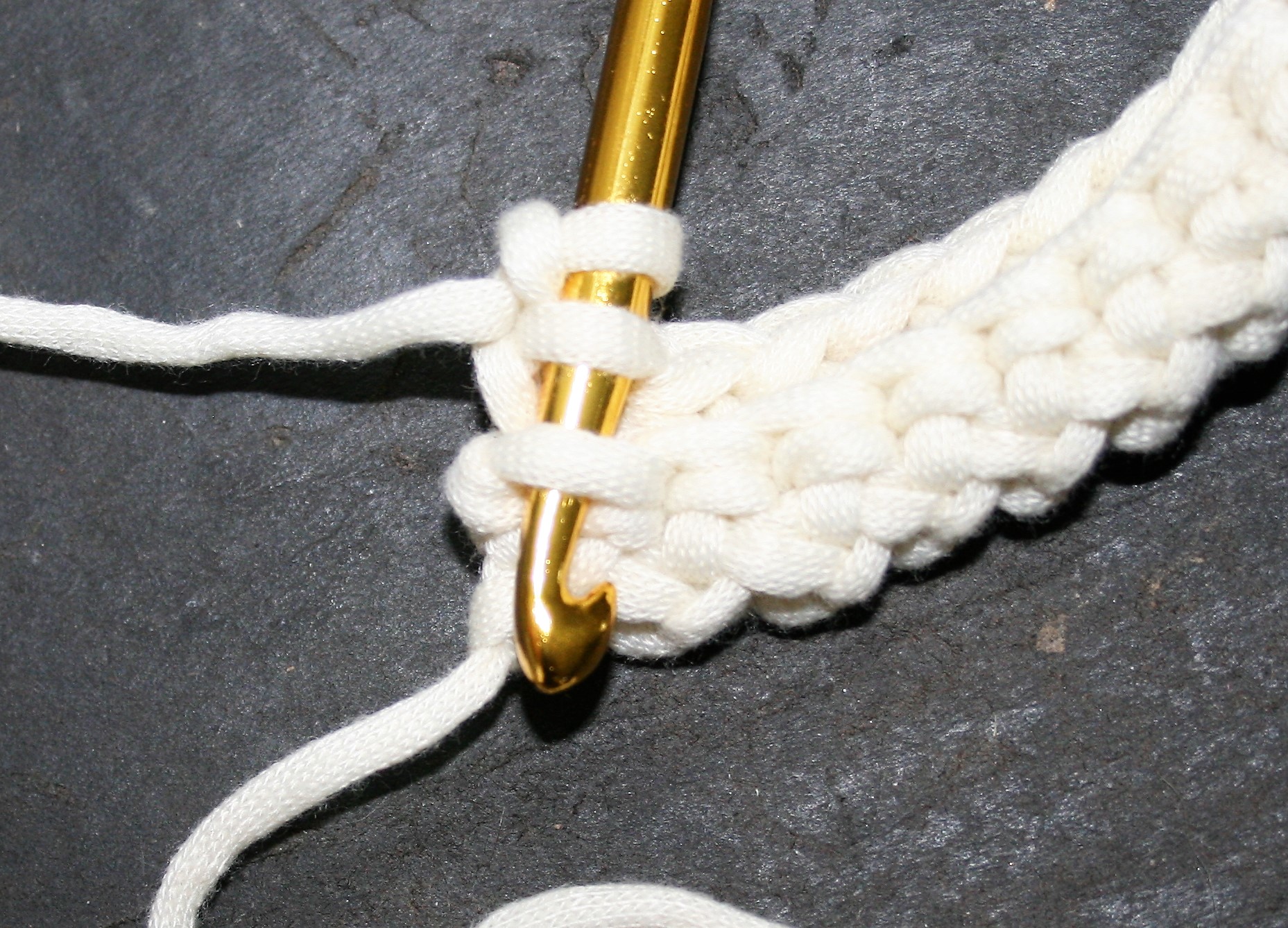
Working in the Back Bump…with the “v” of the chain facing downward, insert the hook under the bump of the chain. This can look like a raised vertebrae of a dinosaur. It offers the neatest finish on the bottom edge of the crochet fabric.

An additional consideration for working only in the back bump is that the bottom of the stitch fabric will resemble the top of the crochet stitches. This can be a very nice finishing trick.

If you happen to be a loose crocheter using only 1 loop can cause there to be a wide gap between the bottom of the crochet stitch and the unused 2 loops of the chain. It might feel a bit flimsy.

Working into 2 lops of the foundation chain
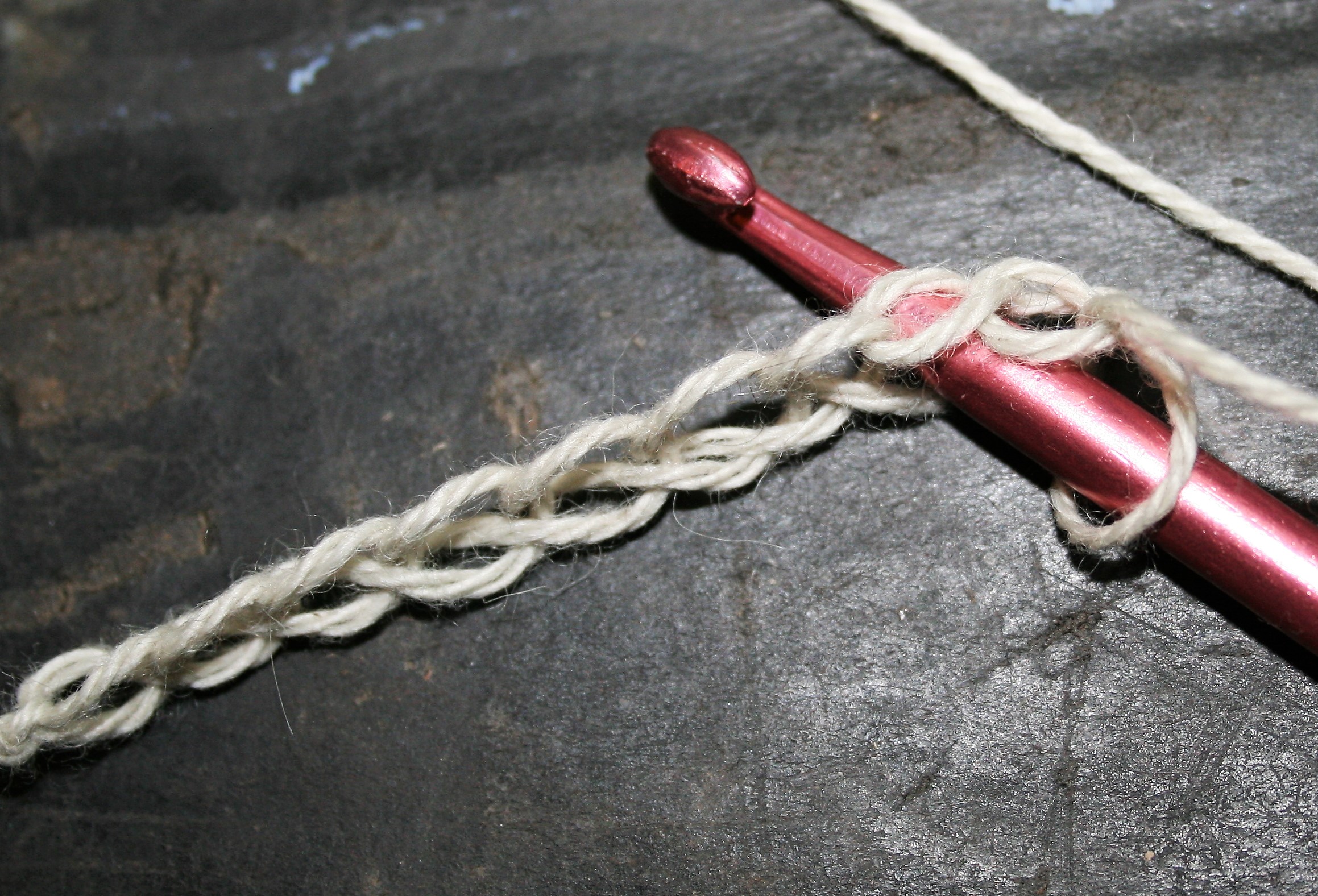
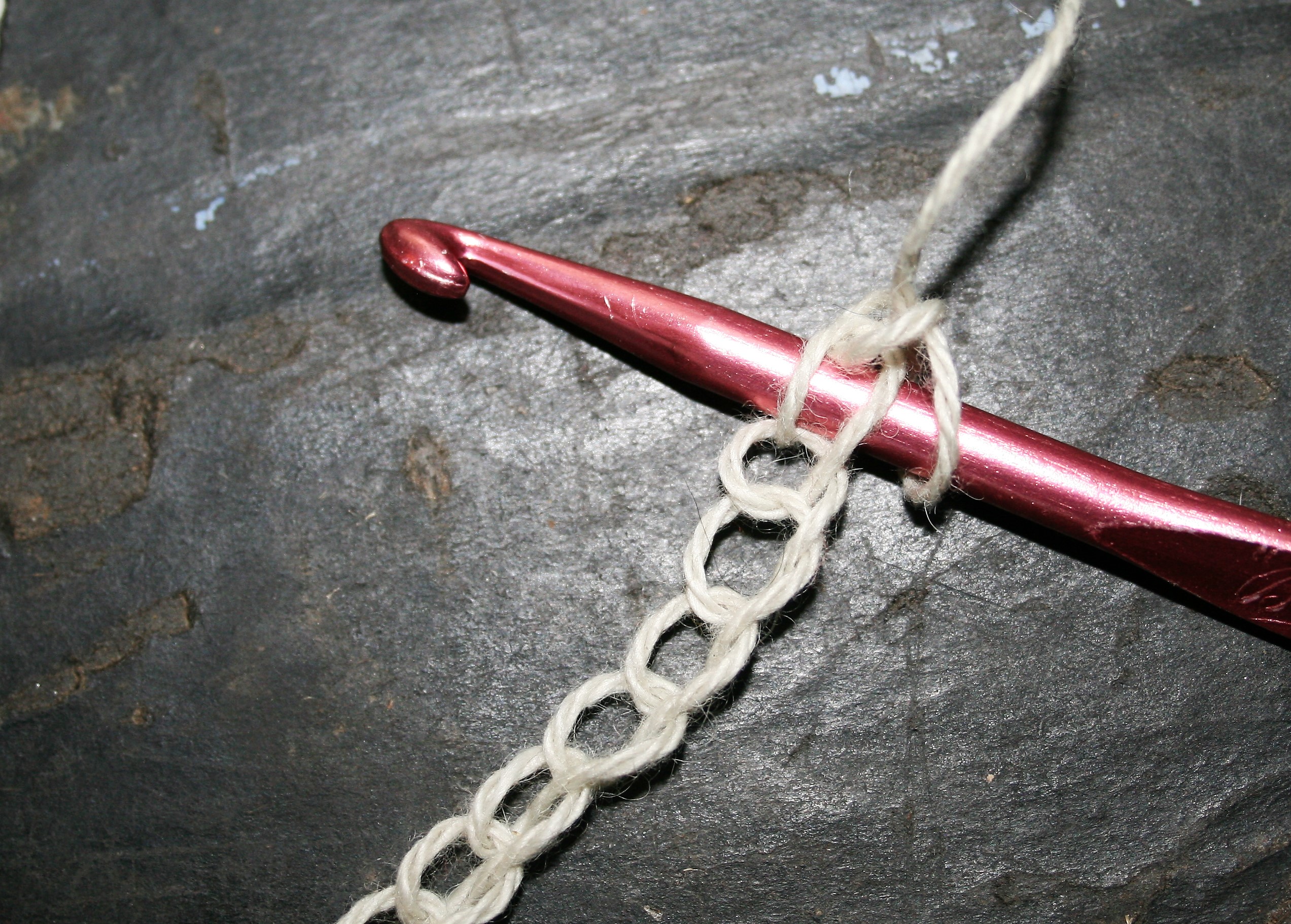
Working through the top/back loop and back bump is the most common approach for working in 2 loops of the foundation chain.
A bit uncommon, but rotating the chain so the the back bump is facing, you can insert your hook under the back bump and the bottom/front loop (the rotation of the chain will place them at the top of the chain)
Working under the top/back and bottom/front loops of the chain is probably the tightest and most sturdy method to work into a chain as it has the least amount of opportunity to stretch out of shape and create gapping

The methods of working in 2 loops, be it the top/back loop & back bump, or the top/back & bottom/front loop, or the bottom/front loop and back bump results in less flexibility. This may be a bit more stable, but if you are a tight crocheter this might be a little difficult to work. For a loose crocheter this approach may offer the least amount of “gapping”.

In the large scheme of things, each of these approaches offer just a little subtle difference. So, play with it and see what you may like.
Inset Mosaic Crochet- 1 of 3 Methods

Inset Mosaic Crochet is an additional 1 of 3 methods of a unique color work within crochet. Creating geometric designs that have stunning results.

This technique has some pros and cons, and varies from Overlay Mosaic Crochet and Mosaic Magic.

Overlay Mosaic work is never turned, and every row has the yarn cut. Resulting in many ends to weave in. Inset Mosaic is worked with 2 rows, allowing you to carry the color changes along the side of the work.

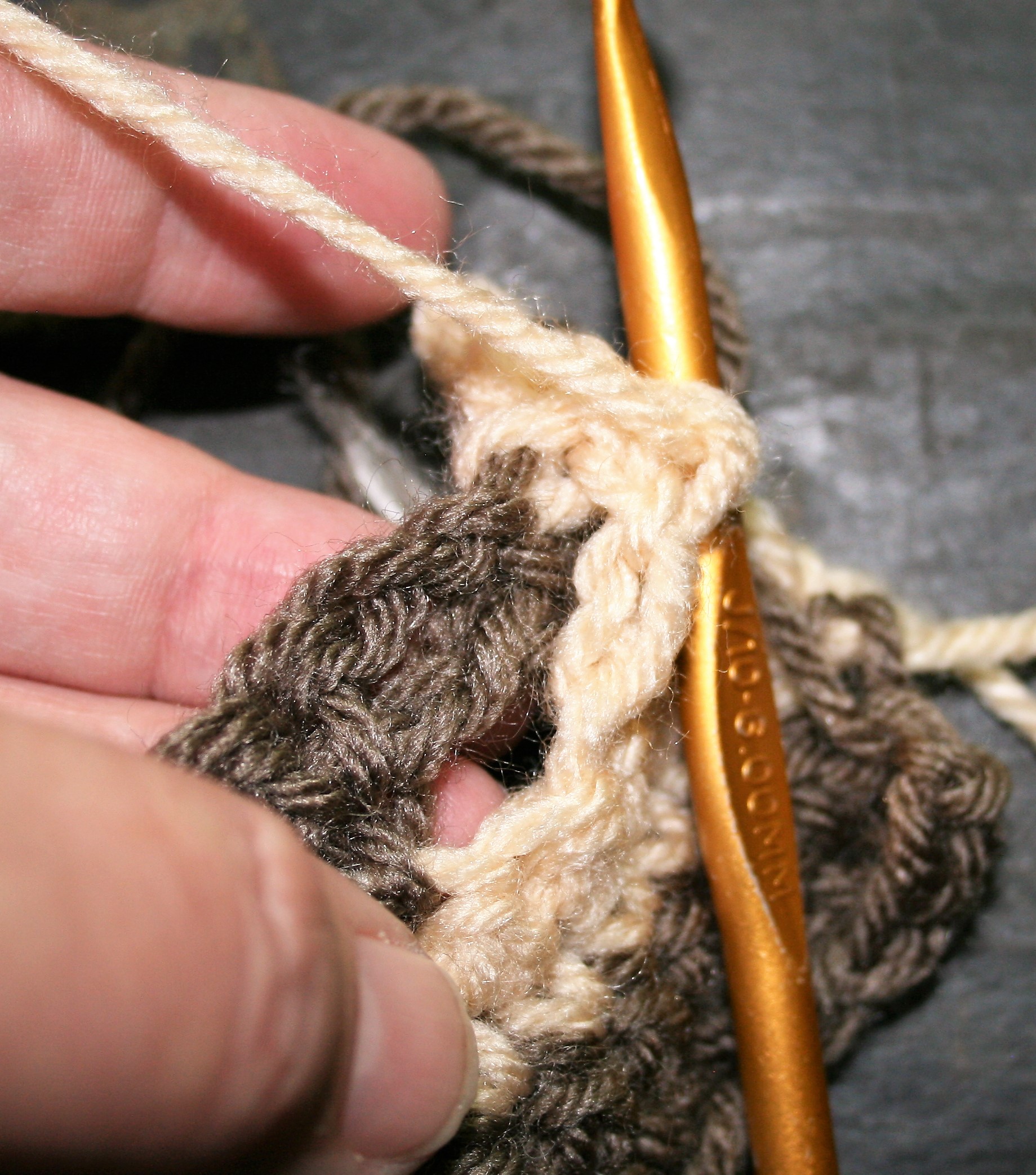
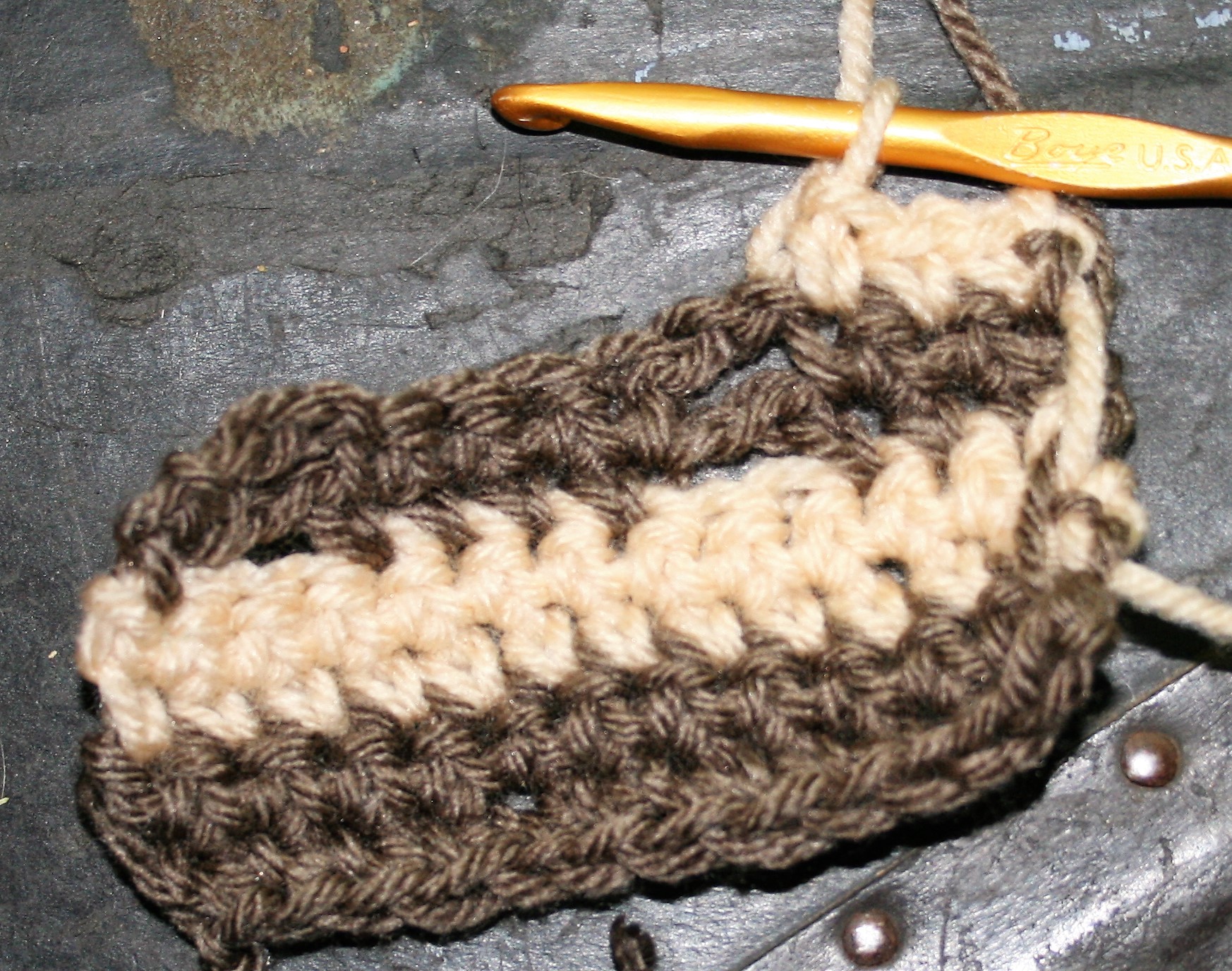
Work rows of color, the design reaches a point that the opposite color will be “brought down” to create the vertical line. Where the vertical line is to be worked, the color below is worked as chain spaces skipping the stitches below.

Brown yarn shows chain spaces where the cream yarn is going to be worked to create vertical lines.

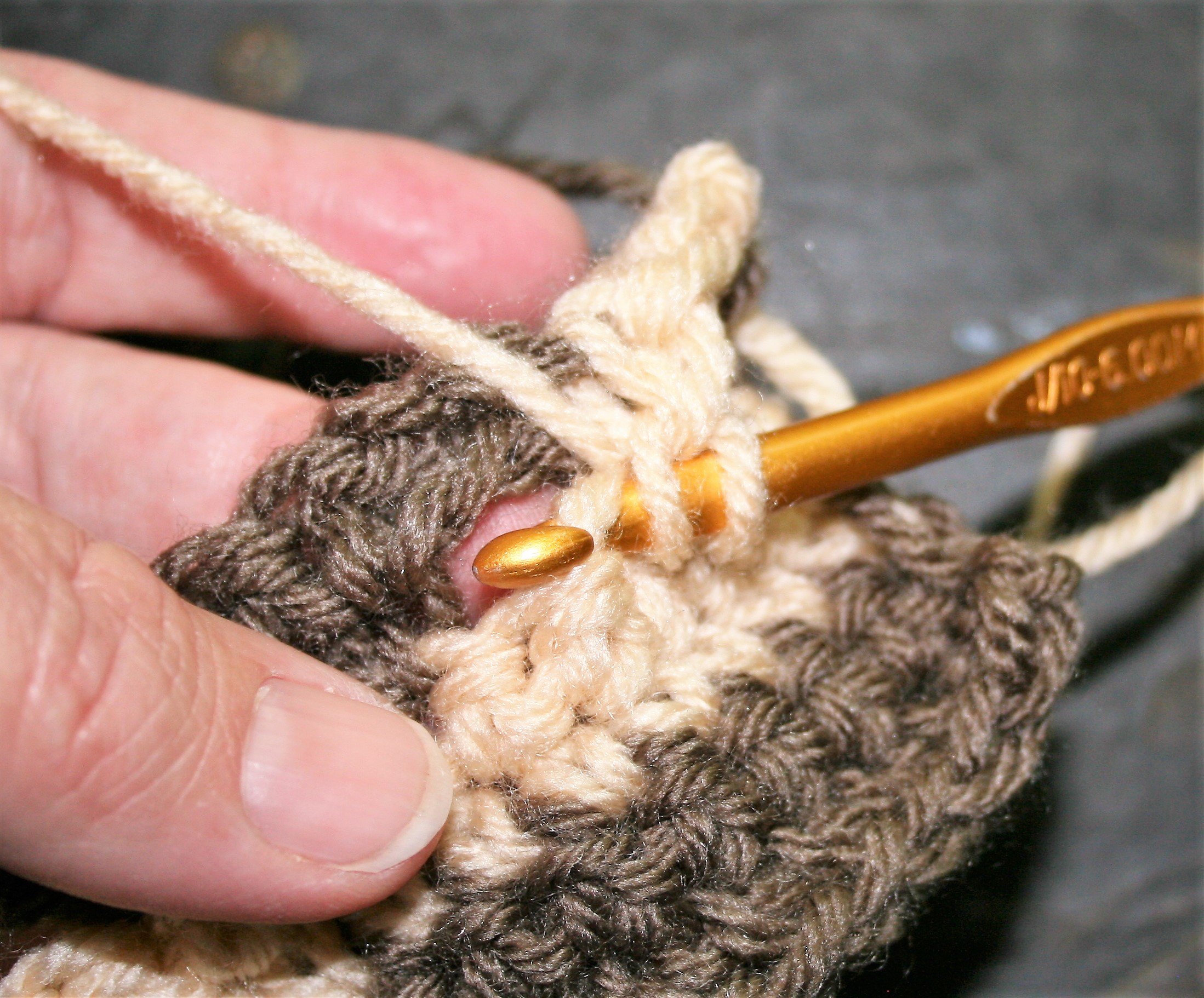
Now work the opposite color. Creating the vertical line is simply working a double crochet in the skipped stitches 3 rows below, in front of the chains.

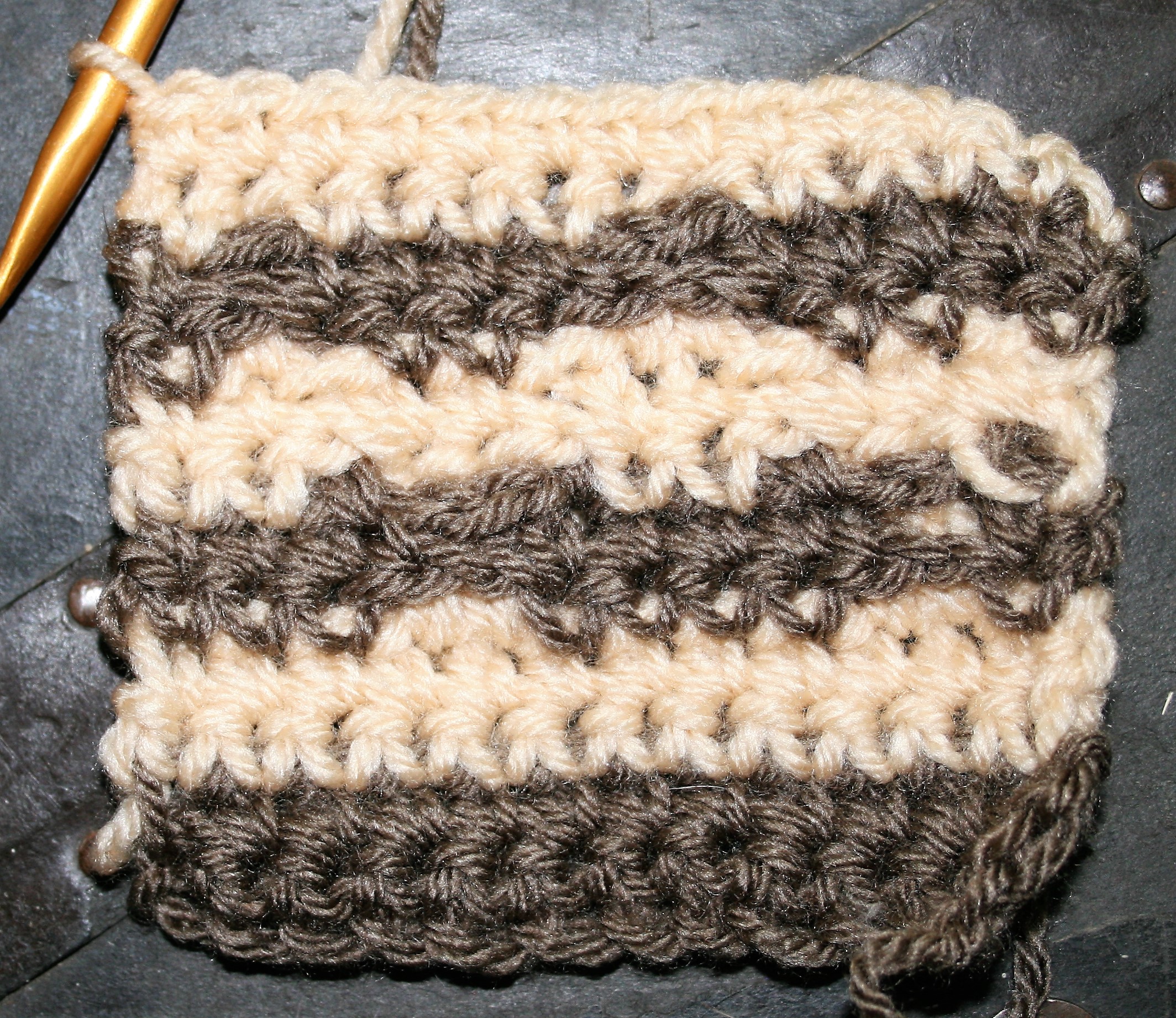
The vertical cream lines, are worked as double crochet stitches in the stitches 3 rows below, with the chains of the brown color pushed to the back (wrong side) of the fabric.
Notice the chains are in the back of the stitches.

There is a “wrong side” and “right side” of the fabric.

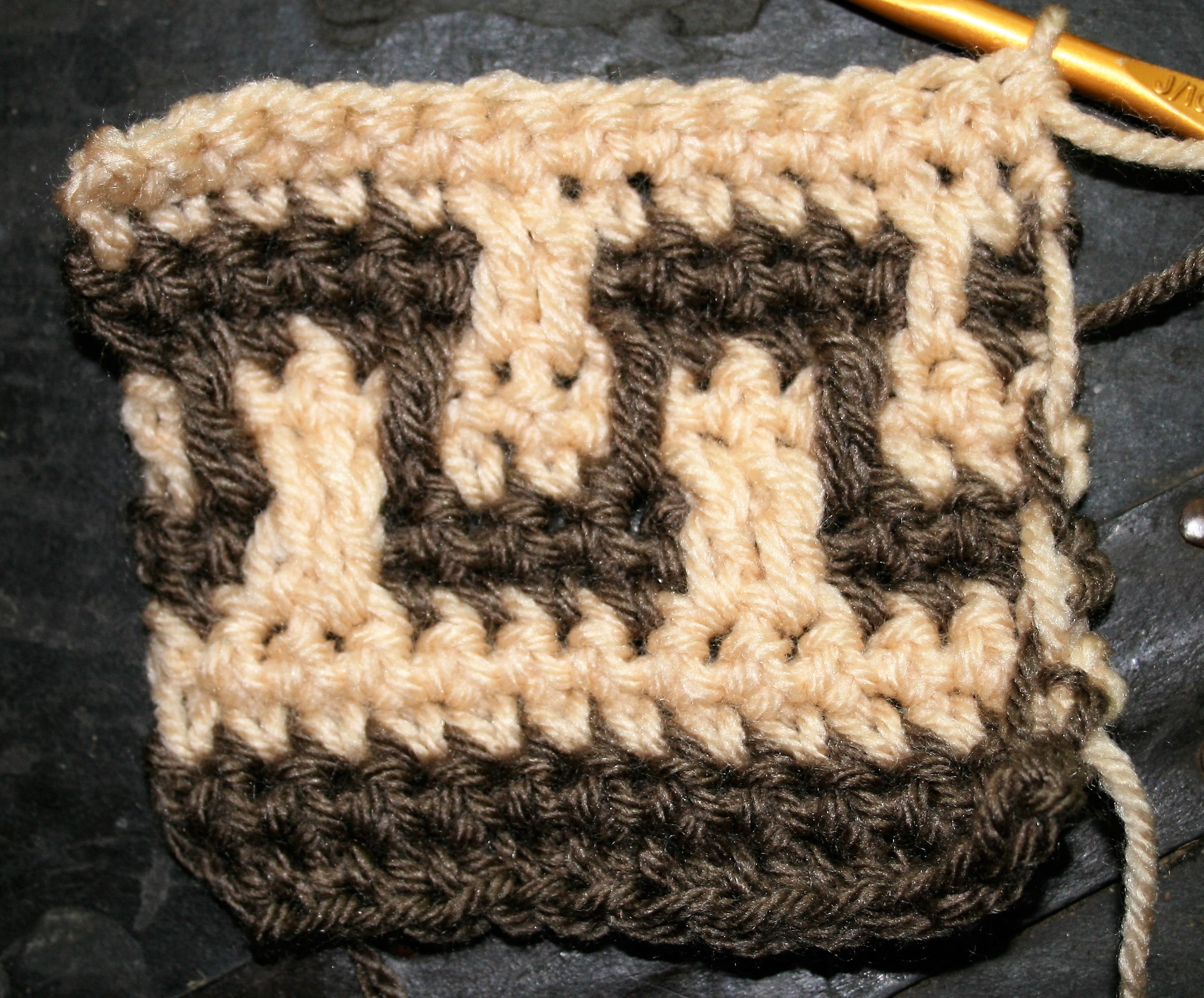
Sides of the fabric are easily distinguished as the patterns for Inset Mosaic have longer lines, due to the 2 rows of the same color.

Right side of fabric for Inset Mosaic Crochet
Wrong Side of Inset Mosaic Fabric

Overlay Mosaic Crochet- 1 of 3 Methods

Overlay Mosaic Crochet is 1 of 3 mosaic crochet methods that are color work methods that create stunning geometric designs.

The Overlay Mosaic Method has some ready to see benefits, but is also has some draw backs especially compared to Inset Mosaic and Mosaic Magic.

Pros

To begin with it uses simple stitches, the entire base of the fabric is created with single crochet worked into the back loop. It creates bands of colors. Working double crochet loops 2 rows below in the unused front loop of the fabric. As a result this causes the color of the double crochet stitch to cover the color the row below. This ensures that the color work looks more difficult to work than it actually is.

Overlay Mosaic Crochet- work single crochet stitches in the back loop.
Overlay Mosaic Crochet, works a double crochet 2 rows below to create the dynamic color work.

Cons

However, this fabric is only worked on the right side, so you never turn. In addition, it is worked with only 1 row of color at a time. The result is a fabric that needs to be joined and fastened off for every row.

The easiest way to deal with the loose ends is to have fringe. Leaving the tails long of both the joining and fastening off. More modern methods have utilized this method in the round, so that the right side is always facing, and the color is carried at the join.

5 Rows of Overlay Mosaic Crochet- note that each row is joined and fastened off, and the fabric is never turned.
Working Row 6 of Overlay Mosaic Crochet

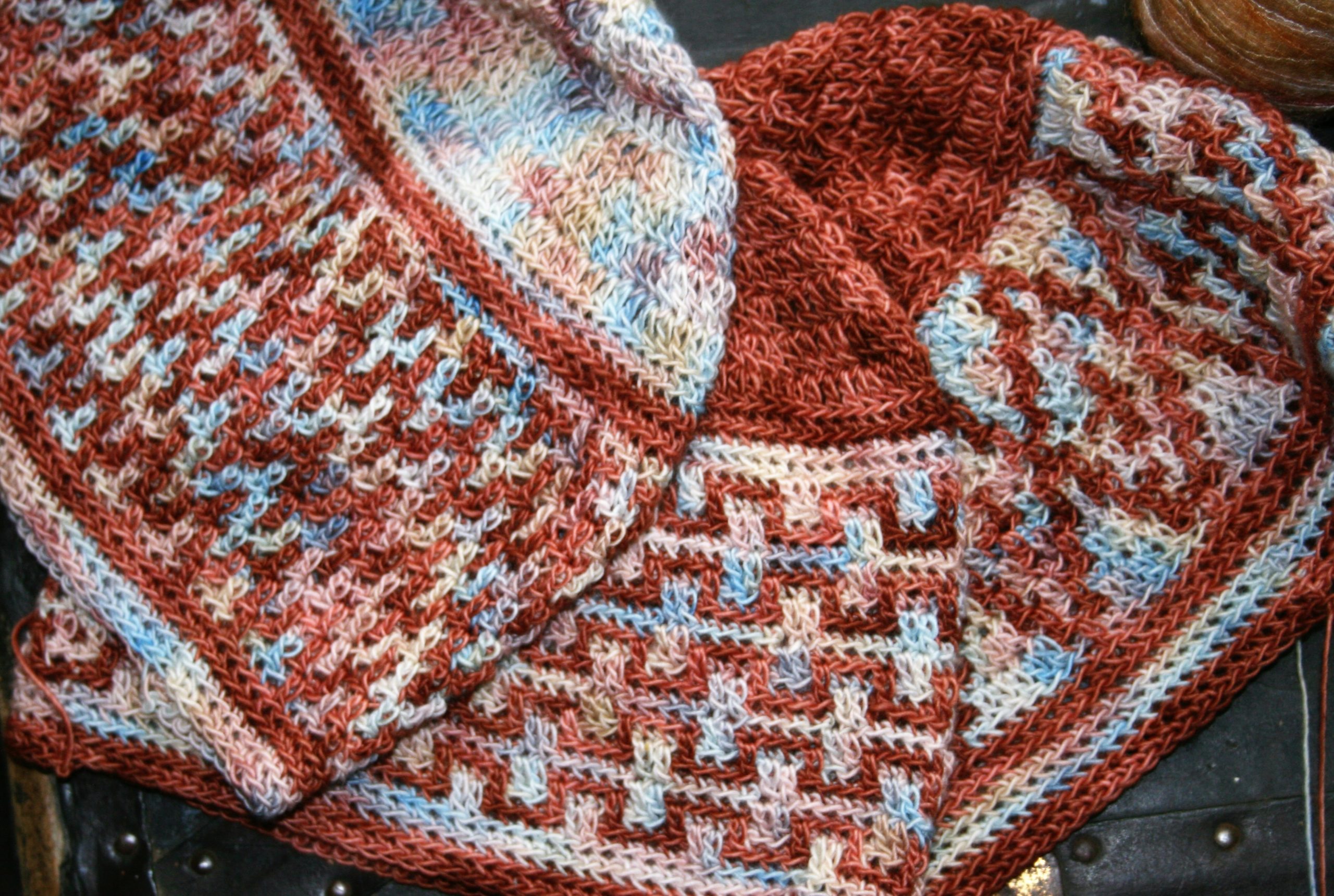
Mosaic crochet historically makes a cycle of popularity. This overlay method classically known for such patterns as Apache Tears and Navajo Indian Blanket.

I have stumbled across a Continuous Overlay Mosaic Crochet Method, put together by Susan Lowman. It is brilliant for creating this fabric in a flat method with far fewer ends to weave in. Make sure sand check out her video here. I like to use Overlay Mosaic for hats and fingerless gloves. I find this approach to be very straight forward and easy to follow. Creating some fun highlights for colors.

Overlay Mosaic patterns in hats

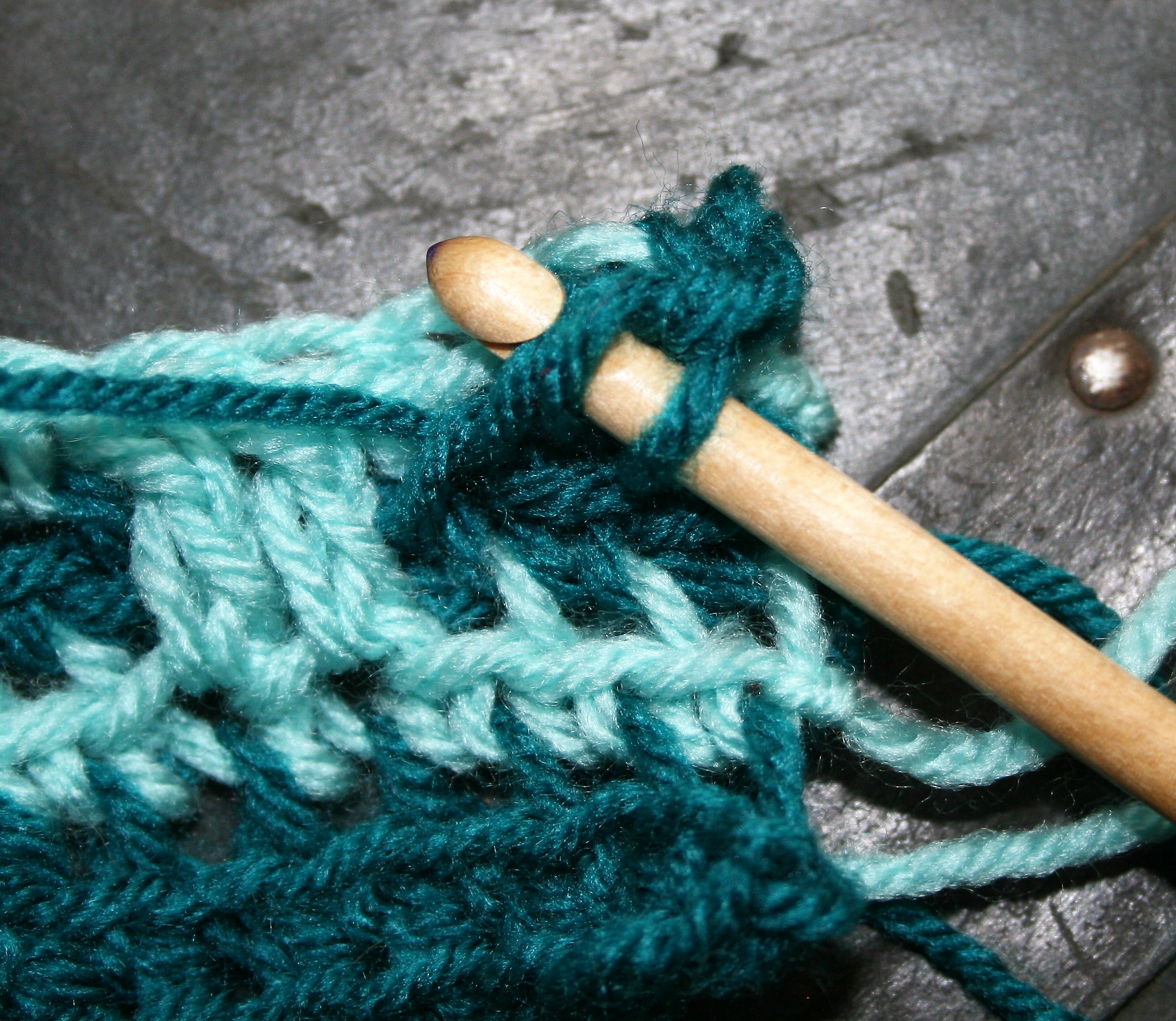
2 Ways -Thermal Crochet

Essentially there are 2 ways to create a thermal crochet stitch. I was first introduced to this technique over a decade ago. “Thermal” is worked one way, and today you can find it worked in a completely different manner. This is proves to me even more, that you cannot rely on the fancy names of crochet stitches, make sure and check the special stitches of a pattern.

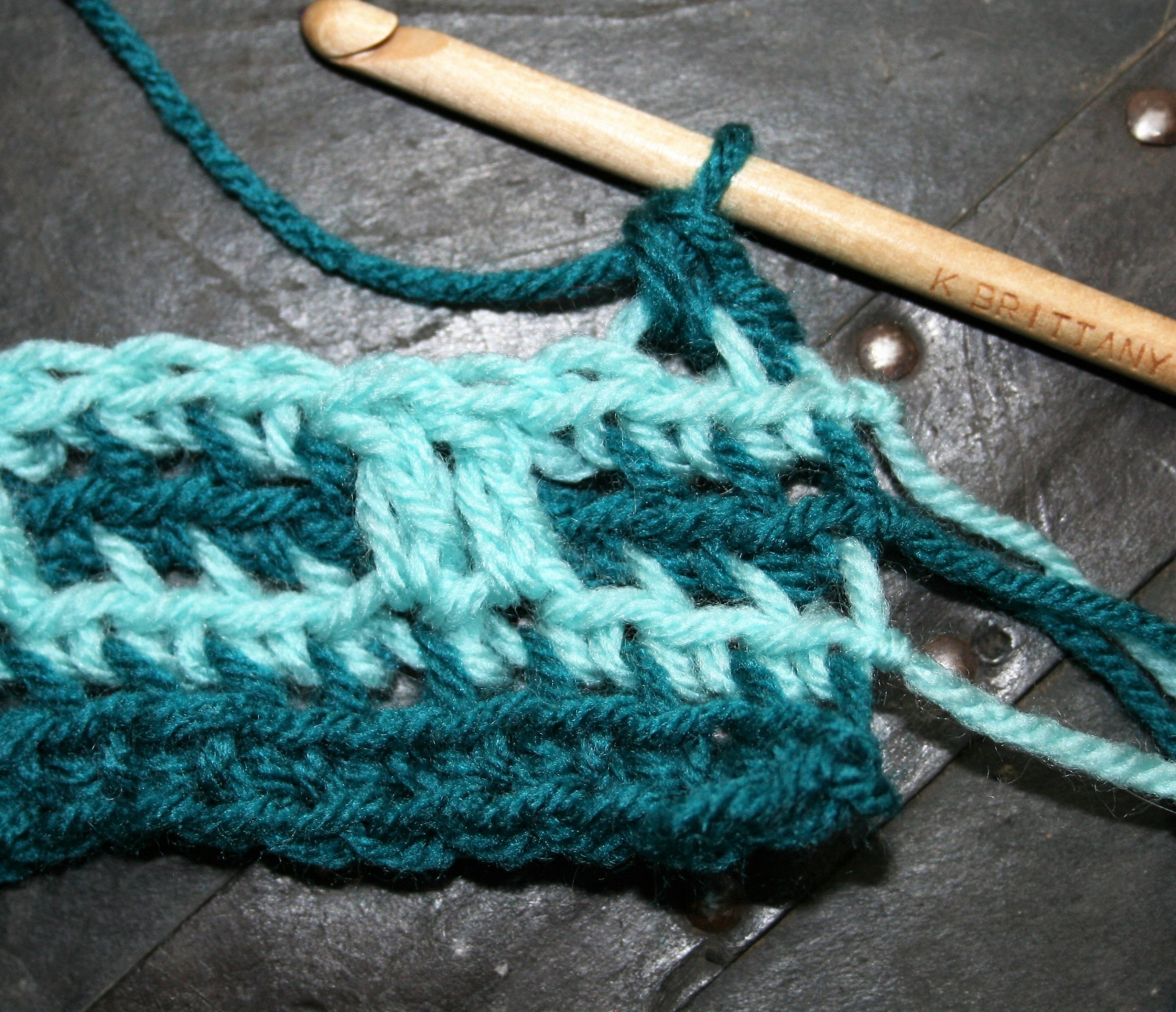
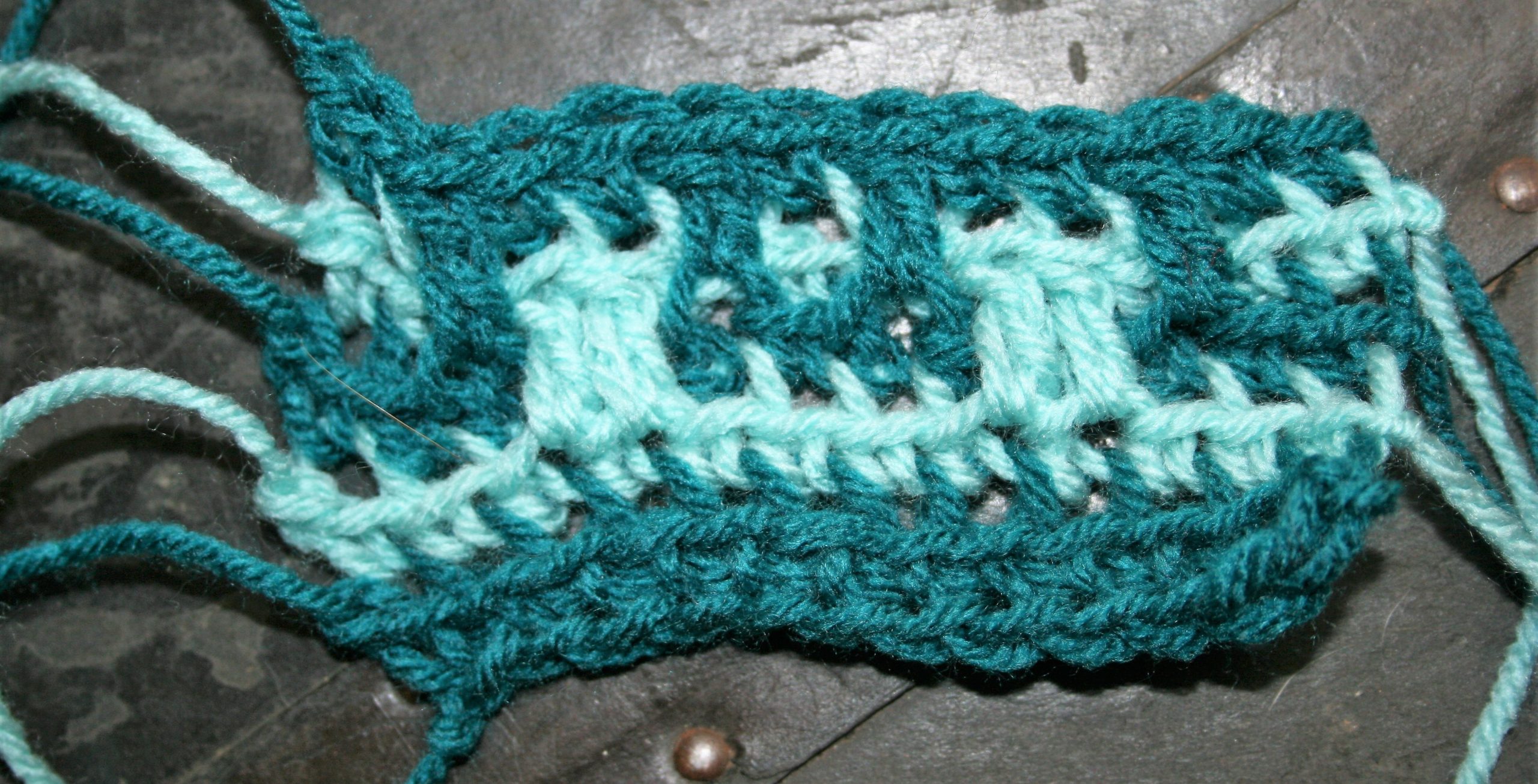
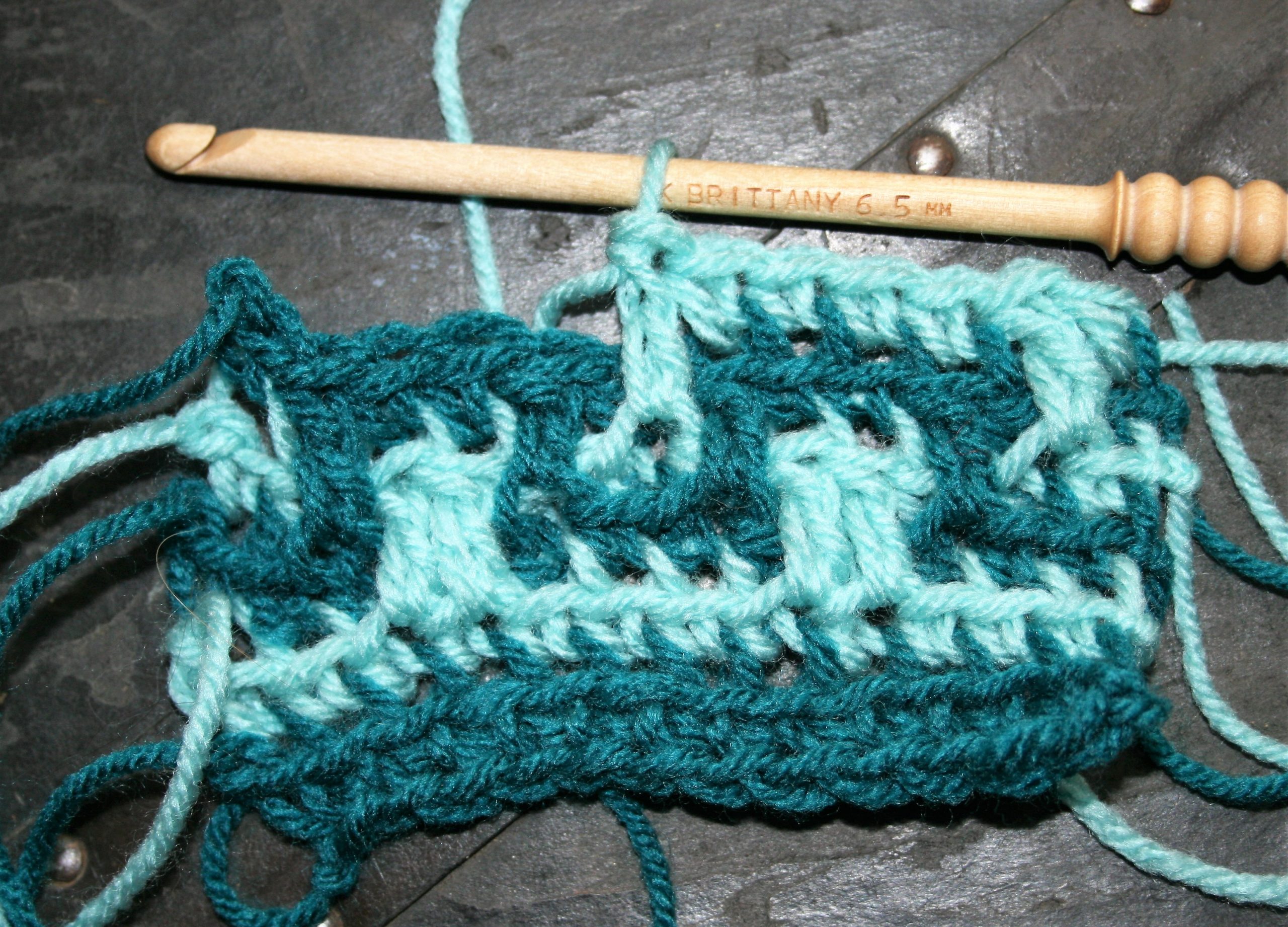
However, I thought I would share what I have learned about this stitch. Basically a thermal stitch is one that creates a double sided fabric. Stitches are connected by working through the loops of 2 different rows to create the third.

Bottom Up method of Thermal Single Crochet Fabric
Top Down Method Thermal Single Crochet Fabric

Bottom Up -1 of 2 ways thermal crochet

I learned to connect these stitches from the “bottom up”. Insert the hook through the loop of the row 2 rows below upwardly and then through the front loop of the row typically be worked into. Yarn is wrapped around the hook and then pulled through these 2 loops. There is an additional yarn over, and pull through the last two loops; a single crochet thermal stitch is created. Learn it here.

Inserting hook from the “bottom up” to create the thermal single crochet

The bottom up method creates a fabric that has the “front” or “right” side of the fabric facing outward, while the “back” of the stitch is captured in the center of the fabric.

Top Down -1 of 2 ways thermal crochet

The latest way I have seen this stitch explained, uses the same loops of the stitch rows has the base of the stitch, but instead works the hook down through the front loop of the regular working row and then through the unused loop of the row 2 rows below.

Created from the “top down” method thermal single crochet

To prevent the stitches from twisting, the work is essentially worked “backwards”.  Meaning that you are crocheting the fabric in the opposite direction from that which you usually do. This “top down” method creates a fabric that has the “wrong” of “back” side of the fabric facing outward with the “front” encapsulated in the center.

There are some slight visual differences with these methods, and the Bottom up approach tends to lend itself better to working in the round.

This is an interesting stitch, either way you work it. I am continuing to explore its possibilities.

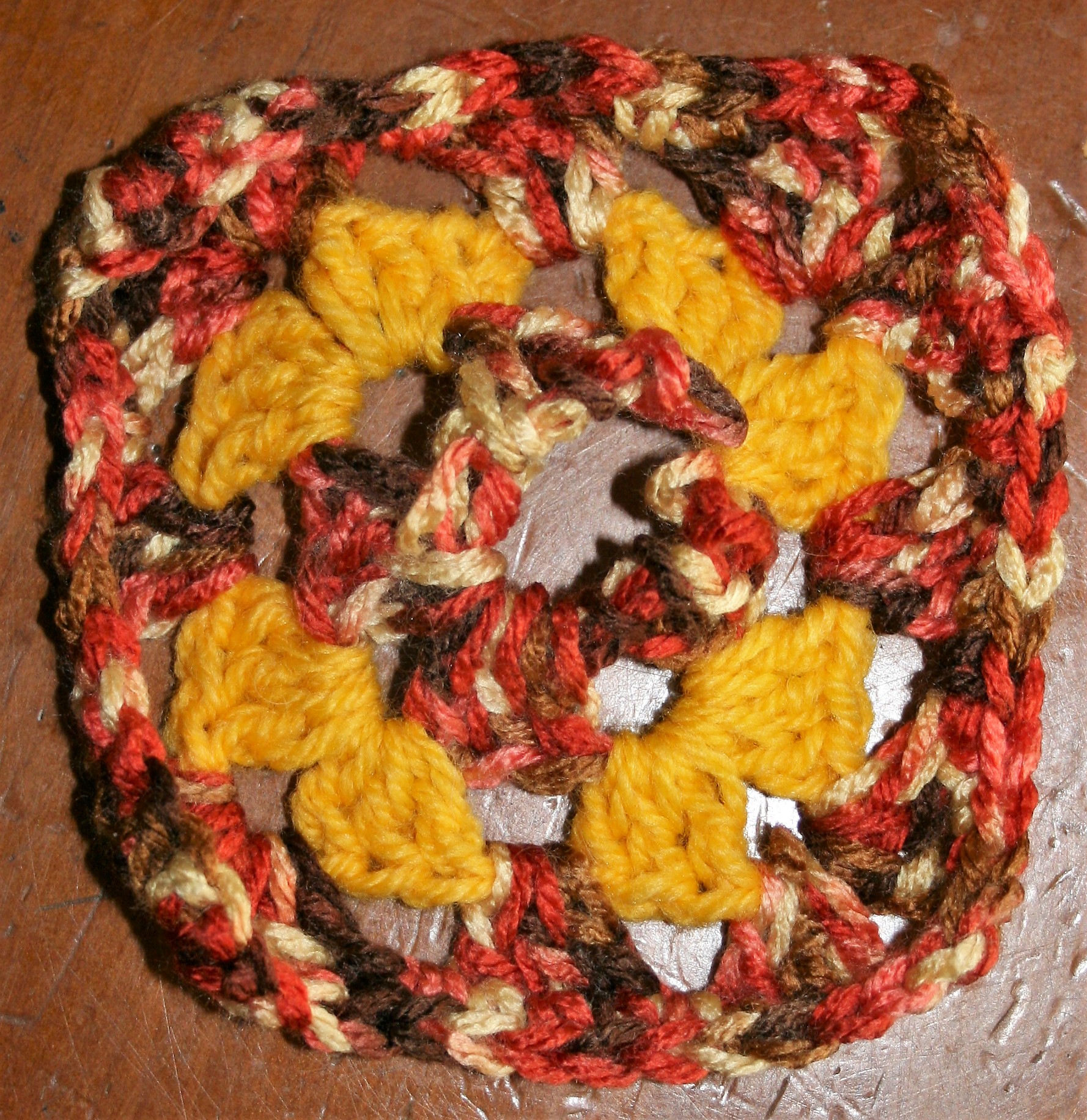
Repairing a Crochet Granny Square

Repairing a crochet granny square can be an easy fix. Often the center of a granny square is the weakest point. There is a lot of stress with many stitches worked around a small piece of yarn.

To begin this repair, find yarn that matches the damaged area. I find this to be the most difficult part of doing a repair. Often you will not find the exact yarn that was originally used, so try to match these three criteria as close as possible:

  • Color- hue and tone
  • Yarn weight- super fine, fine, light, medium, etc.
  • Fiber content – what is it made of, cotton, wool, synthetic

After finding a yarn, cut a sting about 12” (30cm), and thread a yarn needle.

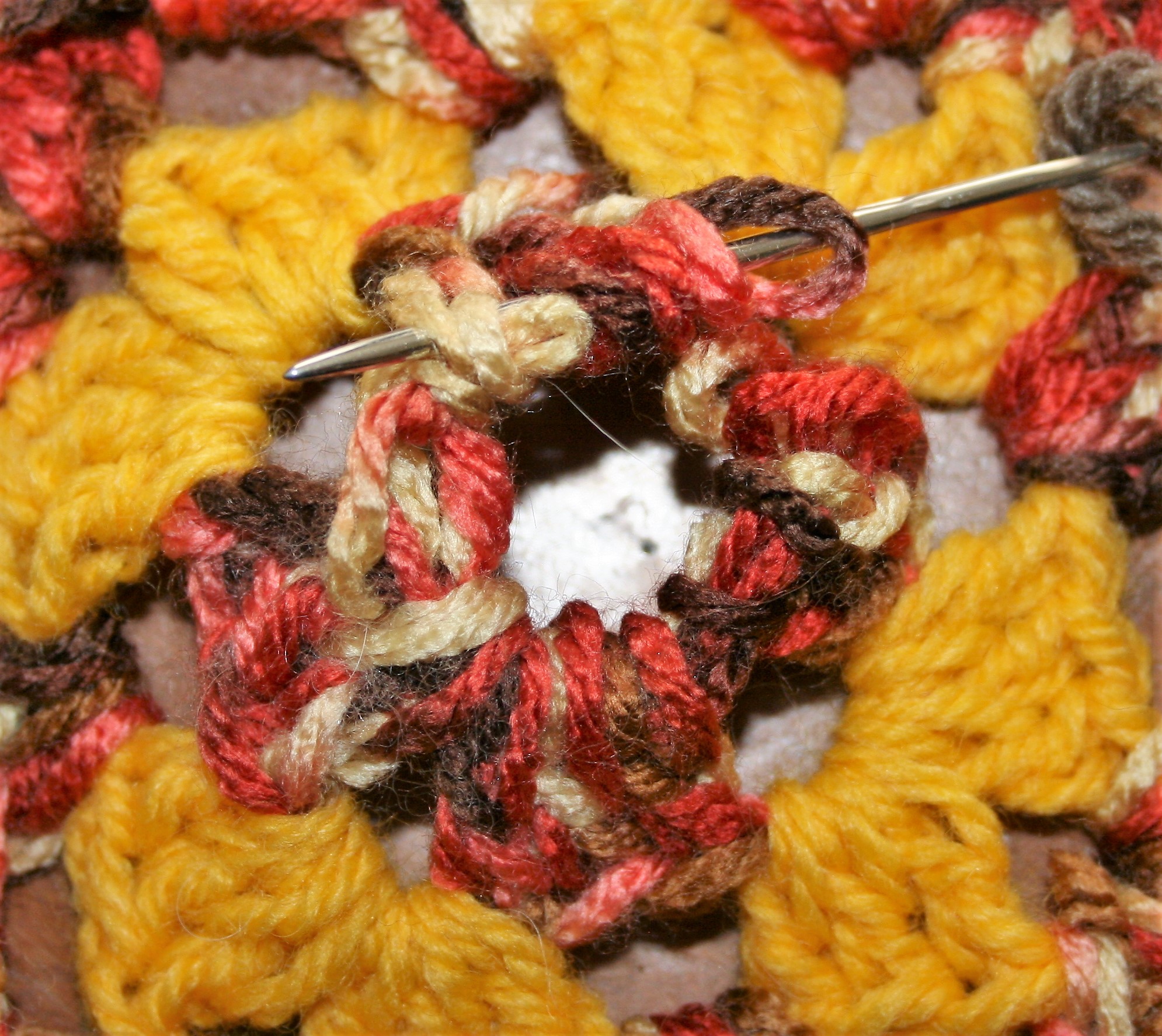
Begin repairing a crochet granny square

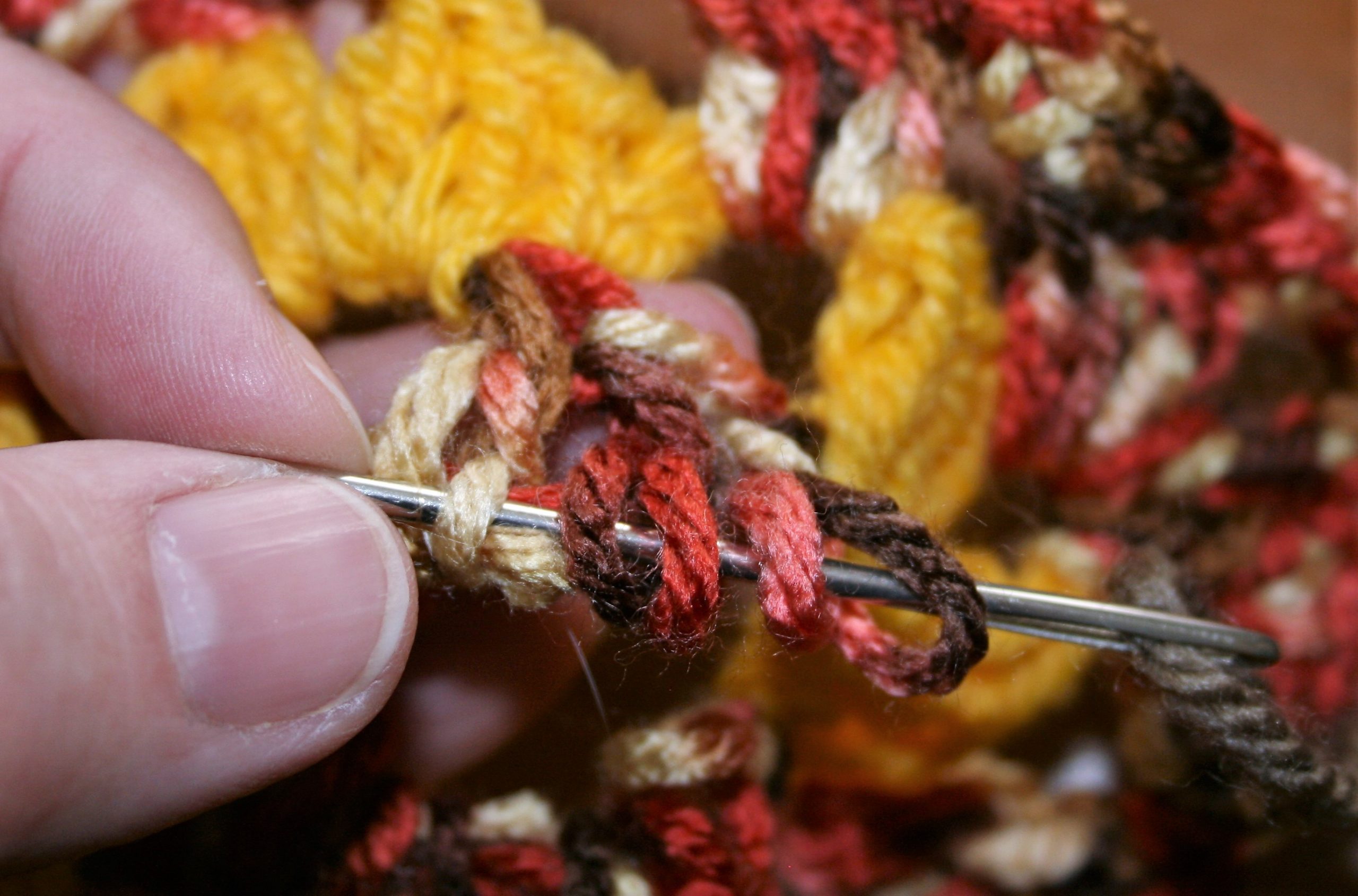
The first step is to pick up all the “feet” of the stitches in the first round. These loops may have a bit of a twist, and that is fine, just ensure that the threaded yarn is worked through even loop at the base of the stitches.

Pick up all the “feet” of the stitches

If stitches are missing in the round, use the threaded yarn to secure loops of remaining stitches to ensure that they do not unravel further. After creating a loop of yarn you can rework the stitches in these missing locations.

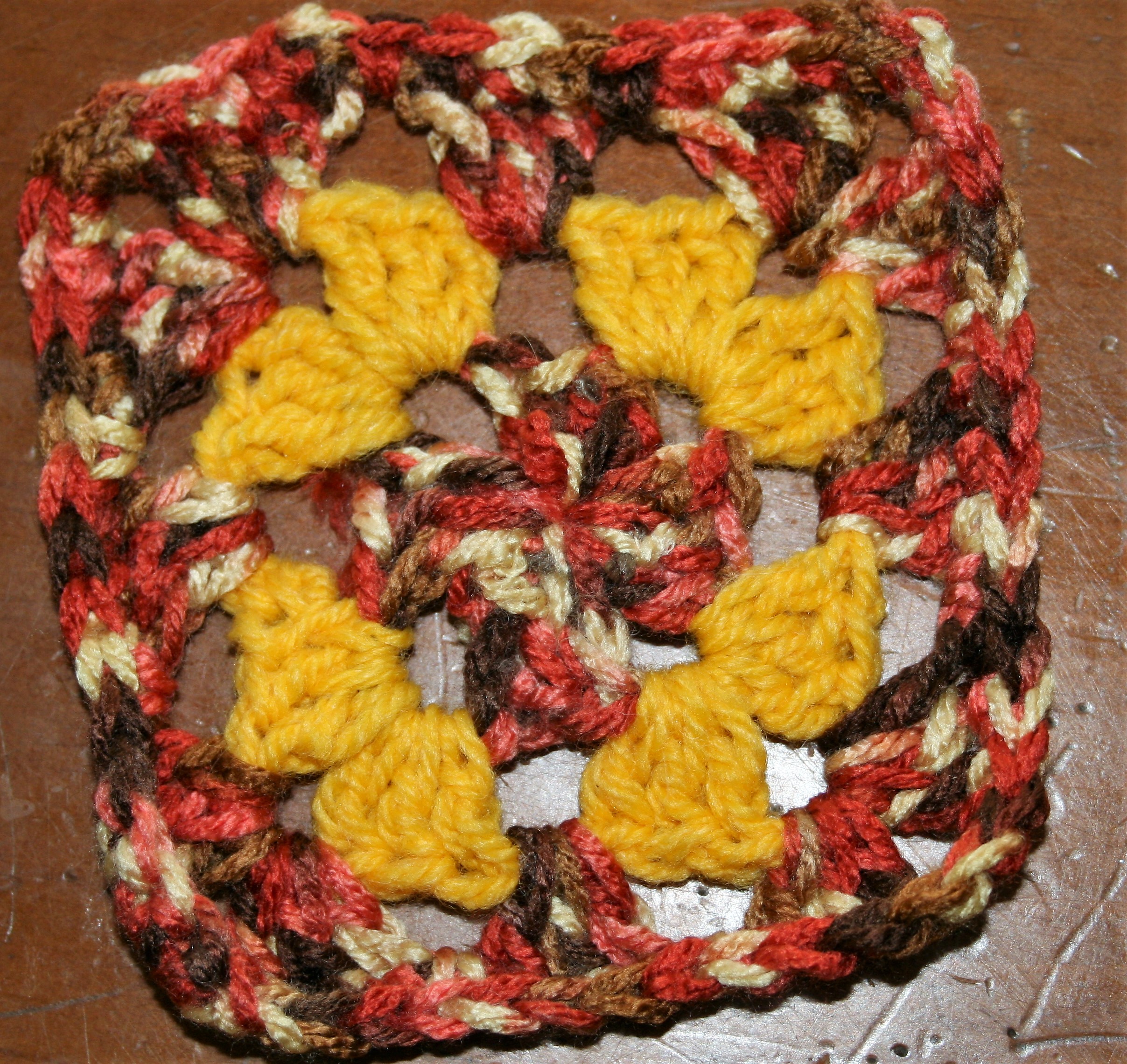
Repaired Granny Square

Pull the yarn tightly in the center, and weave the yarn through a second time. Tie the ends of the yarn together to create a knot, and then weave in the ends.

If you want to cut sections out of the granny square, or understand more about stitch structure to fix it, check out “Cutting Crochet“.