Air Pockets…They make the Difference

DSCF0578 - Copy

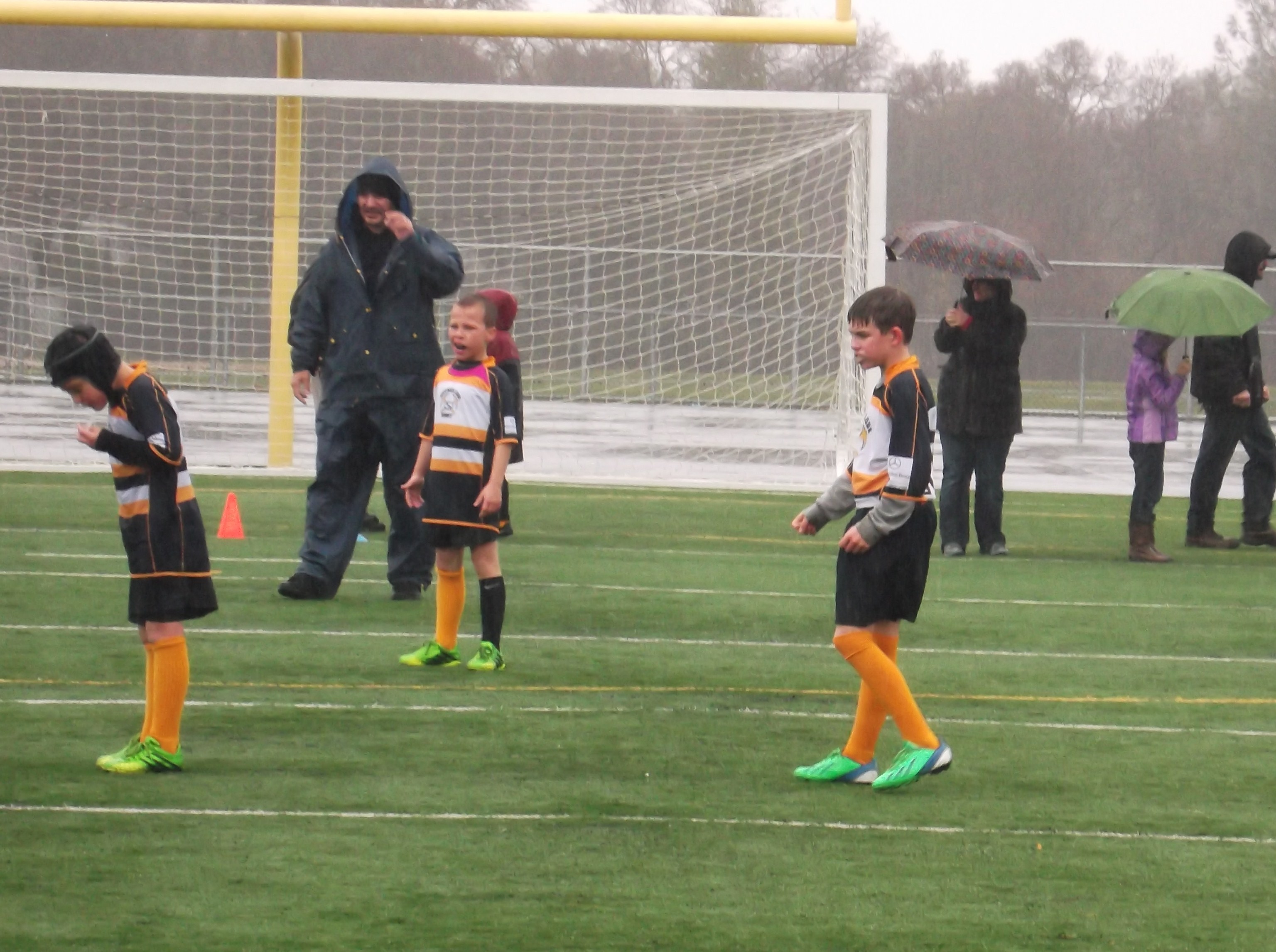
Rugby in the rain. We received about 8″ with this storm, completely welcomed after nearly 2 months of dry and warm weather.
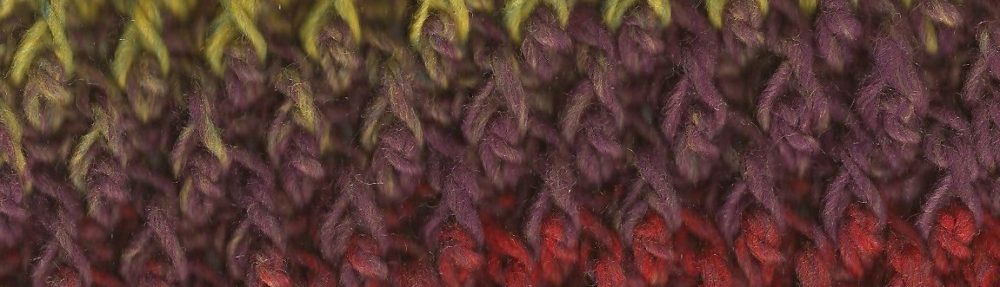
ScannedImageThe other day, while standing in the long overdue rain, watching my son’s Rugby game, I was thinking about what makes my crochet hat and gloves warmer then my denim jeans. The answer is simple, but also kind of surprising; air. The more little pockets of air that are trapped next to the skin, the warmer you can stay.

The process used in twisting the yarn and creating little knots, creates little pockets that trap air. Depending on the yarn and stitch combination, different levels of warmth can be created; this is why lace can be warmer than expected. The more things are compressed and made tight and dense, does not necessarily create a warmer fabric as it can press the air out of the work.

This is true with the yarn as well. Often it is realized that wool is warmer then bamboo, this is because of the fibers that are used. Bamboo, even though it is a plant fiber, is processed and extruded in factories creating a long smooth yarn that absorbs moisture, and thus in hot weather will keep you cooler by wicking away perspiration and allowing it to be evaporated. While the animal fibers that are utilized in wool yarns, are created naturally to keep the animal warm and dry. This is done by the crimp of the fiber itself.
DSCF0582

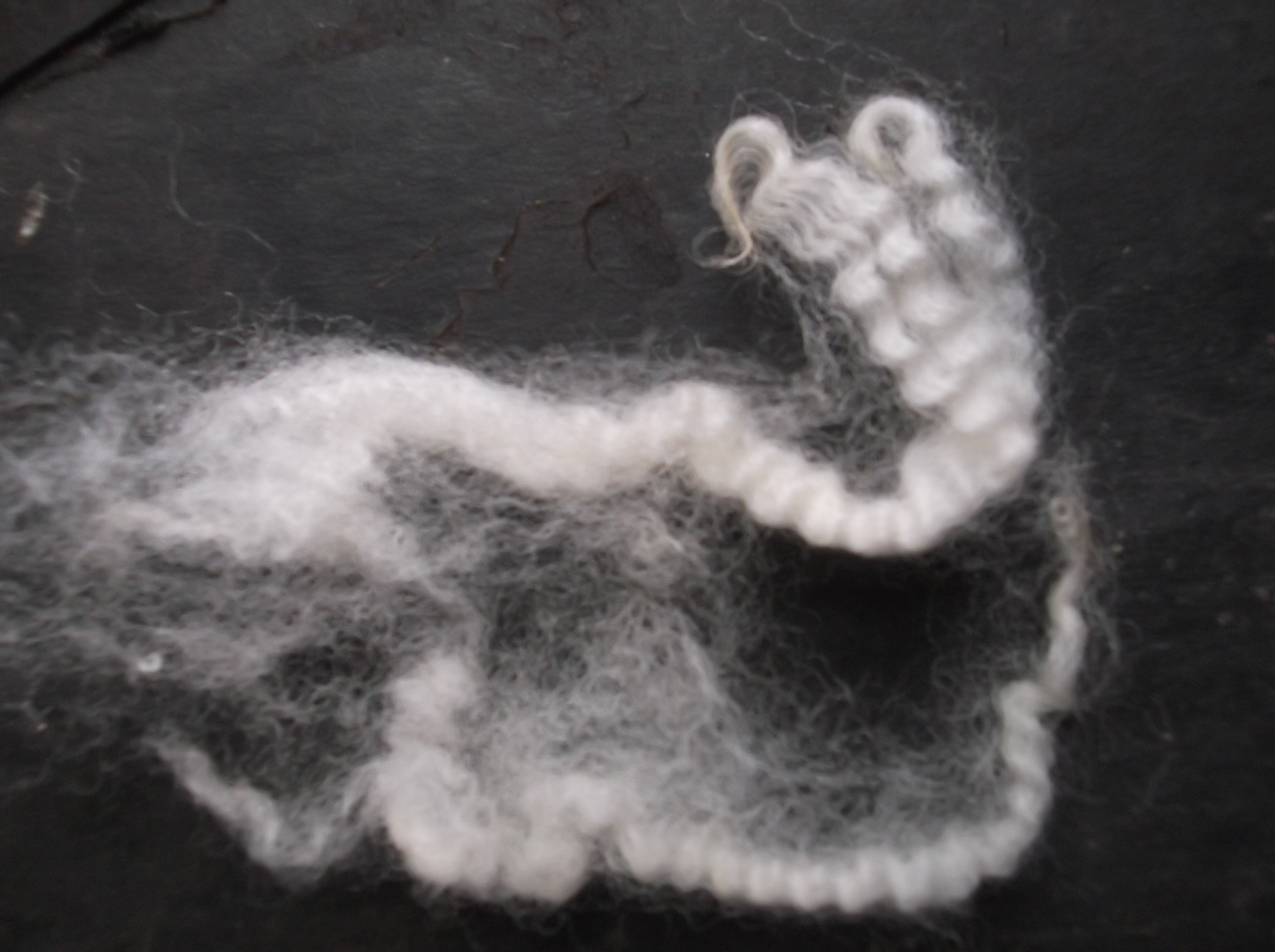
2 locks of wool, notice the crimp of the fiber

Wool fibers are not like hair, they are crimped (like the fashion in hairstyles from the 1980’s), it has stretch (like elastic) and it grows in clusters (a patch grows together and can be plucked out together as one group). This nature helps to create air pockets in the yarn that is being created (depending on the process used, more or less air can be trapped).
DSCF0584

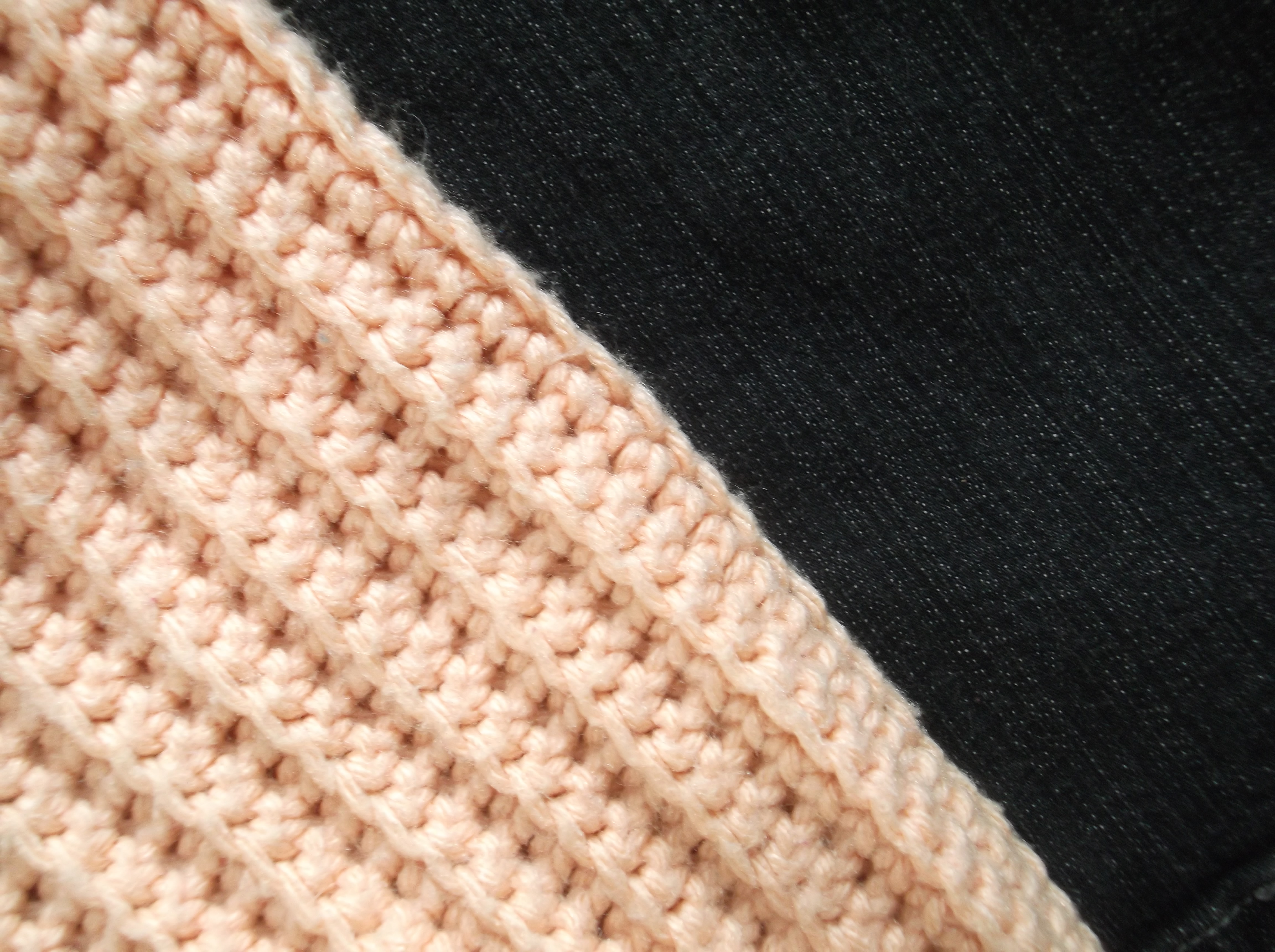
My single crochet ribbed hat over my denim pants

So while my woven denim might be durable it does not offer as much warmth because the amount of trapped air is limited. But that hat, made only out of single crochet ribbing and my gloves made from back loop single crochet kept me quite toasty in comparison.
Uncovering the Wool from Over My Eyes

ScannedImageI will admit, as a long time crocheter, I used acrylic yarns almost exclusively for years. I do not say this as a negative thing, acrylic yarns have many practical purposes and companies are creating new textures of yarn with them daily, but there are other practical mediums out there that deserve attention too. However there were several reasons for my long term use of acrylic.

First, availability. In years past I could actually pick up Super Saver in the grocery store while my mom got milk and eggs. Since it was already at hand it was easier to use more regularly. However times have changed, even finding the box stores with Super Saver are getting harder to locate (or involve quite a drive to get to). However box store yarns have become more diversified and I can find fibers that would have been seen only in small local yarn stores in the past.

Secondly, I knew how to use it. A pull skein is a simple concept that involves no extra work on my part. I could pick up a skein and a hook and go right to work, with a hank I was at a loss. I did not want to look like I was confused or unskilled, so I never really picked them up. I guess I figured that if the yarn could confuse me as to how to actually start using it, things would not go well. But after meeting some local spinners and learning how yarn is created at a wheel, I learned how to handle a hank (Here is a past post that shares the explanation).

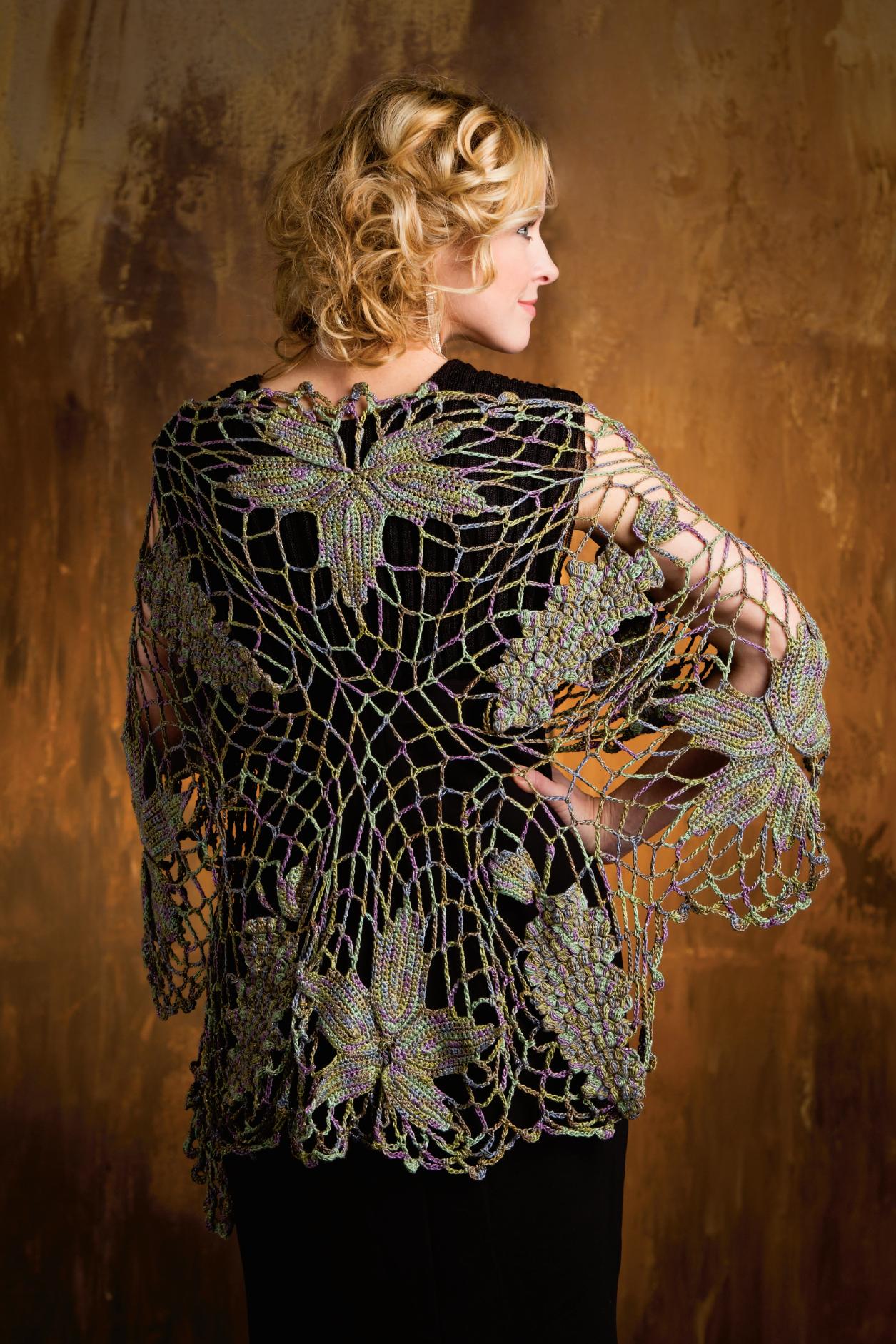
Vineyard at Dawn Shawl (back), Crochet! Magazine Spring 2013 Photo courtesy of Annie's

Vineyard at Dawn Shawl (back), Crochet! Magazine Spring 2013
Photo courtesy of Annie’s

Finally, thirdly, cost. I like to think of myself as spend conscience. I always looked at the cost per yard to find my best value (I admit I still am very aware of this even today). However, over the years I have come to realize that quality can make a really difference in my end product. Often the yarn can make or break a design. I use my Vineyard at Dawn Shawl (pattern in Spring 2013 Crochet! Magazine) as an example (created with a Blue Heron Rayon/Metallic), it has great drape, and is just striking, but if it were worked up in a chunky yarn it would have a very different effect, imagine it in soft, fuzzy mohair, which would be a different effect as well.

So, while these three obstacle where in place, I never tried luxury yarns or even wools for that matter until the last decade or so. When I first attempted wools, using my value shopping method, I found fibers that were not the most ideal. It worked up like I expected wool to, scratchy, itchy, and somewhat stiff. It played into all my negative preconceptions, but the more I learn out fiber the more I realized that not all wool is created equal.

Basically saying “wool”, is like saying bouquet, while terms like Merino, Shetland, and Romney are names of the flowers. These “flowers” have different properties that offer a different quality to the yarn. They have different degrees of softness, of loftiness, of felting ability, of amount of twist in the end yarn, and of durability. I won’t pretend to be an expert in know all the differing qualities of wool breeds, but I do know that the differences are there and can really make a difference in the end quality of my work.  

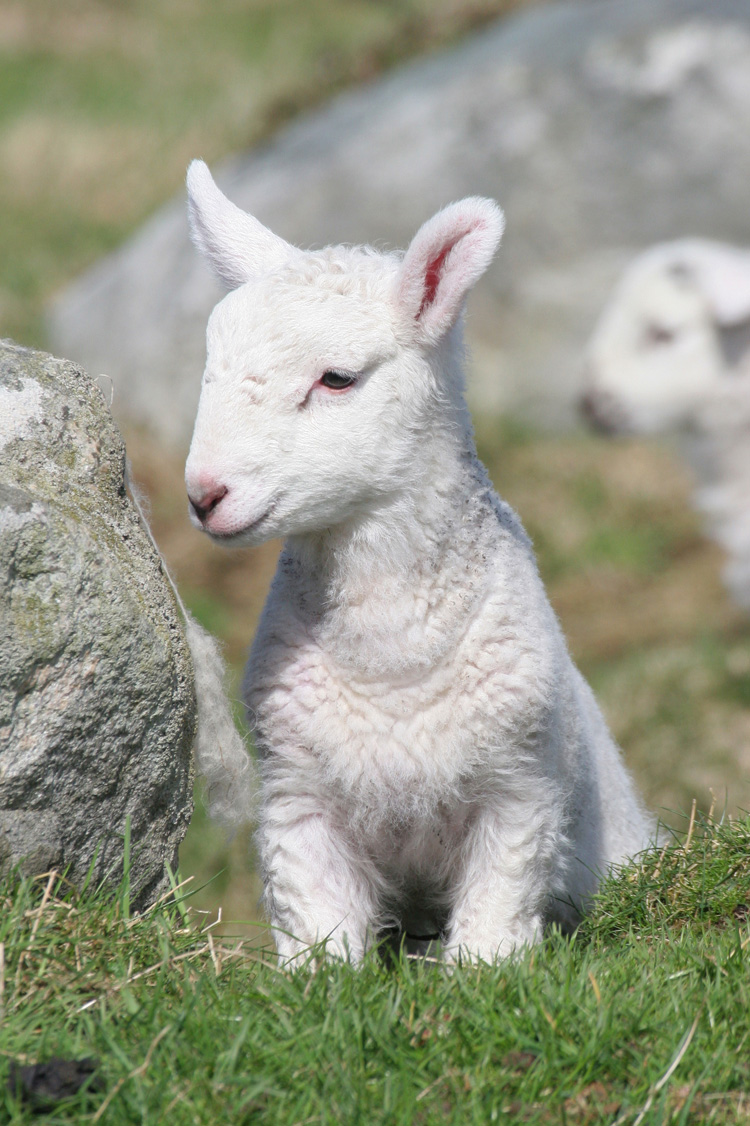
New Born LambOne of the first grading areas is the diameter of the individual fiber. The smaller the measurement in microns the finer the yarn, for example Superfine Merino might have a range of 15.6-18.5 microns, while carpet wool can have a measurement of 35-45 microns. This is before they are spun into yarns, so basically the larger the individual fiber the courser it will be. This alone can create many differing yarns out of wool, but then there are other properties such as crimp and staple length that play into a yarns texture. So you cannot take the term “wool” on face value, different wool breeds react differently (even to felting, some felt very little and others felt just by looking at a washing machine). I guess like most of us, there is more than meets the eye.

What to Pack…..

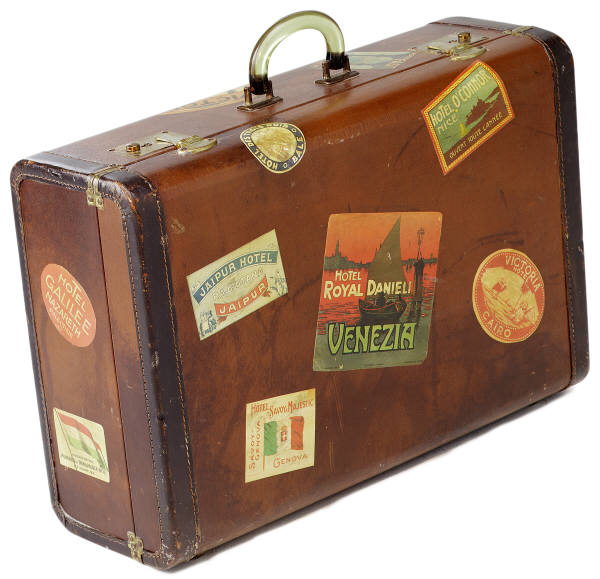
ScannedImageFall becomes a busy time of year, there seems to be some yarn related event happening almost every weekend across the nation. Since this last week there has been the Oregon Flock and Fiber Festival (OFFF), this weekend there is Lambtown in Northern California and the Knit & Crochet Show in North Carolina, Closely followed by the New York Sheep and Wool Festival (known simply as Rhinebeck) and Stitches East. It is almost enough to put you on yarn over load! (Okay only, almost, and I am sure that there are many other events taking place in this time frame as well). So what to include in your suitcase if you happen to be attending any said events?

If you crochet or knit, make sure and take something you have made, these are events where people actually really do know how time consuming, and intricate the hobby you have is. They will often stop and compliment your work, maybe even want to “pet” it. It is nice to feel like you are at a place where people understand you, and you often get great inspiration by seeing what others have done.MP900305798

If you are planning on attending, splurge a little and take a class, there are not many places that you can find great teachers like these venues offer. Even if you are like me and think, “oh, I’ll just buy the book and learn the technique that way”, there is so much more you can get out of the class. More than you can possibly imagine, and often well worth the price.

Bring your hooks and needles, and a project to play with. These are places you will feel like pulling up a chair and staying for a while, chatting with new and old friends and enjoying the atmosphere.

Make sure to leave extra room in your suitcase for yarn and goodies to bring home. If you sign up for the event and not just the show room shopping, you might find some free samples, but then there is the shopping you can do. Many vendors do not have store fronts, and some may not be available in most local yarn stores, so you can find the beautiful yarns usually only here or on-line (and I like to touch before I buy).

I hope I am remembering everything…oh, clothes to where I might need that, and travel supplies, but I guess I could go without and leave more space for yarn! (See you in North Carolina, if you can make it to the Knit & Crochet Show).

Differing Yarn Weights…what are they really…

ScannedImageI was asked a question the other day, of something I kind of take for granted; yarn weights. You hear a lot about different yarn weights, and as a crocheter I have always had a grasp of the traditional worsted (medium) weight acrylic yarns, but when you hear phrases like “I need to get some DK”, or “ I really enjoy this fingering”, there is a smile and a nod, but not a full appreciation of the statement.

So I will address my perspective of yarn weights (note; this is not about threads, that is a whole different discussion, but the same conclusion applies). The Craft Yarn Council of America has been attempting to help standardize many things in the yarn industry for consumers, including yarn weights. But that doesn’t mean that all worsted weights are created equal.

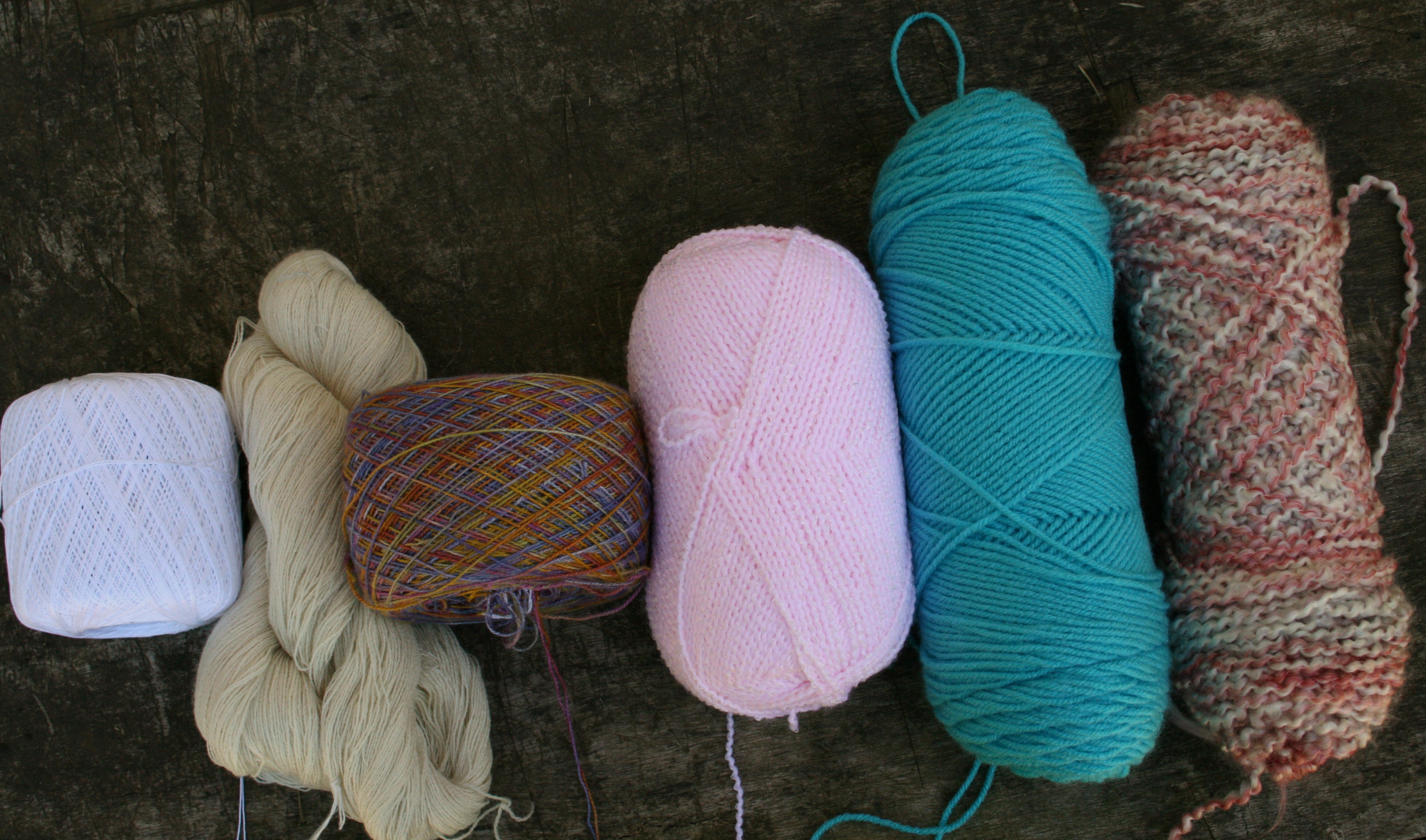
You have probably noticed numbers listed on the skeins of many commercial yarns, these are on a gradient scale with 0 being thinnest and 6 (or greater) being thickest.

So for the 0, listing this is categorized as Lace weight yarn, but has gone by other names such as Fingering, and 10 count crochet thread. While 1 is categorized as Super Fine, and has gone by the name of Sock, Fingering, and Baby. Not to be confused with 2, known as Fine, also called Sport or Baby. Confused yet? Basically the name terms have a more loose interpretation of what they really are. The number scale is devised of by using yarns with hooks that given an even drape and measuring the number of double crochet stitches over 4 inches (just like a swatch, that we are suppose to do before every project…and sometimes realize later that this is good advise). The greater the number of stitches, the finer the yarn (You can find the complete table and all the hooks used, and stitch range used for each category here).

IMG_5620

Yarn weights, 0 to 5- lace to chunky

This may work great when shopping at larger box stores, but not always helpful when buying yarn at some smaller local yarn shops or at larger events such as Stitches, or other venues that small distributors, yarn dyers, and personal yarn spinners. As they may not use the numbering standards and instead using the other terms; Fingering, Sock, Baby, Sport, DK, Light Worsted, Worsted, Afghan, Chunky, Craft, and Bulky (At these large events I don’t usually see a lot of the heavier weights, often it is hard to find what I would consider a worsted weight yarn), or simply give you a number of stitches per inch on certain size knitting needles (not really helpful to someone that doesn’t knit). Often they are using another unit of measure to determine the classification they are using such as the number of twists per inch in a length of yarn (the higher the number of twists the finer the yarn), or the numbers of yards in a pound (meter in a gram) (the more yards per pound the finer the yarn), so don’t feel intimidated to ask. I know you may feel like you will get slighted as a crocheter by knitters for asking, but if the booth wants to really sell yarn they will treat you like the valued customer you are.

A good mental note to use is to close your eyes and gently rub the strand between your fingers, let your instincts guide you. If you were to pick up a hook just now and crochet what hook would you pick up? The other thing to remember, if you like it, you’ll find a way to make it work. The classification only really matters if you want to substitute exactly, but let’s be honest, how often do we follow the patterns to a tee? (Okay I am not suggesting that you can substitute a lace weight yarn for a chunky and not have some difficulties, but reasonably close and you can make it work). We know how to make it our own, even if we don’t feel confident in explaining this. Everyone crochets differently, no two are the same, and we always make adjustments for this, yarn weight is no different.

If you have not left your comfort zone and have not attempted some finer weight yarns, what are you waiting for? There are many beautiful yarns that are finer weight that you can have fun with, remember ultimately you set the rules.

Learning the Hank (part 2)

IMG_5567

From Hank to Skein with Blue Heron Yarn

ScannedImage(Continued from April 19, 2013 post)…. So I finally understood the concept of a “hank” of yarn, it was intimidating me anymore, so I would simply open it up and roll it into a ball. Needless to say I had nothing but a tangled mess. After freeing the large loop of yarn so that I could unravel it from its loop, I learned that it might want to hold on to its neighboring thread and pull it ever so slightly with it, moving the neighboring thread from where it sat and growing into a mess. It took me hours, and even then I needed to cut places and work out knots that I had made, it was a head ache.  But this time I was not discouraged. I would find a process.

IMG_5571

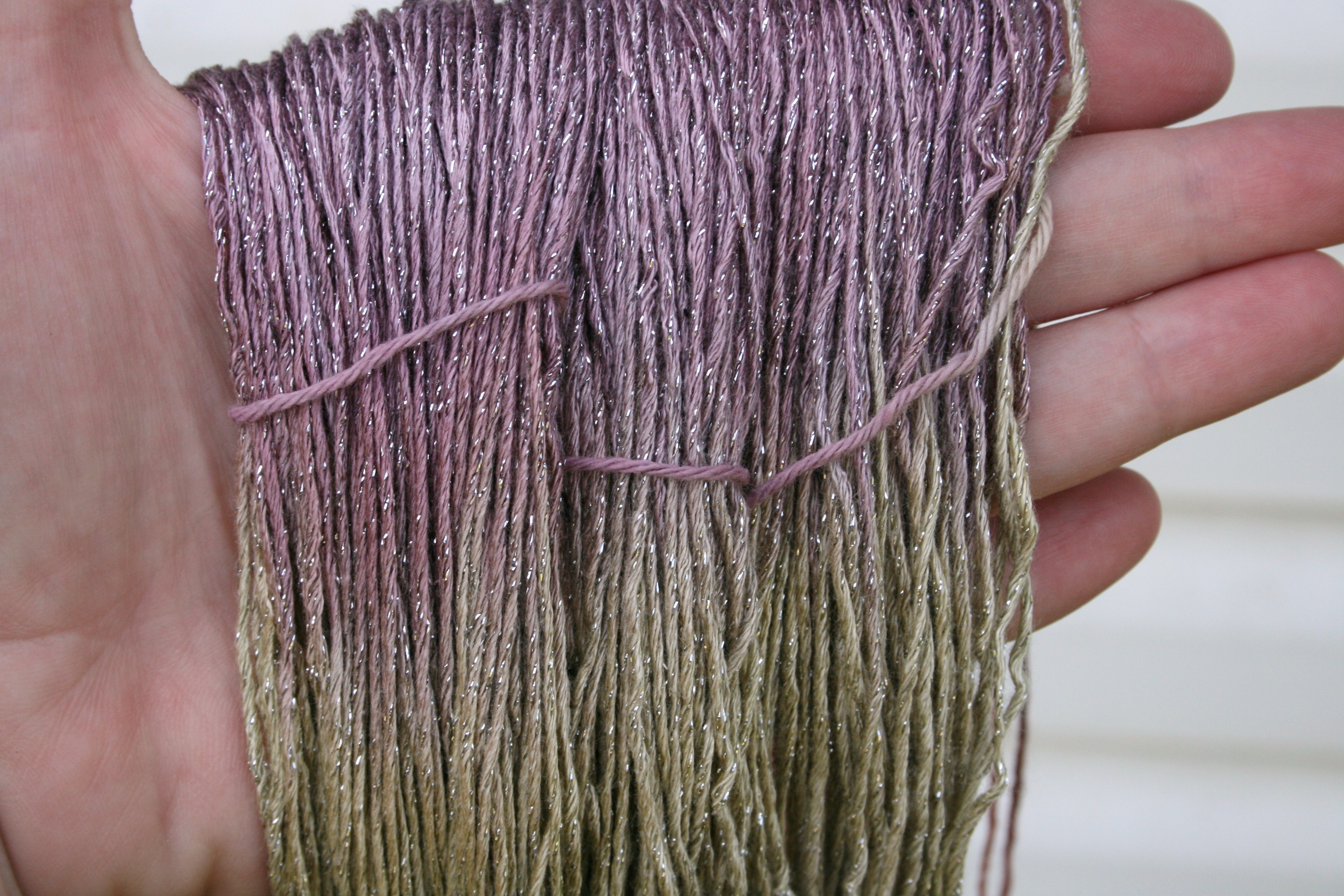
Let the loops hang smooth, note the yarn that ties to loop together, keeping the yarn in place

IMG_5572

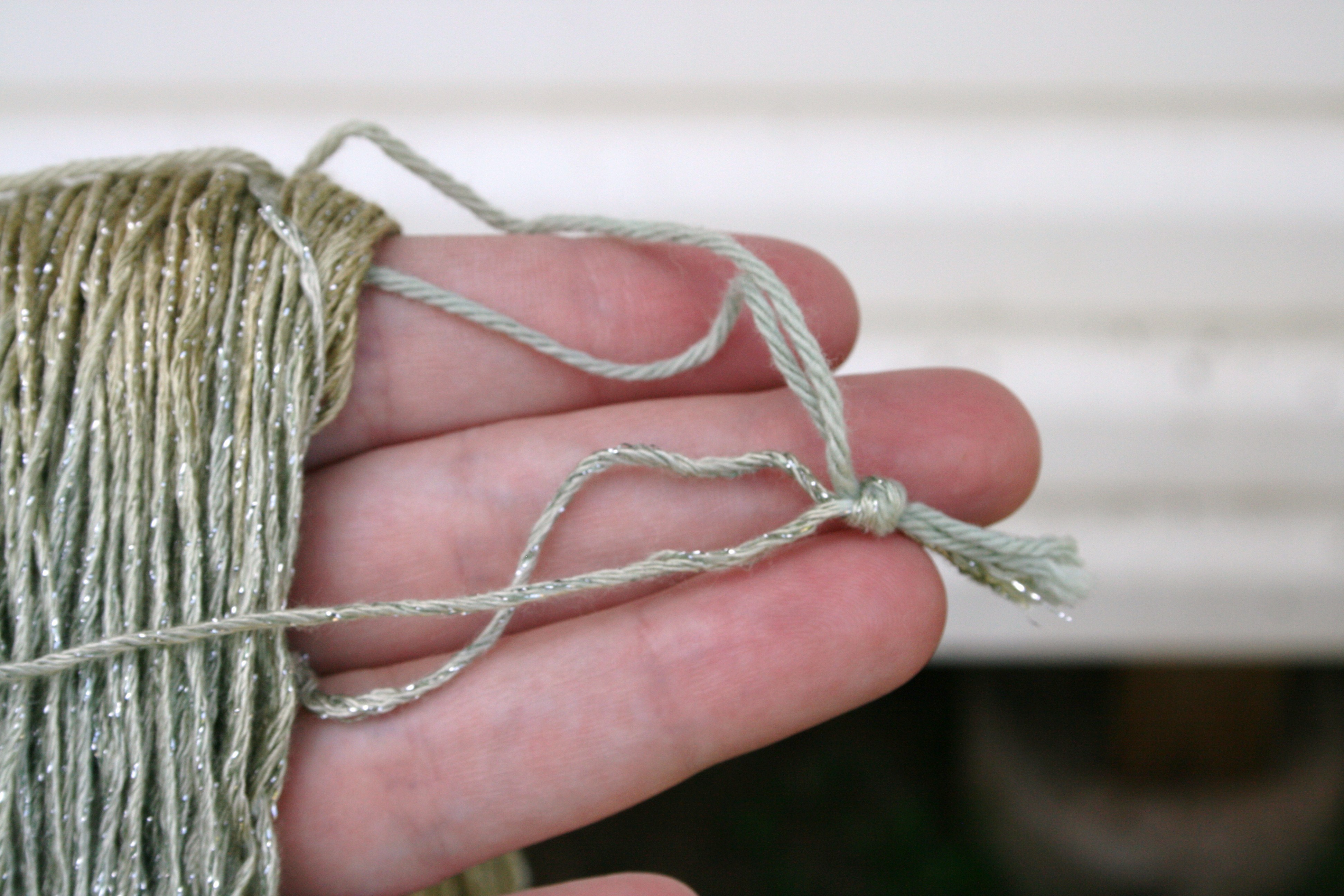
Usually you can fond the end of the yarn tied to a securing yarn, that holds the loops in place

After playing with some hanks I learned that before I even attempt “freeing” the yarn from its loop, I need to make sure the loop in smooth, not twisted, that it hangs nicely, this will definitely help. Then I need to place it somewhere that will keep it taunt, maybe over the back of a dining room chair, but I found that I use my knees (not very lady like but effective for me), I have learned that some people use a swift…it reminds my somewhat of an umbrella, but without the fabric. This expands to the size of the loop and will spin as you pull the yarn). Then I can make it into a ball, if I want to pull it from the center I can wrap the yarn around an empty toilet paper tube (open finishing wrapping it up, I can pull out the tube and use the middle yarn, as pulling from  the center means that the yarn will not be rolling around that floor as I use), or there is a little tool called a ball winder that you place your yarn end in and crank its little handle and it spins it onto a tube, to make a pull from the center skein.

So why is yarn placed in hanks? Is it just to give you a little more of a work out, or to look fancy? Actually it does have a reason; it places less stress on the yarn. By being in that “loop” it helps the yarn to relax, where putting it into a skein or ball, the yarn in the center is under more pressure than the yarn on the outer edges. This may be a subtle thing, but it can make a difference in some processes and designs, especially if the fiber has been sitting in this more pressured state of a long while. If you think about it you have seen this with a basic skein of yarn, when you pull out the beginning end, it is often bent of twisted, where by the end of the skein it is smooth. So if you want to use a hank of yarn, only wind it into a ball when you feel you are ready to use it. It will help the yarn stay consistent.

IMG_5569

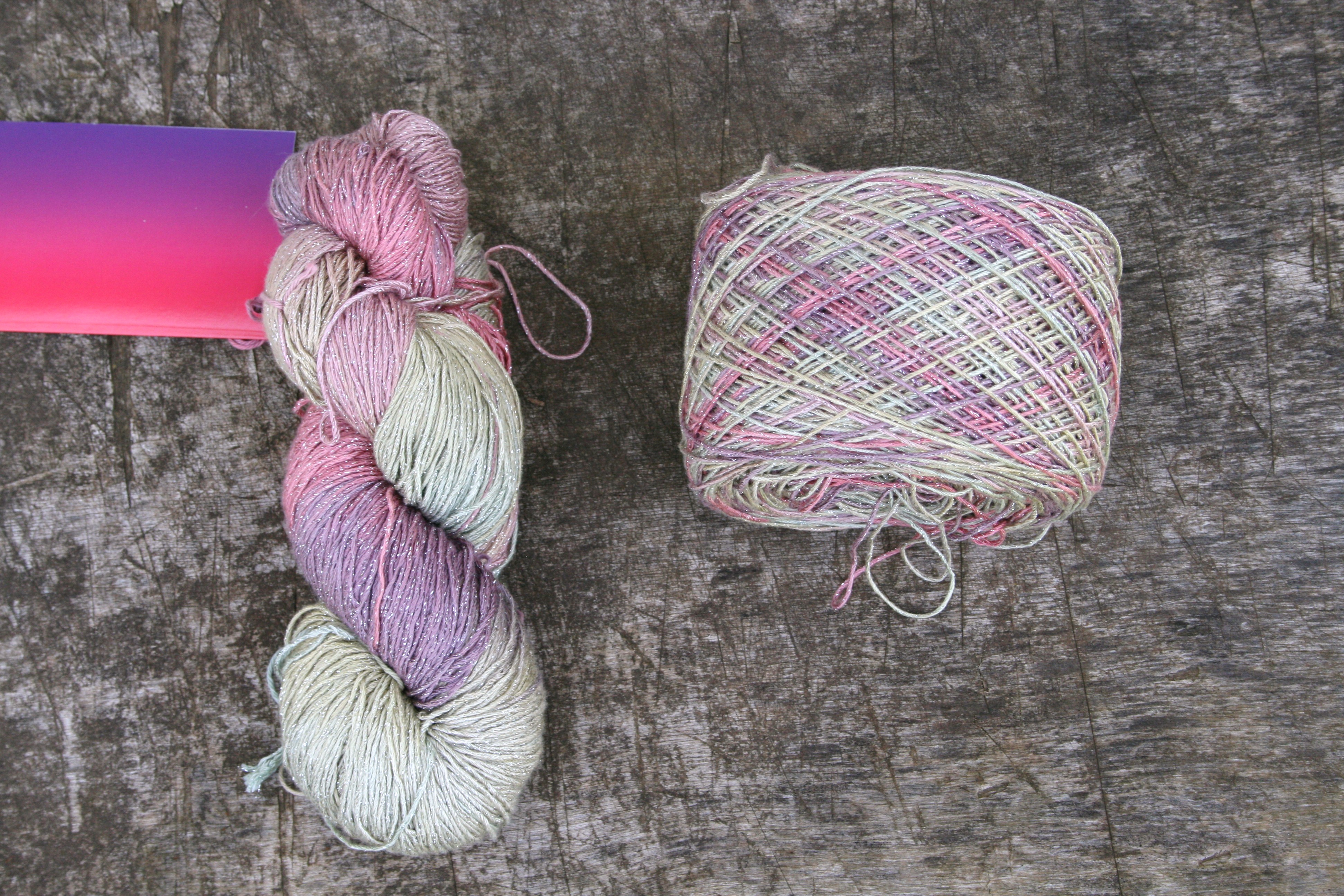
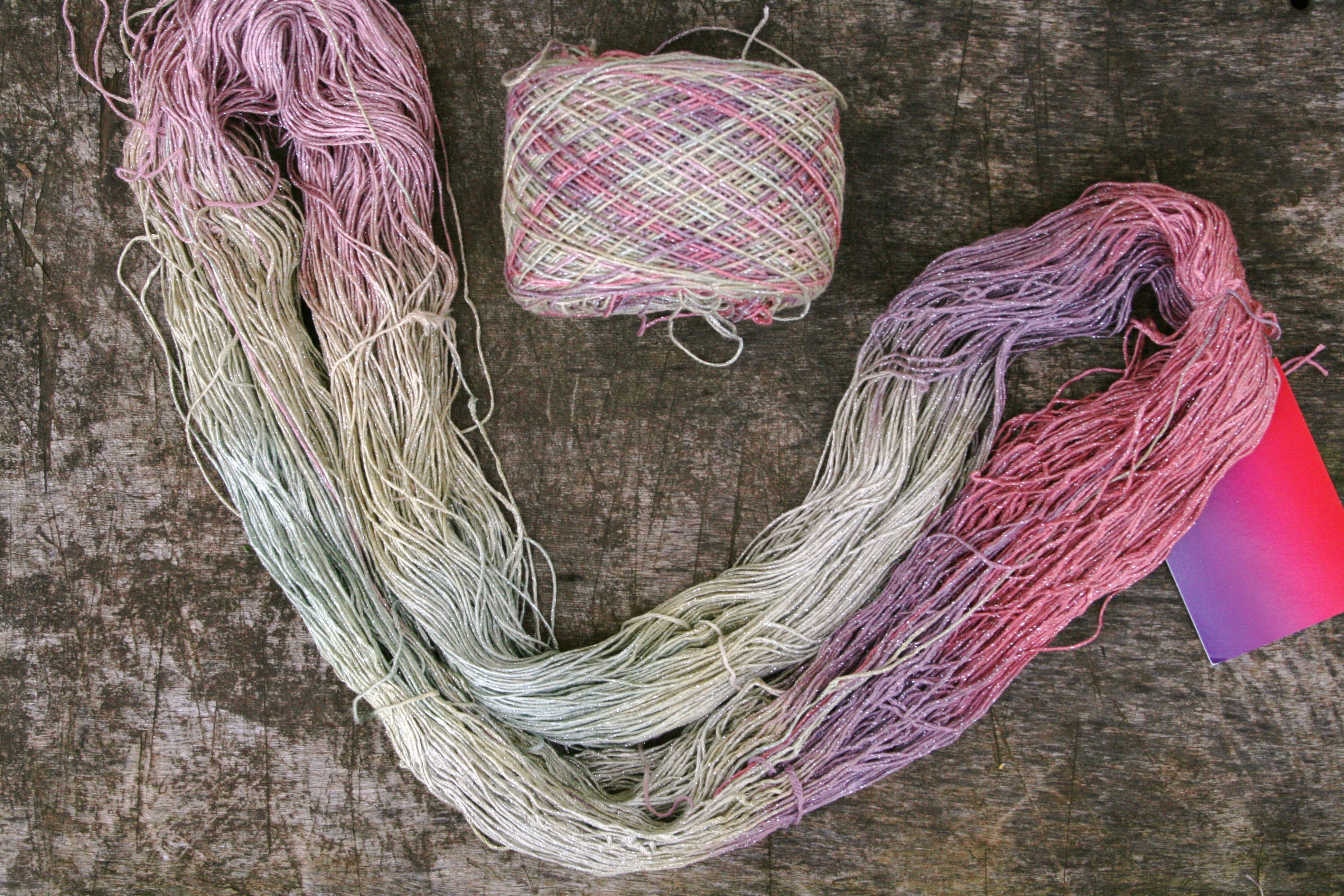
Notice the hank lets you view the length of the color change, whereas the skein it is less obvious

One of the benefits I have found with a hank, it a purely visible one, I can open a hank to a loop, and see how long the color changes are for a variegated yarn. This is something that I have difficulty seeing in a skein.

I have found that I am not alone in my understanding of this “yarn hank”, so I hope my experience will help you take the step to attempt a yarn you may not have used because of the way it is presented. (And I have since learned, that most of these Local Yarn Stores, will in fact wind the hank into a skein for you at purchase, you just have to ask). Take the plunge and explore the world of fiber!