Crochet Review

ScannedImageI never intended to be quiet for the month of December, but the time between Thanksgiving and Christmas just disappeared in a blink. I had many things ready to write and post, but my world got caught up in birthdays, families and traditions.

Speaking of traditions this is the usual time of year for reflections and promises of goals to accomplish in the next 365 days. I usually take some time reflecting on the year my family has had when I write up a Holiday letter, but that did not occur this year either, however I am sure it looked like many peoples. We made new friends, we lost others. We had highs, we had lows. We overcame challenges, some small, some large. We gained, we lost. We dealt with change, both positive and negative.

I thought I would take this opportunity to do something that I never have done before, reflect on where my crochet has been in the last year. I am not meaning focusing on my designs, or where my designing has gone this year (even though I can see it growing and it is definitely on a journey), I mean my actual crochet. Highlighting the moments of understanding and conceptualizing with clarity some stitches or techniques I have taken for granted.
MC900222914In 2013 I can say that I put to practice the concept that was introduced to me in the fall of 2012, using much larger hooks then would be expected. It has made a much greater drape in my work, and opened me up to some yarns that I felt were more limited in the past. It is a simple concept that I did not really put to understanding, but after some play it has changed my perception of Tunisian crochet, as it has made a great difference in this stitch technique for me. The work curls less, is not nearly as stiff, and can have a flow like silk in some cases.

I have also paid more attention actual stitch construction. This sounds like something I really should have understood well before now, but once again it is something I took for granted. I knew the parts of a stitch and how to create them, but this year I spent more time playing with how each part affects the stitch and what happens if they are changed. This has opened a completely new door for my thoughts, that I am sure will be carried forward with me for many years to come.

I have also really paid more attention to my finish work. After many discussion with other crocheters (and even some knitters), I began applying new ways of finishing my work, and seaming. The differences are subtle, but subtle can definitely make the difference.

So, basically, it looks like I learned a lot this last year from playing. I hope that I have more opportunities to play, in the upcoming year; and that the adventure in learning, even from things I think I know, never ends.

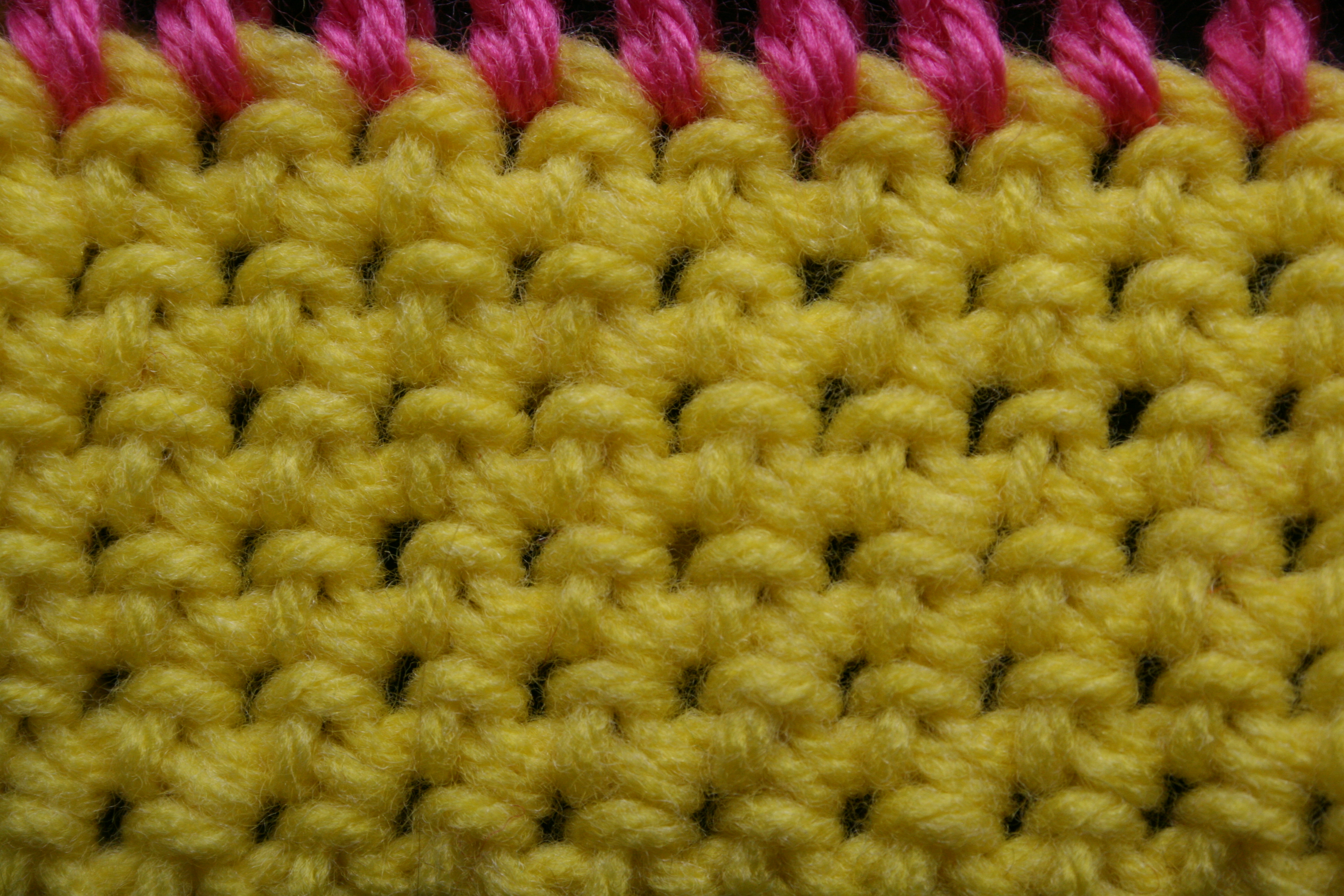
The Touch of Crochet, Reading Stitches

ScannedImageMany people who believe that they can’t read a pattern, really just have a different learning style. This last pattern reading technique I want to discuss is probably the most difficult for most people to grasp, reading stitches. I don’t mean that is too difficult for people to understand, but it is not the most effective way for most people to read a pattern, but there are some that this is a needed style. It reminds me of playing music by ear; you know the melody and are finding the write notes. This is a tactical way of learning, by using your hands and touch, whereas traditionally written patterns are good for oral learners (reading it our loud and it makes perfect sense), and charts are great for visual learners. This doesn’t mean that you only have one learning style, most of use learn effectively from a combination, it is just that tactical instruction is a little less apparent and some people believe they can’t understand a pattern when really they haven’t given themselves permission to realize that they may understand the craft of crochet in a different way than others.

To begin with you won’t really find these patterns in any book, at least not formally. But close up photos lend to assisting in this style. Often this style is worked by directly copying an already completed project.

To read stitches, you have to recognize what your stitches really look like. If you’re like me, you probably never really look at how your stitches. I plug right along and only notice the special stitches like shells or bobbles, but never really pay a lot of attention to a double or single crochet stitch appearance. But there have been times when I have been presented with some old handmade item and asked if I knew the pattern. (Sometimes the item is not crocheted, so I attempt to decipher the creation manner, such as tatting or bobbin lace most often). To recreate this masterpieces, or for those that learn better from this example, you must know what the stitch looks like a know how to recreate it. So let’s take a look at some common stitches.

First you need to identify the top of the work, this can be a little challenging dependent upon the type of work, and you may need to pull out a hook and yarn to see if you can duplicate what you can to determine direction (but once you recognize various stitches you can easily discern the direction, it may take you a little practice).

Chains are usually obvious, but the slip stitch can be a little difficult to locate and recognize without some practice, (as it doesn’t photograph well for me, I recommend you play with some slip stitches and see how they look for yourself.

IMG_5625

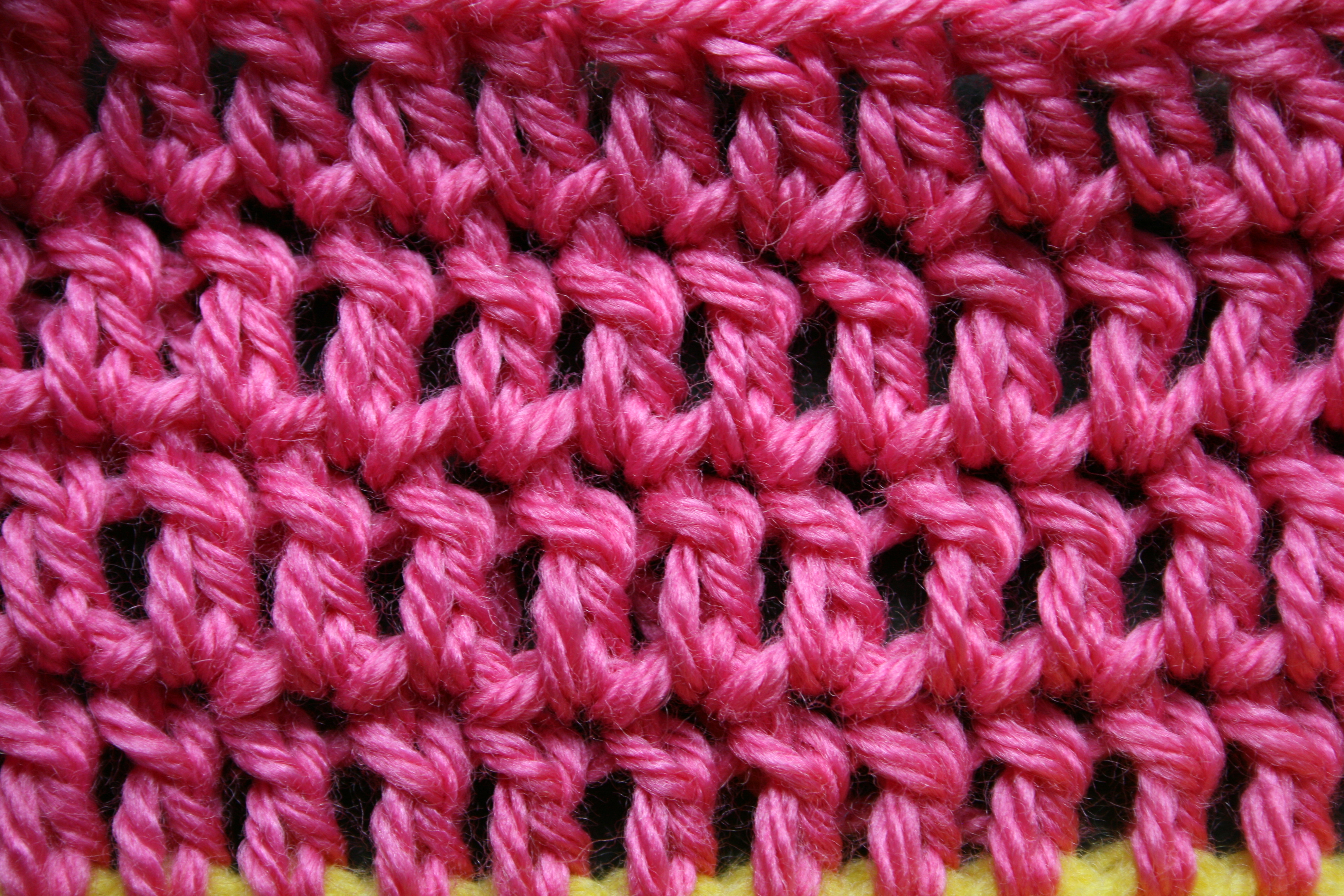
Right Side Single Crochet

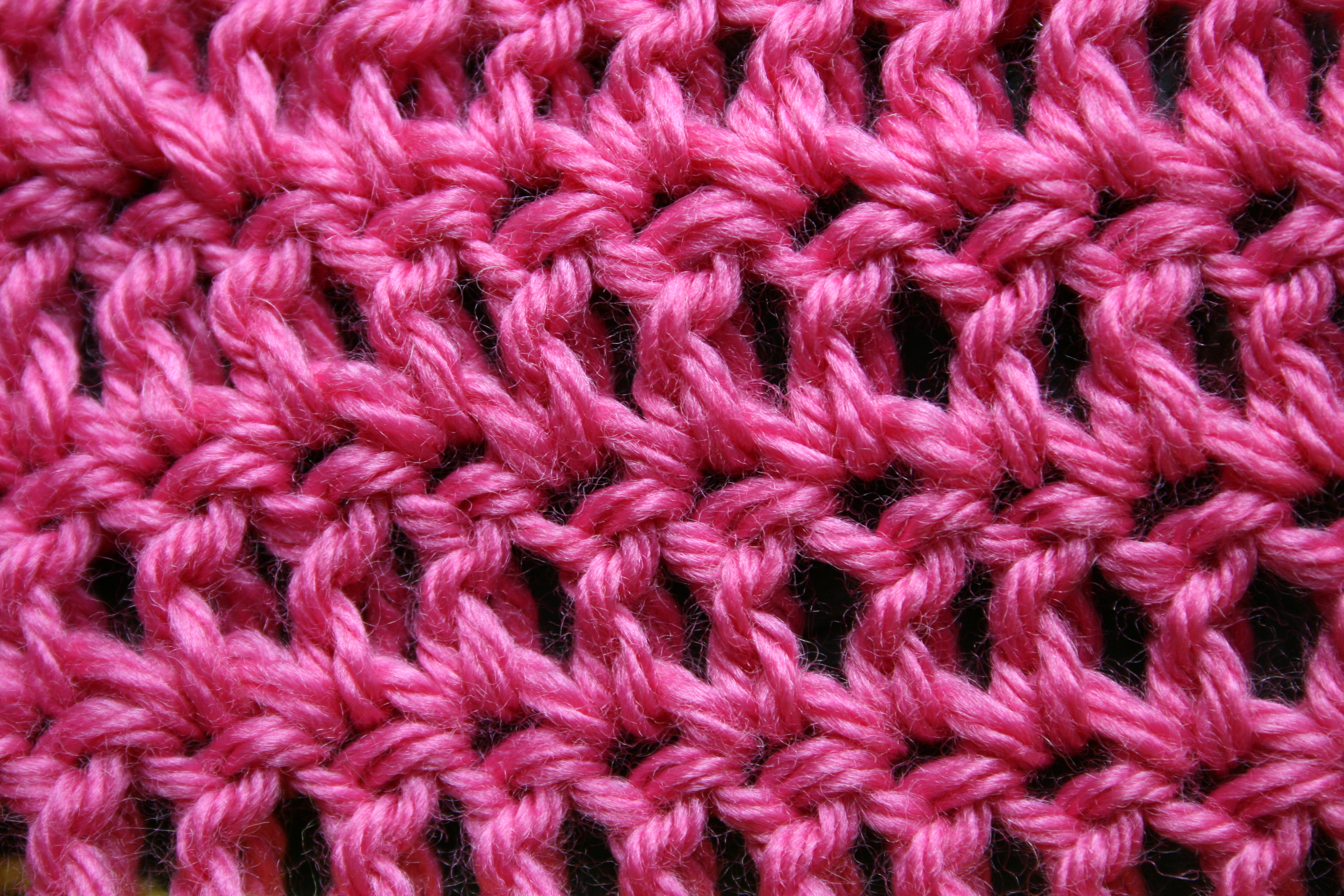
IMG_5626

Wrong Side Single Crochet

The Right Side(RS) of a single crochet (sc) row looks like a row of little “v”, while the Wrong Side(WS) look like upside down “v” wearing a flat hat, or maybe even a belt with two little legs.

IMG_5624

Right Side Double Crochet

IMG_5627

Wrong Side Double Crochet

For the RS of a  double crochet (dc), if you are right handed (left will be opposite)you will see two diagonal bars, one beginning in the upper left of the stitch and  continuing to the right  where it reaches the second diagonal bar that continues in the same direction appearing to wrap around to the back of the post. While the WS has one horizontal bar at the top and one diagonal bar from the upper right, just under the horizontal bar, down to the left ending at the middle of post and appearing to go between the base of the stitch (I love the description Vashti Braha uses for this part of the stitch as “feet” since they appear to be like ballet slippers at point).

This style of pattern reading is one that lends itself well to expanding your creative side, as it gives you a better understanding of stitch construction. Even if this is not the easiest method for you to follow or understand I recommend that you work up some sample and really look at you stitches, it is amazing how improving your techniques at this basic level can really improve the overall appearance of your work, not to mention help you greatly when you are approached with the question; “I love the doily my great-great grandmother made, can you show me how to make one like it?”


Differing Yarn Weights…what are they really…

ScannedImageI was asked a question the other day, of something I kind of take for granted; yarn weights. You hear a lot about different yarn weights, and as a crocheter I have always had a grasp of the traditional worsted (medium) weight acrylic yarns, but when you hear phrases like “I need to get some DK”, or “ I really enjoy this fingering”, there is a smile and a nod, but not a full appreciation of the statement.

So I will address my perspective of yarn weights (note; this is not about threads, that is a whole different discussion, but the same conclusion applies). The Craft Yarn Council of America has been attempting to help standardize many things in the yarn industry for consumers, including yarn weights. But that doesn’t mean that all worsted weights are created equal.

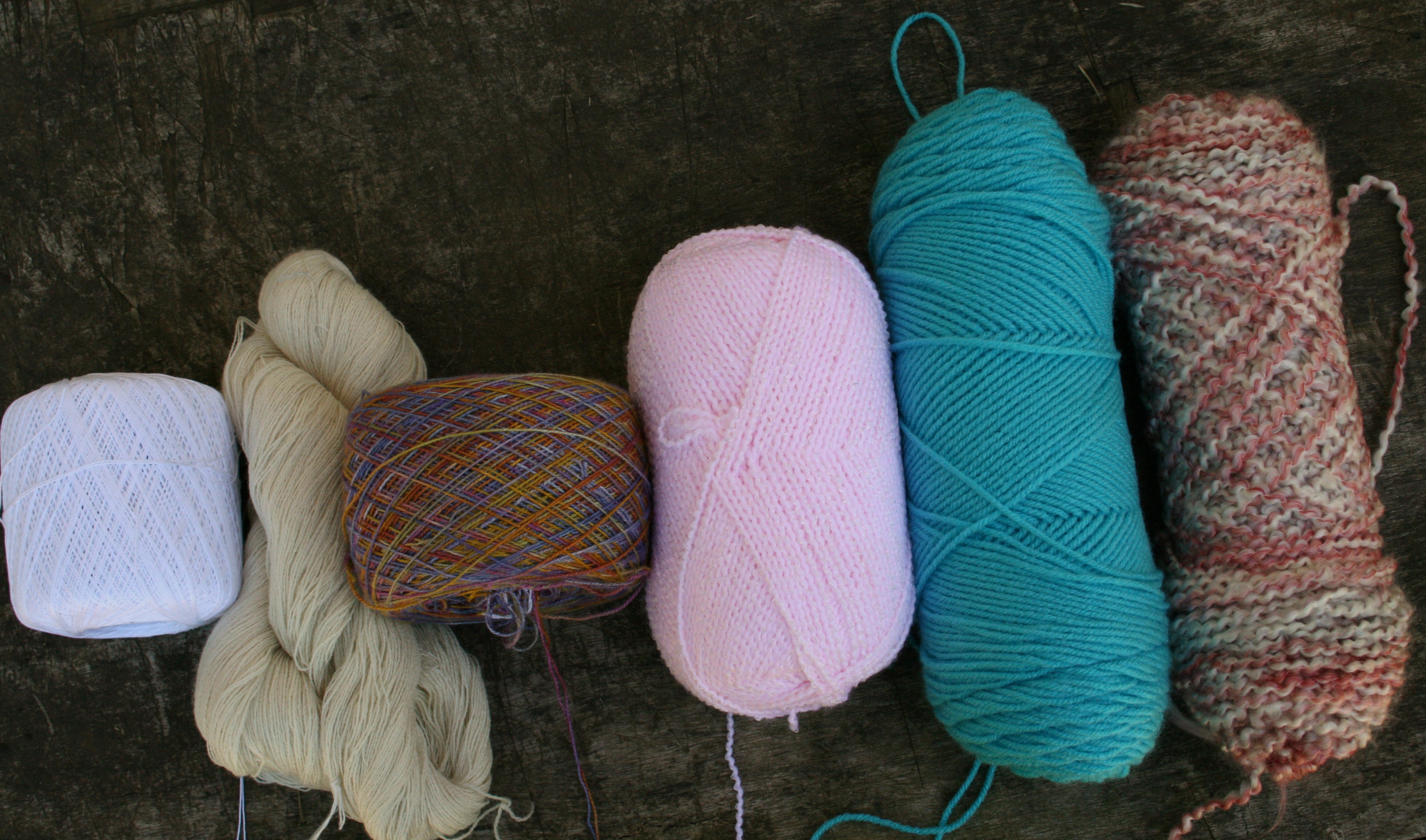
You have probably noticed numbers listed on the skeins of many commercial yarns, these are on a gradient scale with 0 being thinnest and 6 (or greater) being thickest.

So for the 0, listing this is categorized as Lace weight yarn, but has gone by other names such as Fingering, and 10 count crochet thread. While 1 is categorized as Super Fine, and has gone by the name of Sock, Fingering, and Baby. Not to be confused with 2, known as Fine, also called Sport or Baby. Confused yet? Basically the name terms have a more loose interpretation of what they really are. The number scale is devised of by using yarns with hooks that given an even drape and measuring the number of double crochet stitches over 4 inches (just like a swatch, that we are suppose to do before every project…and sometimes realize later that this is good advise). The greater the number of stitches, the finer the yarn (You can find the complete table and all the hooks used, and stitch range used for each category here).

IMG_5620

Yarn weights, 0 to 5- lace to chunky

This may work great when shopping at larger box stores, but not always helpful when buying yarn at some smaller local yarn shops or at larger events such as Stitches, or other venues that small distributors, yarn dyers, and personal yarn spinners. As they may not use the numbering standards and instead using the other terms; Fingering, Sock, Baby, Sport, DK, Light Worsted, Worsted, Afghan, Chunky, Craft, and Bulky (At these large events I don’t usually see a lot of the heavier weights, often it is hard to find what I would consider a worsted weight yarn), or simply give you a number of stitches per inch on certain size knitting needles (not really helpful to someone that doesn’t knit). Often they are using another unit of measure to determine the classification they are using such as the number of twists per inch in a length of yarn (the higher the number of twists the finer the yarn), or the numbers of yards in a pound (meter in a gram) (the more yards per pound the finer the yarn), so don’t feel intimidated to ask. I know you may feel like you will get slighted as a crocheter by knitters for asking, but if the booth wants to really sell yarn they will treat you like the valued customer you are.

A good mental note to use is to close your eyes and gently rub the strand between your fingers, let your instincts guide you. If you were to pick up a hook just now and crochet what hook would you pick up? The other thing to remember, if you like it, you’ll find a way to make it work. The classification only really matters if you want to substitute exactly, but let’s be honest, how often do we follow the patterns to a tee? (Okay I am not suggesting that you can substitute a lace weight yarn for a chunky and not have some difficulties, but reasonably close and you can make it work). We know how to make it our own, even if we don’t feel confident in explaining this. Everyone crochets differently, no two are the same, and we always make adjustments for this, yarn weight is no different.

If you have not left your comfort zone and have not attempted some finer weight yarns, what are you waiting for? There are many beautiful yarns that are finer weight that you can have fun with, remember ultimately you set the rules.

Attending the Big Events

ScannedImageIf you have never attended a large fiber conference I recommend that you at least attend one once in your life time. The opportunities are more then you can imagine. Usually you find great venders in yarn, as well as books and unique supplies; there are even classes to take with a wide range of specialties. I mention this because I will be at Stitches West this week and look forward to seeing all the interesting booths. The Convention Center in Santa Clara, California is always filled with booths of various types supporting all kinds of fiber arts. One year my sister attended with me, and found a new hobby of needle felting. If you happen to be in the area, stop by Saturday and say “Hi”, I’ll be at the Lisa Souza Knitwear and Dyeworks Booth (720/22/24) with the release of my new patterns!

http://www.knittinguniverse.com/west/

http://www.knittinguniverse.com/west/