A Class of Crochet

ScannedImageI am a self taught crocheter; I learned from a long out of print book when I was about 10. However only recently I have learned the benefit of actually taking a crochet class.

My first class was at a Crochet Guild of America (CGOA) Chain Link Conference (aka Knit and Crochet Show) in July 2011, with Karen Ratto-Whooley on Savvy Singles, learning new approaches to single crochet stitches. (This conference changed my life, but that is a story for another day)Usually I read through class listings and think “I have seen that in a book, what else they can be showing me”, but after taking this class I realized that there are more than the words in a pattern or book that created my hobby. Being in a room of fellow crocheters getting more detailed instruction then I thought was possible was an eye opening moment.

The designer doesn’t talk about the inspiration or thought process behind a pattern in any book that I’ve found, but in the class I was hearing the “background” of how the stitches work and the dynamics of how they work with the pros and cons of each stitch.  The fellow students offered more then I would have thought by bringing up questions I would have not considered. Even after crocheting for nearly 30 years, this old dog was learning new tricks.
IMG_20121023_165749

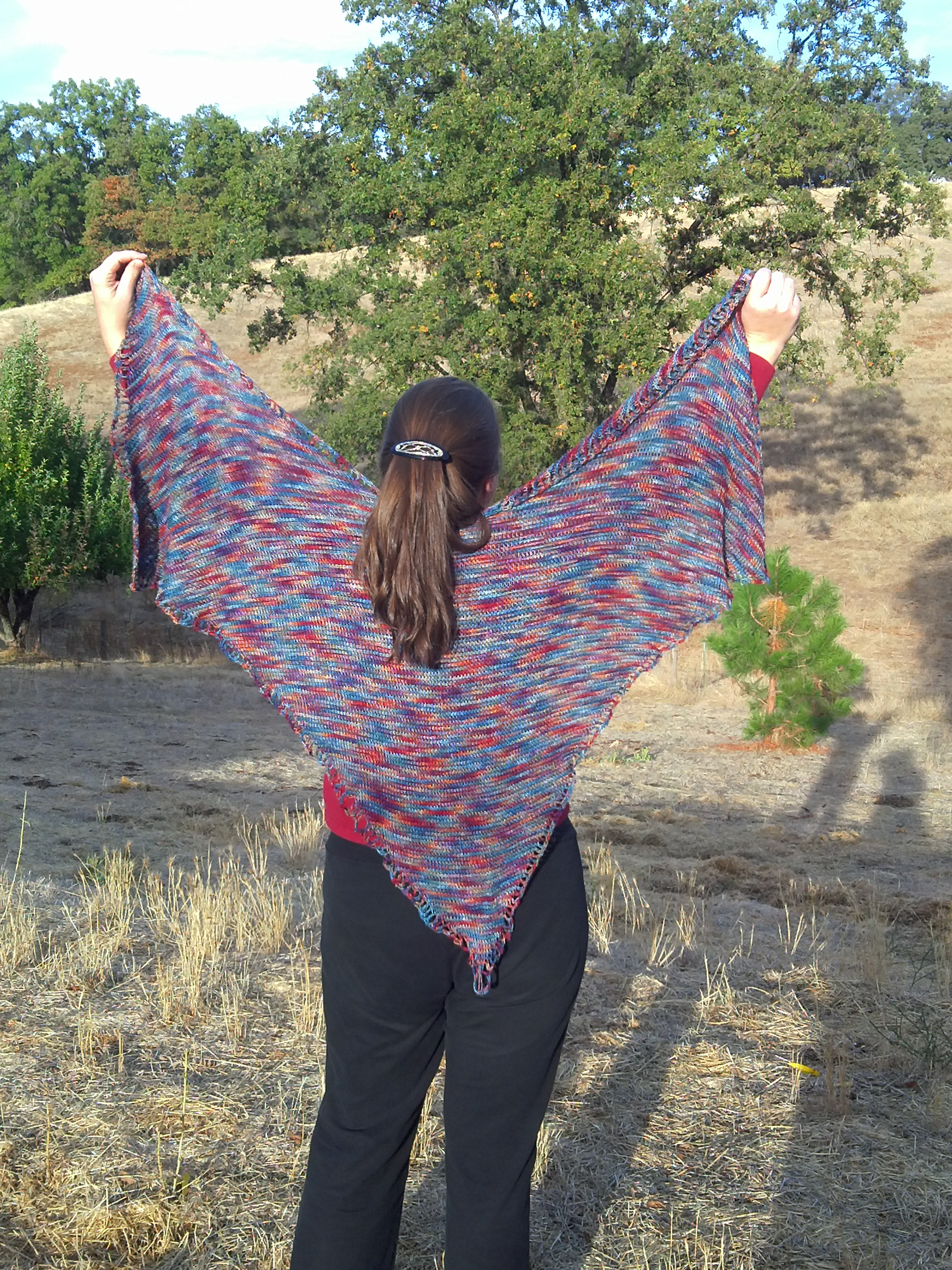
5 Peaks Shawl class by Vashti Braha at Fall 2012 Chain Link, Reno


This experience has encouraged me to take a handful of classes every year, and the new ideas and concepts that have opened up new worlds to me. (The 5 Peaks Shawl by Vashti Braha gave me a whole new outlook on Tunisian Crochet) Just because I knew the stitches, could read a pattern and complete the fabrics I desired, I didn’t realize there was another world within the one I knew. How often this happens in life; there is more depths in that we love than ever imagined.
Crochet! Spring 2013

I have some new designs out in the latest issue of Crochet! Magazine.

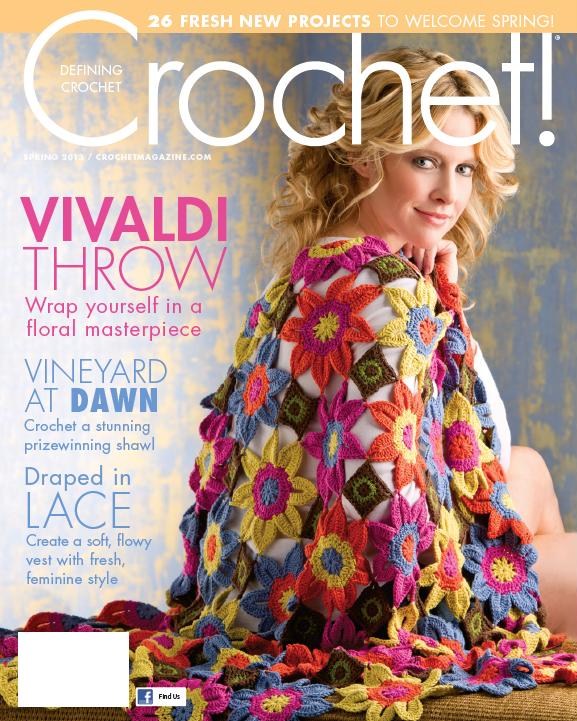
Cover Crochet! Magazine Spring 2013 Photo courtesy of Annie's

Cover Crochet! Magazine Spring 2013 Photo courtesy of Annie’s

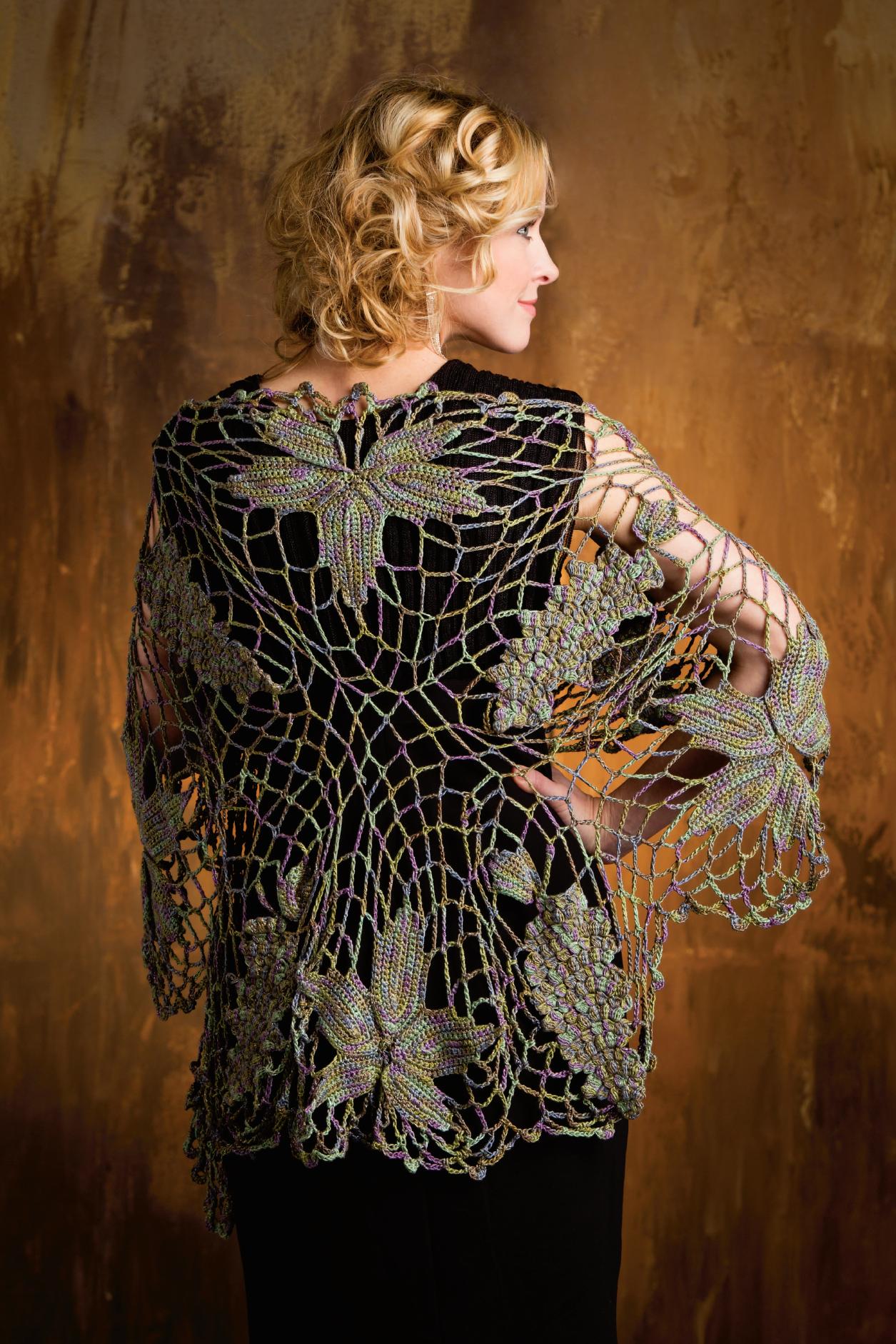
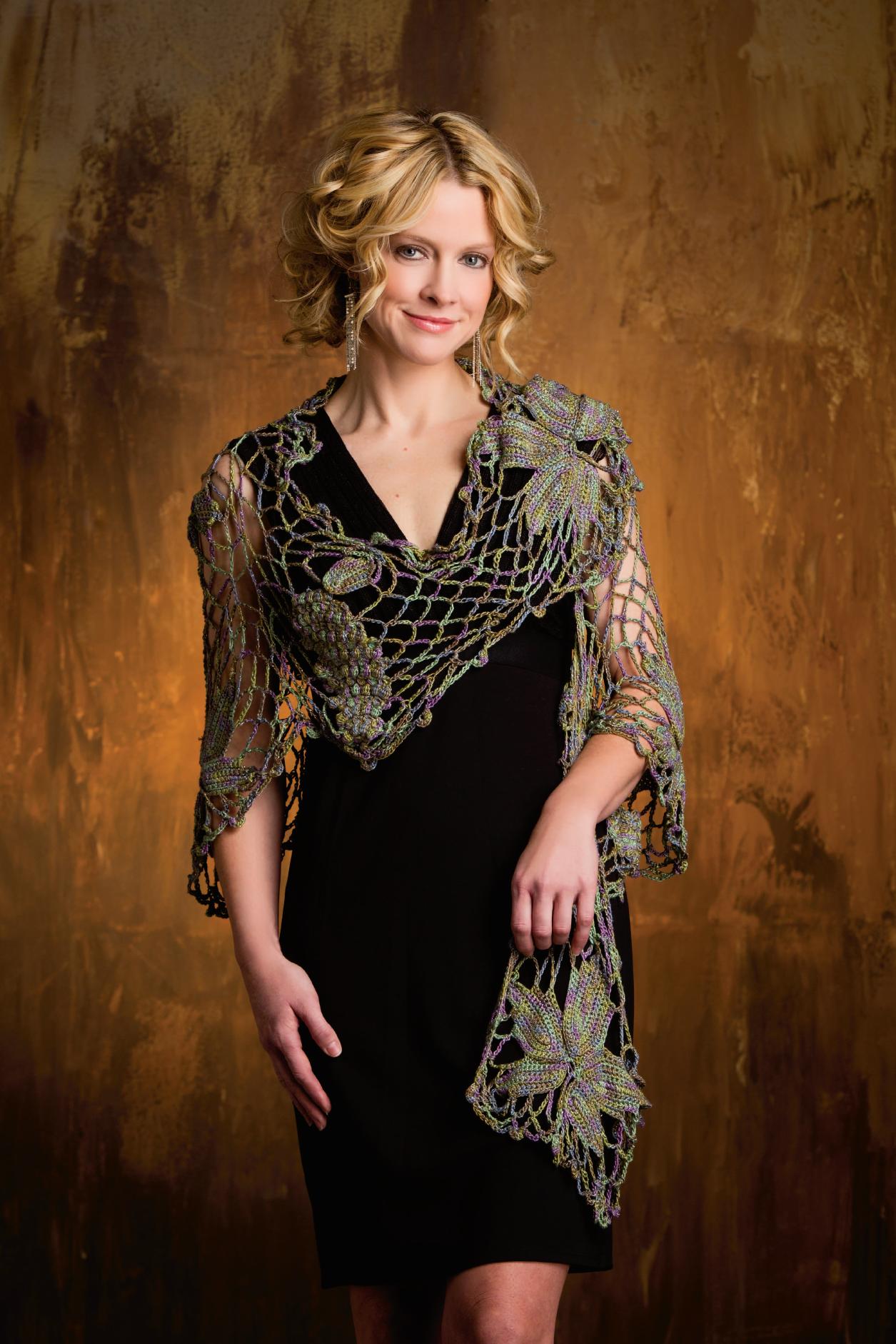
The Vineyard at Dawn Shawl was my winning design in the 2012 Crochet Guild of America Design Competition.

Vineyard at Dawn Shawl (front), Crochet! Magazine Spring 2013 Photo courtesy of Annie's

Vineyard at Dawn Shawl (front), Crochet! Magazine Spring 2013
Photo courtesy of Annie’s

Vineyard at Dawn Shawl (back), Crochet! Magazine Spring 2013 Photo courtesy of Annie's

Vineyard at Dawn Shawl (back), Crochet! Magazine Spring 2013
Photo courtesy of Annie’s


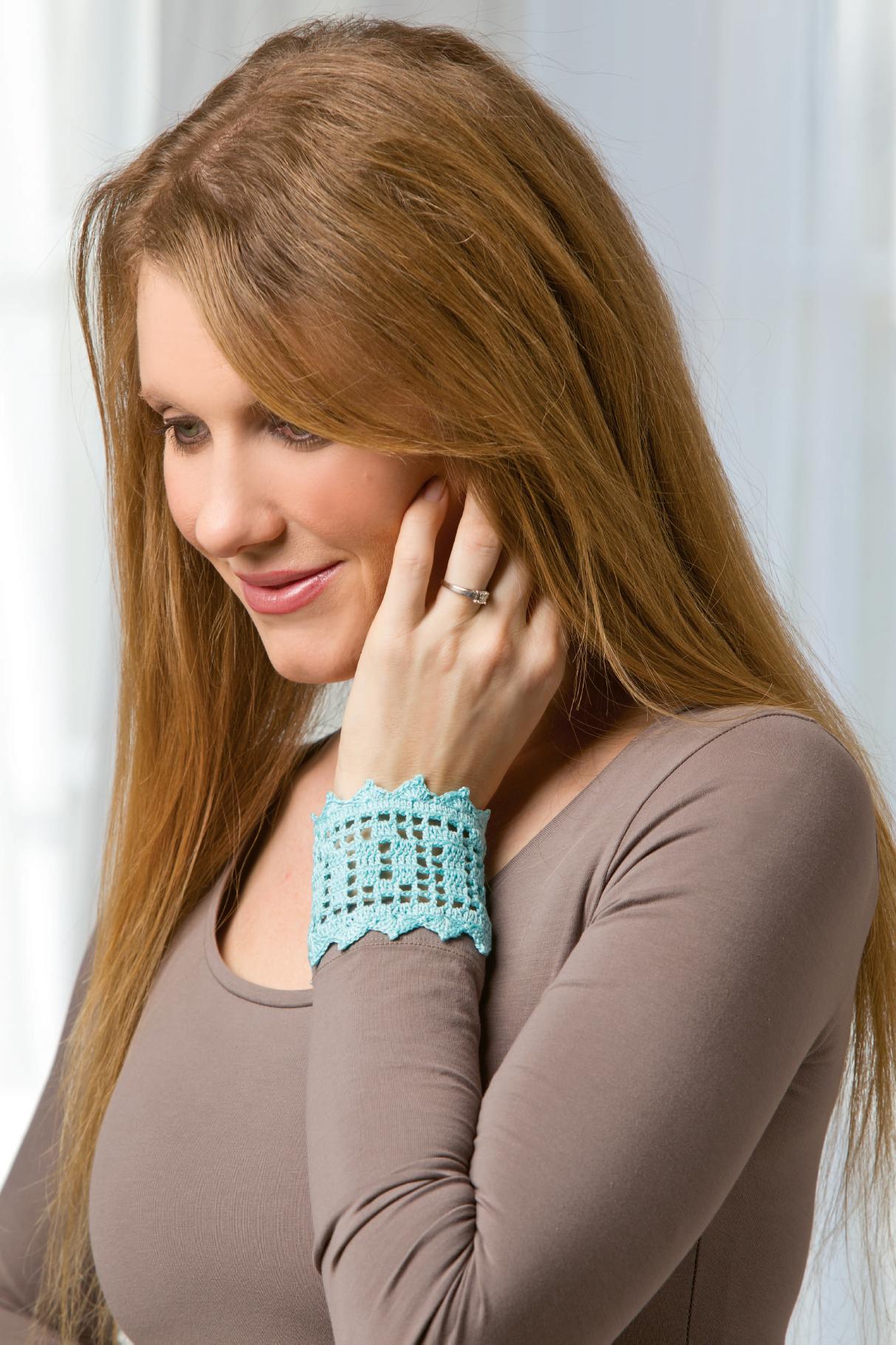
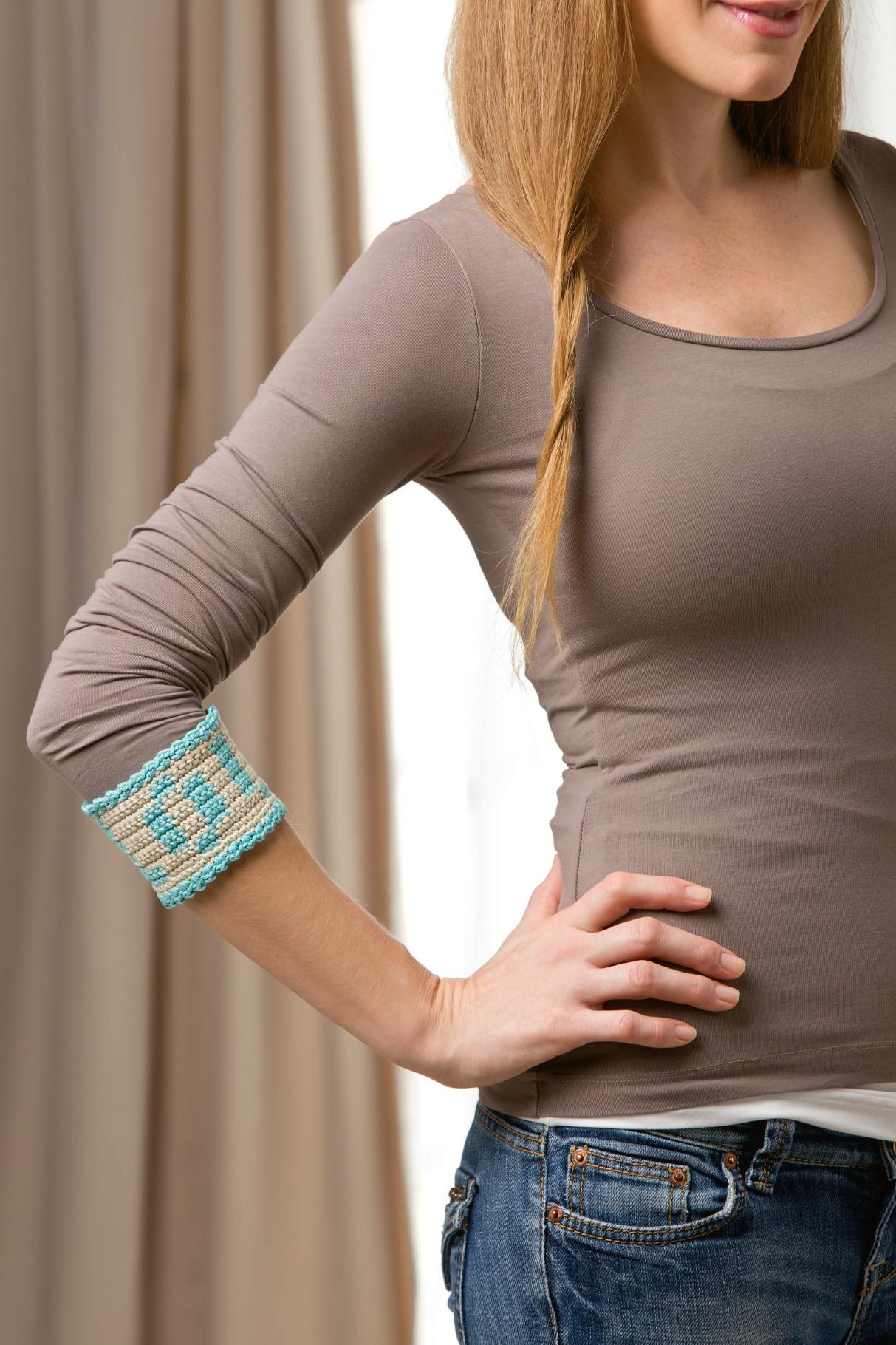
And the Cuffs are part of an article I have in the issue about translating Filet crochet charts into Tapestry crochet.

Love Wrist Cuff, Crochet! Magazine, Spring 2013 Photo courtesy of Annie's

Love Wrist Cuff, Crochet! Magazine, Spring 2013
Photo courtesy of Annie’s

Love Arm Cuff, Crochet Magazine, Spring 2013 Photo courtesy of Annie's

Love Arm Cuff, Crochet Magazine, Spring 2013
Photo courtesy of Annie’s


Gauge…sometimes referred to as a four letter word. But can open your world.

There is a dirty little secret that I believe more people practice then care to admit…that we don’t make a gauge swatch. I’ll be honest, I didn’t make any gauge swatches for years, I always skipped that part of the pattern, treating it as a page break at best. Yarn is precious, why would I waste any on a little scrap that has no purpose but measuring? Okay so there is my confession, but I’m sure I’m not alone. However none of us bring it up in public, because you do get the looks like “you’re crazy” (usually from knitters that have realized the importance years earlier).

So really what is gauge? Well the simple definition is that it is the number of stitches by number of rows to fit a desired measurement (like, 16 dc /6 rows=4”). Sounds simple, so why avoid it?…crochet is my relaxation, gauge sounds like work. In some respects it is, but in reality, I don’t think gauge is really important in a lot of crochet projects. Granted checking gauge on a couple of afghans in the past might have meant that I wouldn’t have over/under purchased enough yarn, but overall it has been pretty negligible.

I can see where in some fitted garments that it can make a difference, being an inch or so too big or too small in the bust could make or break a sweater. This becomes especially true when substituting a different yarn then the one the pattern was written for. Worsted weight is not the same in every yarn, granted they maybe ball park, but not exact (same is true for all the over weights as well) and the makeup of the yarn makes a difference. An acrylic yarn and a wool yarn of the same weight can behave differently in their appearance and effect the gauge as well. Not to mention everyone has a different hand in crocheting and no one does it the same as you.

Own your gauge, by understanding how it relates to you pattern you can determine if you really want to worry about it, if my scarf is a little wider then indented it isn’t going to be the end of the world, but I would want to know if that coat that I’m making for my 6 year old would come out fitting my 9 year old instead.

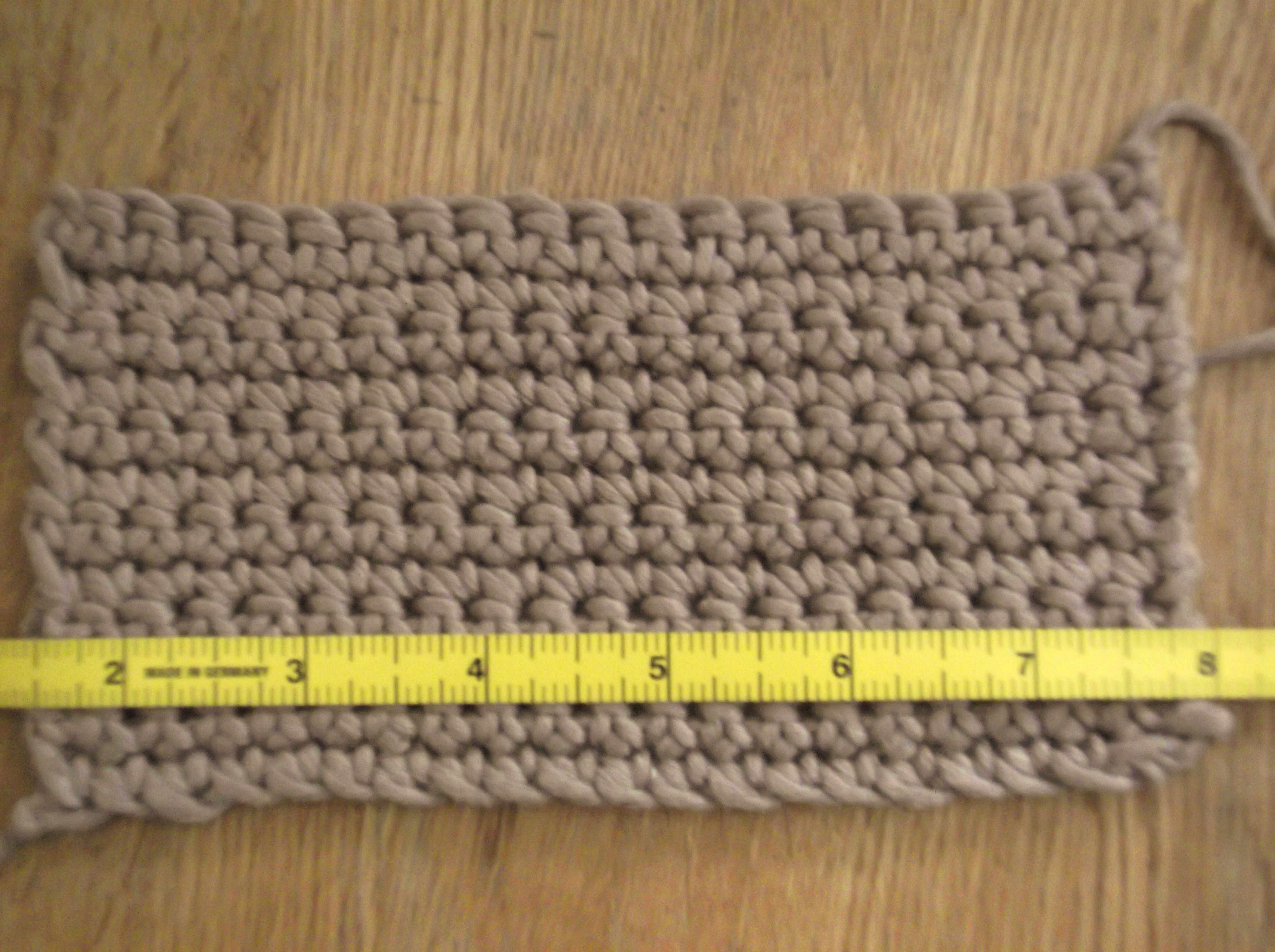
If you don’t want to do a gauge swatch, but want to make that sweater, start with a sleeve and when you get a little ways into it, stop and measure (Note: for a more true measurement don’t measure from edge to edge, but from a stitch to a stitch, or row to a row, in a larger worked piece, the turns of the edges can distort the measurement).

Measure in the body of the work and in the middle of the tape measure for more accuracy

Measure in the body of the work and in the middle of the tape measure for more accuracy


Since I am bearing my sole in this confession of a dirty little secret, I should admit, I will check gauge as I am working along on a garment to make sure it will fit in the end. So I don’t make with gauge swatch, but I check in my work before I finish (I’d rather rip out 2 days worth of work then make and measure a gauge swatch over  20 minutes…it is a pride thing), at least I know what I should do. Don’t let it intimidate you, it is a challenge that you can overcome and master. It is amazing how once we attempt and feel comfortable with a new skill/trait/challenge that the world opens up a little, and more things are possible.

If you want to understand more of the math behind the gauge, check out my tutorial, under the tab above.

Crochet World 35 Years!

ScannedImage

It is hard to believe that Crochet World Magazine is celebrating 35 years with its latest issue.

Cover Crochet World April 2013 Photo courtesy of Annie's

Cover Crochet World April 2013
Photo courtesy of Annie’s

A Day of Style Tote, Crochet World Magazine April 2013 Photo courtesy of Annie's

A Day of Style Tote, Crochet World Magazine April 2013 Photo courtesy of Annie’s


When you hear of publications going out of business, what is the secret of this periodical? I can’t say for certain, but it could definitely be that they offer a wide range of crochet projects that entices the creativity of many. They also keep up with current trends while balancing with tradition (an art in itself!). So congratulations Crochet World! Cheers, to many more years to come! (And if you happen to pick up the issue, check out one of my latest designs – A Day of Style Tote, I’m pretty lucky to be in this momentous issue).

Joining Right Along

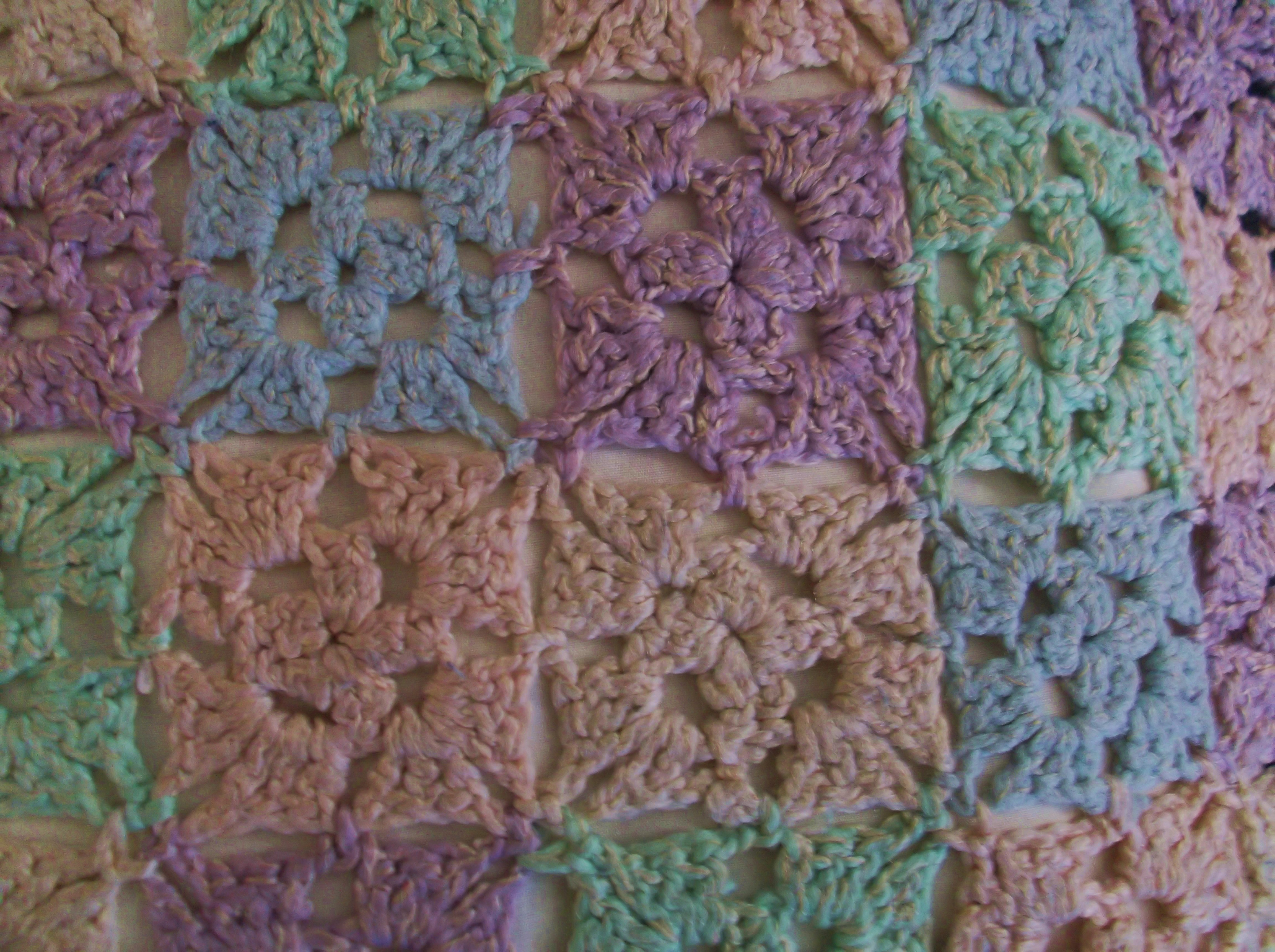
Since crochet has always been a point of relaxation for me, I never have fully appreciated joining work together. Actually I have avoided it like the plague, granny squares looked lovely, but then I’d have to put them all together! That afghan made in strips is attractive, but then I have to find a tapestry needle and sew it together. Well that takes the relaxation out of my work with hooks. So I left them alone for a long time, then the world of join as you go opened up to me. This is the process of working a motif and on the last row you work through to edge of the ones already created and thus work them together, joining with my hook as I create the final row. Genius!! This has brought a new world of crochet to my hook.  Without this technique I would have never used some scraps to make the pillow see in the photo.Join as you go motif, pillow.

To get this to work for you here are the things to keep in mind. Where do the stitches come in contact with each other? Do you want an open join (kind of like lace) or a solid join? Are your motifs the same size? What shape are you joining together? The simplest to work out is putting together a square motif, or at least one with straight sides. If you are already using a motif based pattern then the attachment of the motifs has already been thought out, so you just have to modify it to allow you to work the last row with the ones already created. If there are spaces in that last row, it much easier to connecting point, but you can work around regular stitches or in between them.

You never know what interesting designs you find in bring two pieces together, and that applies to much more then crochet, and joining as you go is a good metaphor for the path of my life. I use to treat my life as chapters of a book, which I have closed one chapter to move on to another, but really I find myself reflecting on past “chapters”.  So using the metaphor of a “join as you go afghan” might be more appropriate, since they build on one another and are forever connected.

This has opened my thoughts and given a new direction with my hook to enjoy the classic crochet works of motifs, without the hassle. I hope you will investigate this option for yourself as well.