Quick Holiday Gift- Classic Kitchen Towel

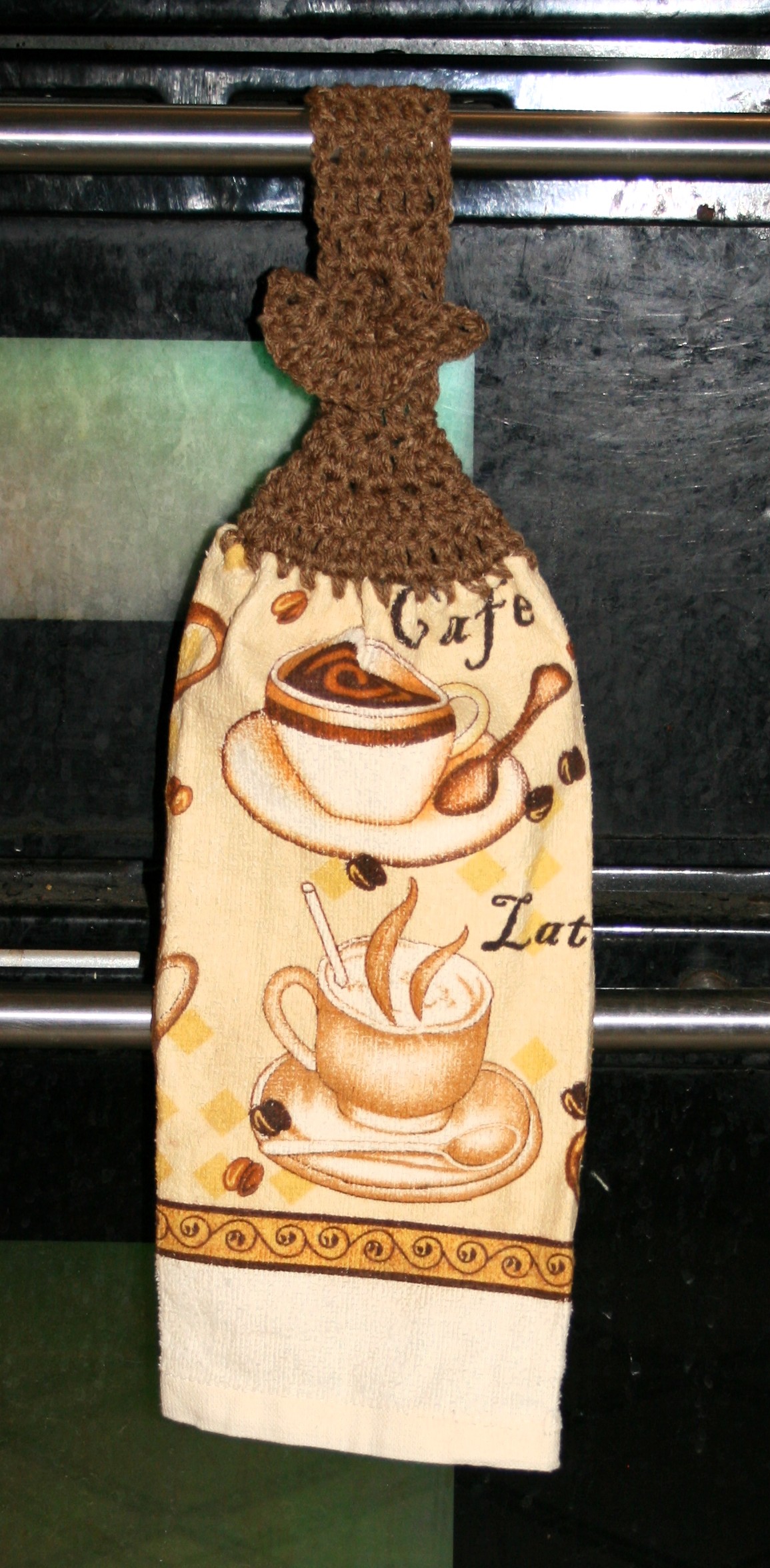
Quick holiday gifts are a must, so why not give a couple of home decor items a try. The Classic Kitchen Towel is a go-to.

All you need is a kitchen hand towel, yarn, and a hook. Within the afternoon you can make up a stack and be all set for beginning your wrapping.

Classic Kitchen Towel

I prefer to not use an actual written pattern for this project, I think it can get in the way a bit. Instead, I take the approach of “this is the basics, lets jump in”

Lets Cut

To begin, I fold the towel in half, short edge to short edge. Then I cut it in half at the fold. I do this because I fond it easier to crochet through I piece of fabric. Having an intact towel usually means to insert your hook through the fold, and thus 2 pieces of fabric. In addition, I get two gifts out of each towel. Double bonus!

Now we stab

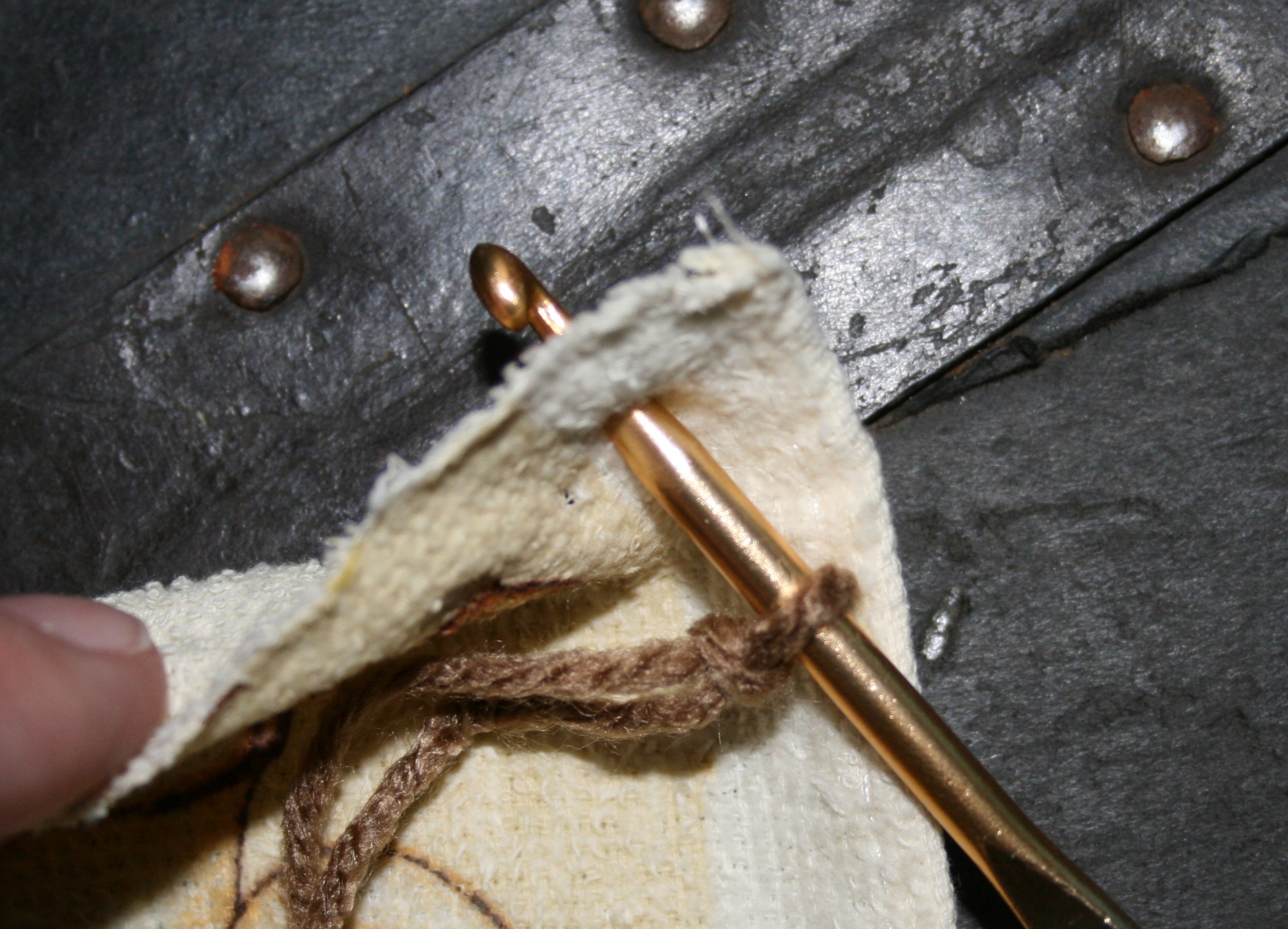
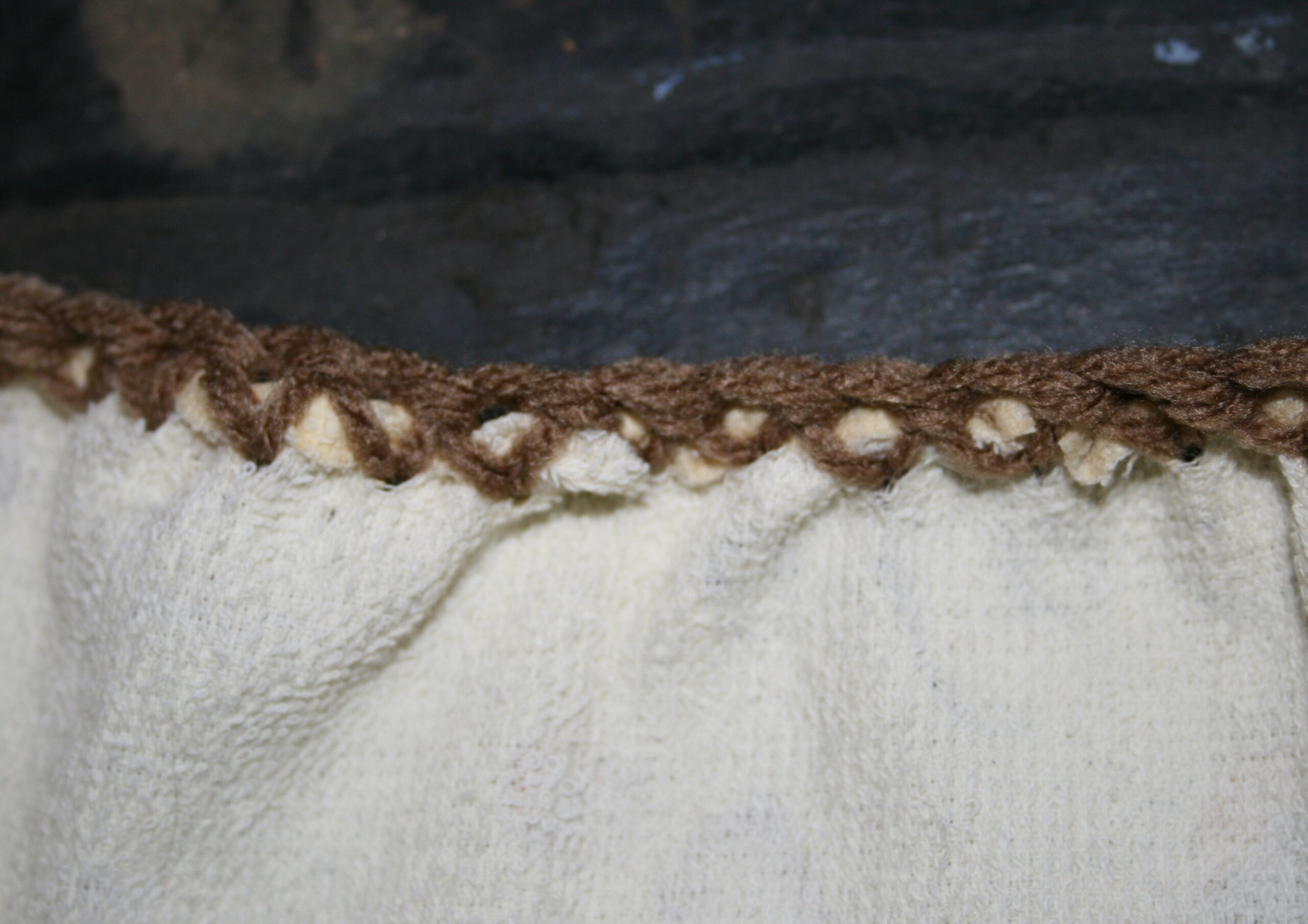
Then find a crochet hook that will “stab” through the fabric, about ½” (1.25 cm) from the cut edge. The weave of the towel will typically give way to the hook. In the rare occasion that it doesn’t, try a smaller hook, for you can use a hammer and nail to “punch” holes into the fabric.

“Stab” through the fabric

Some people like to ensure that these “stabbed” or “punched” points are evenly spaced across the top edge. I have found that I don’t usually notice it being uneven from being eye-balled, especially since the towel usually folds back on itself.

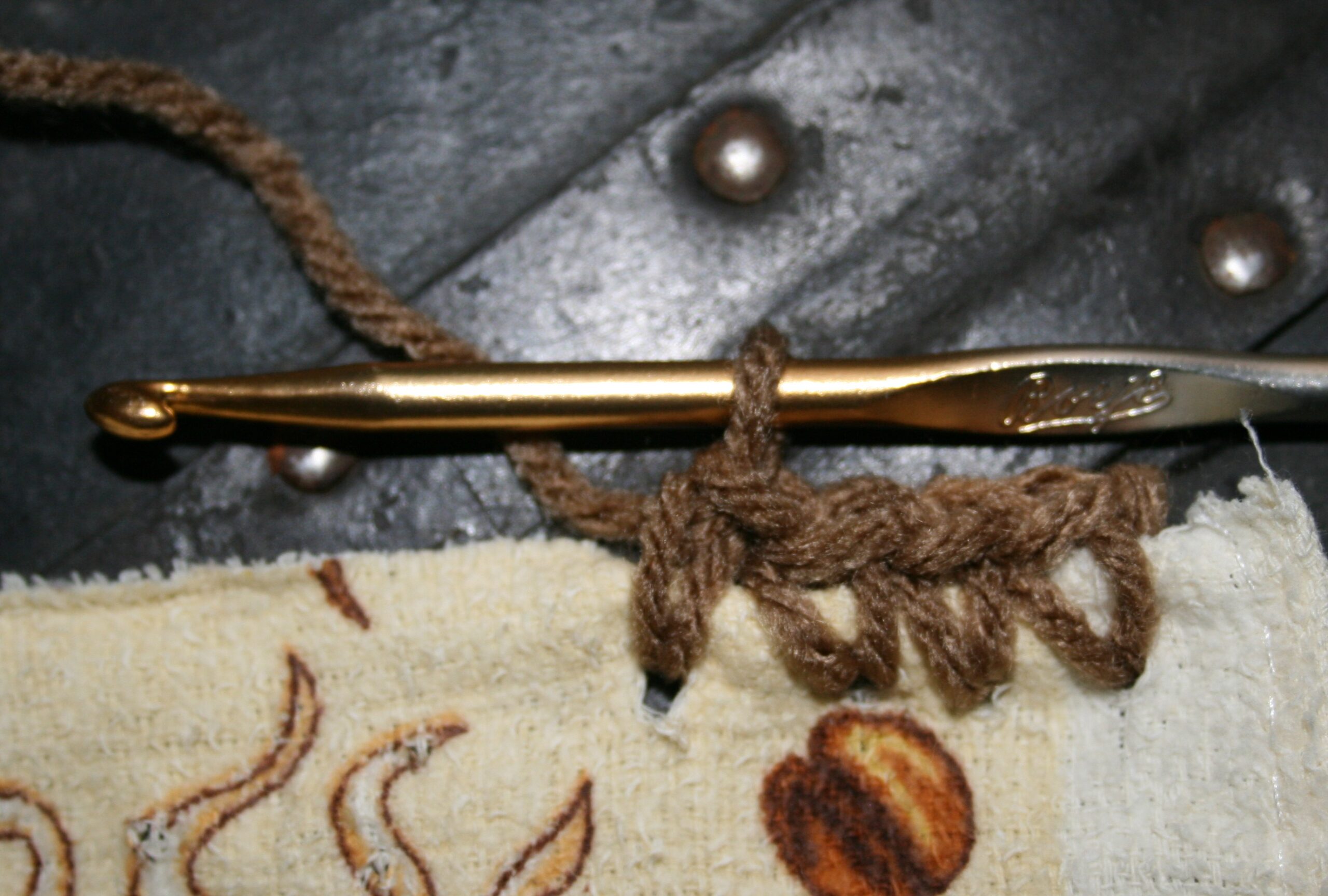
Single crochet stitches are worked in these “stabbed” or ‘punched” points, a chain can be worked between the single crochets, but that is a personal choice. After getting all the way across, chain 3 and turn.

Single crochet across

(Don’t worry about the cut edge, it will typically roll under when you begin stitching, if it doesn’t you can help it to curl under the stitches).

The cut edge will “curl” under

The second row is just double crochet all the way across.

Now some regular crochet

Row 3 just chain 2, double crochet in the next stitch and work a double crochet 2 together all the way across. If the stitch count doesn’t work out evenly, don’t worry just work 1 double crochet at the end. Then turn.

Repeat Row 3 until there are only between 5-9 stitches remaining. This will become the “neck” or “hanging part” of the towel.

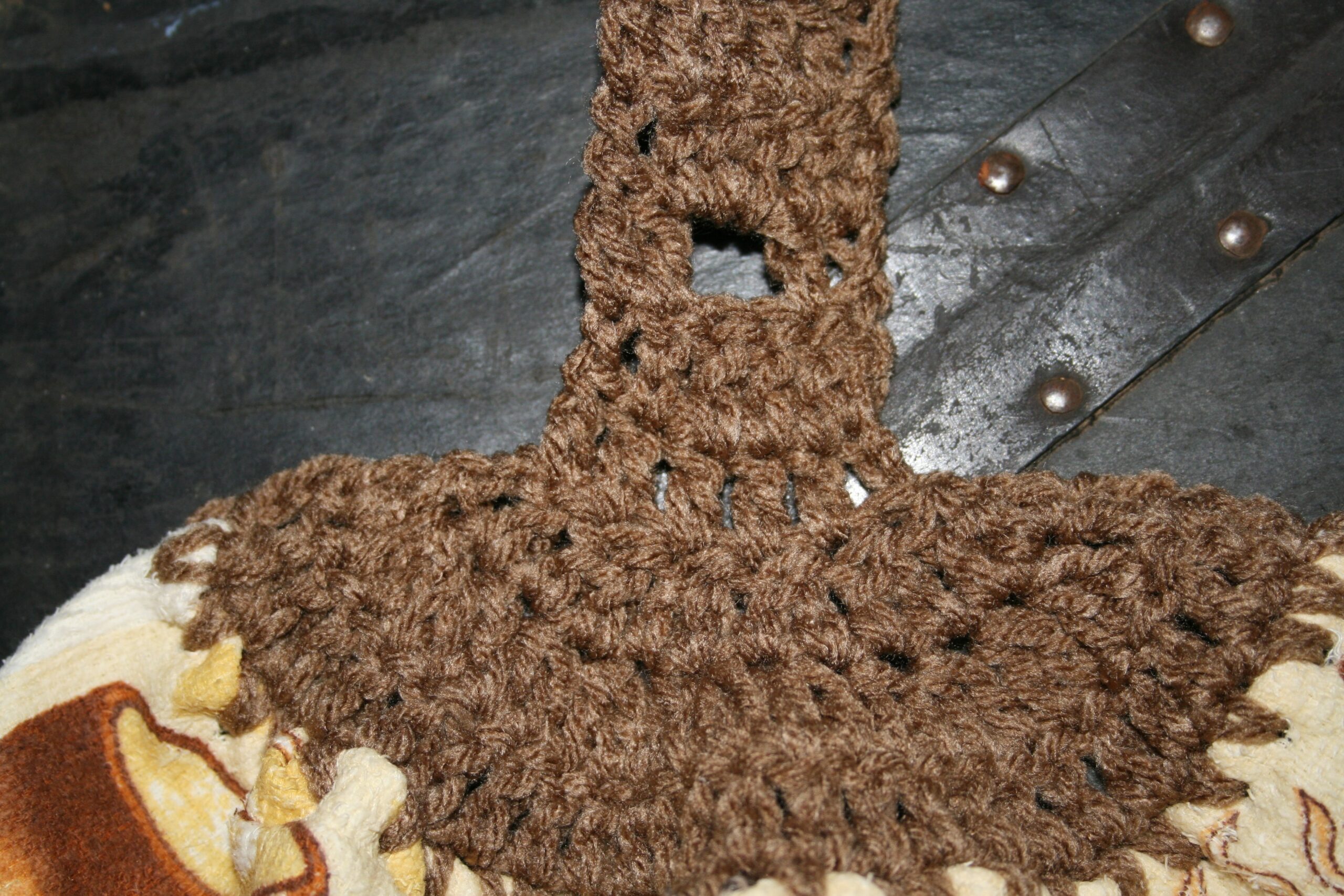
Making the “neck” is simply working the stitches even (by working: chain 3, double crochet in each stitch across, turn). By the second row of the “neck” you want to make a “buttonhole”. This is done by making a chain space (chain 1, skip 1 stitch) in the center of the row. The next row a double crochet is worked into the chain. Continue working even until the neck is between 9-14” long.

Work decrease every row until there are only a few stitches, then work even, inserting a “buttonhole”

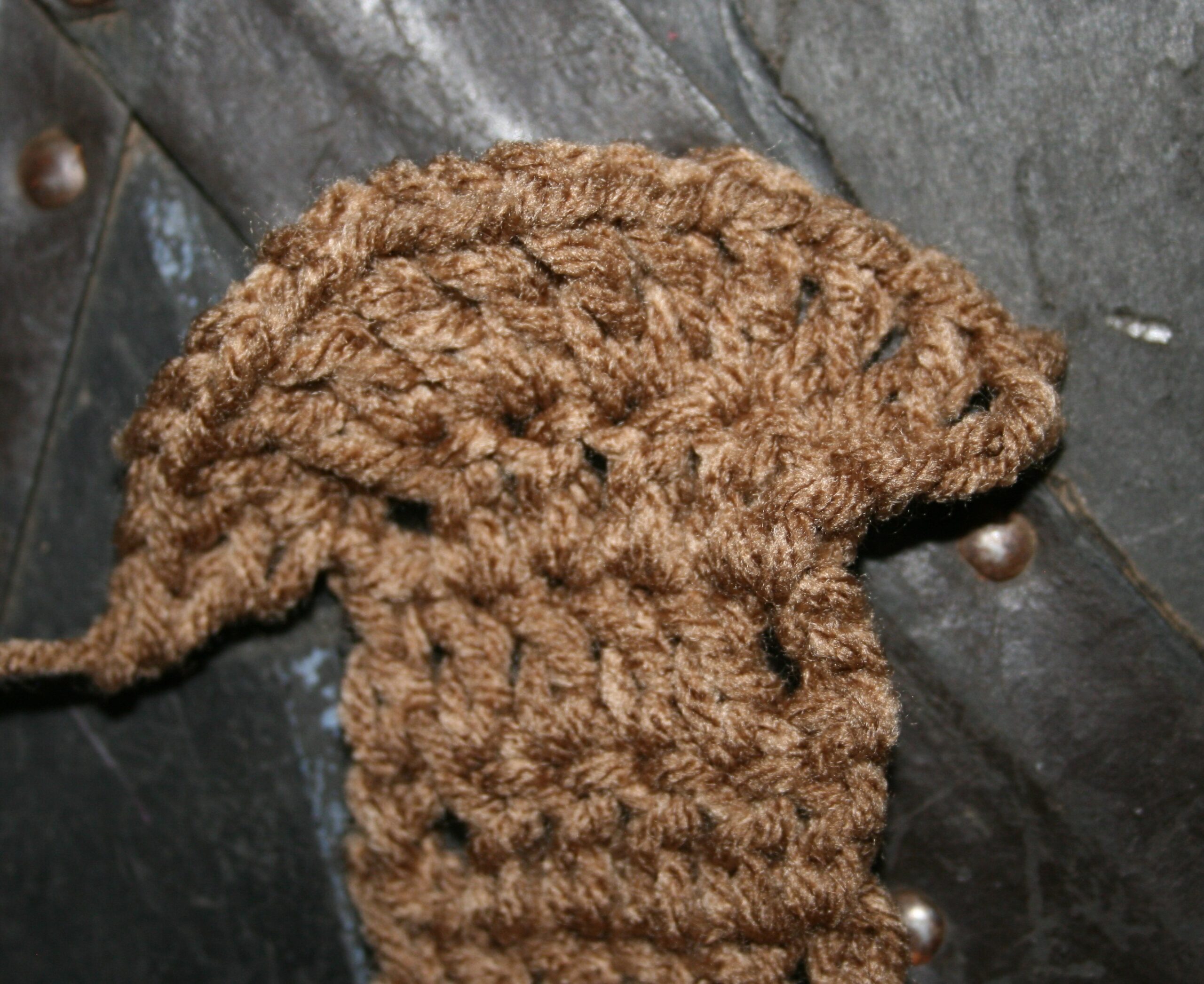
No button is actually needed. Instead, when the length of the “neck” is finished, work an additional row with 3 double crochet stitches in each stitch across. This makes a flared and sometime ruffled end that can be inserted through the “buttonhole” to secure it to any rod.

Create a fan at the end to act as a button

Lastly, weave in the ends, and this gift is done.

As far as yarn to use, I usually use some scraps that are usually a medium weight (#4) and usually acrylic. This just happens to be what I have on hand the most, but really anything can be used.

Another relatively quick gift is a simple pot holder; this is one that I turn to.

Walking Pathways- A Free Blanket Pattern

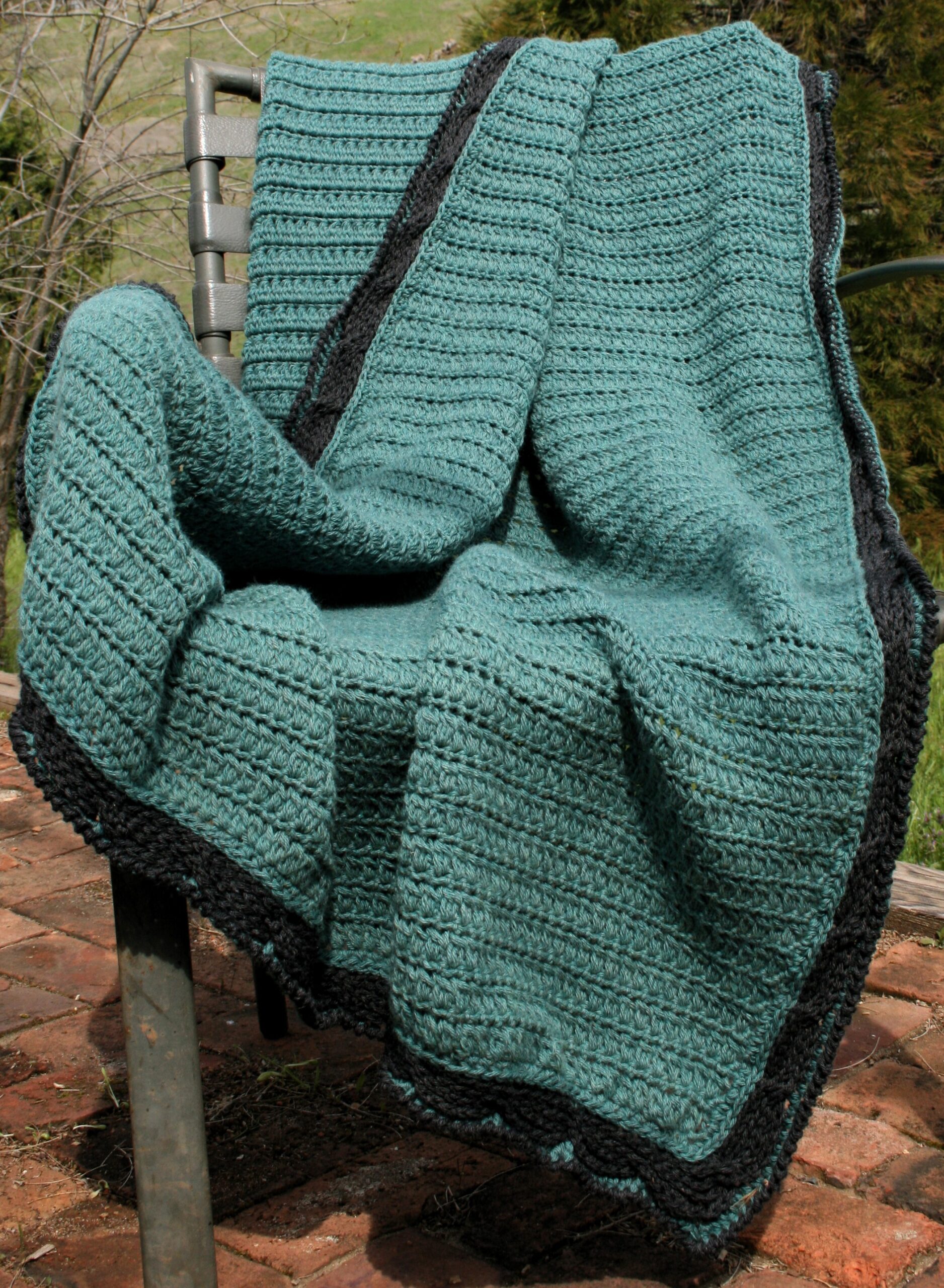
I found a stitch pattern that I really got into a rhythm working. I could keep working it for hours, with the Walking Pathways Throw. The cluster row might be a bit involved. But following it up with a simple row keeps it fun.

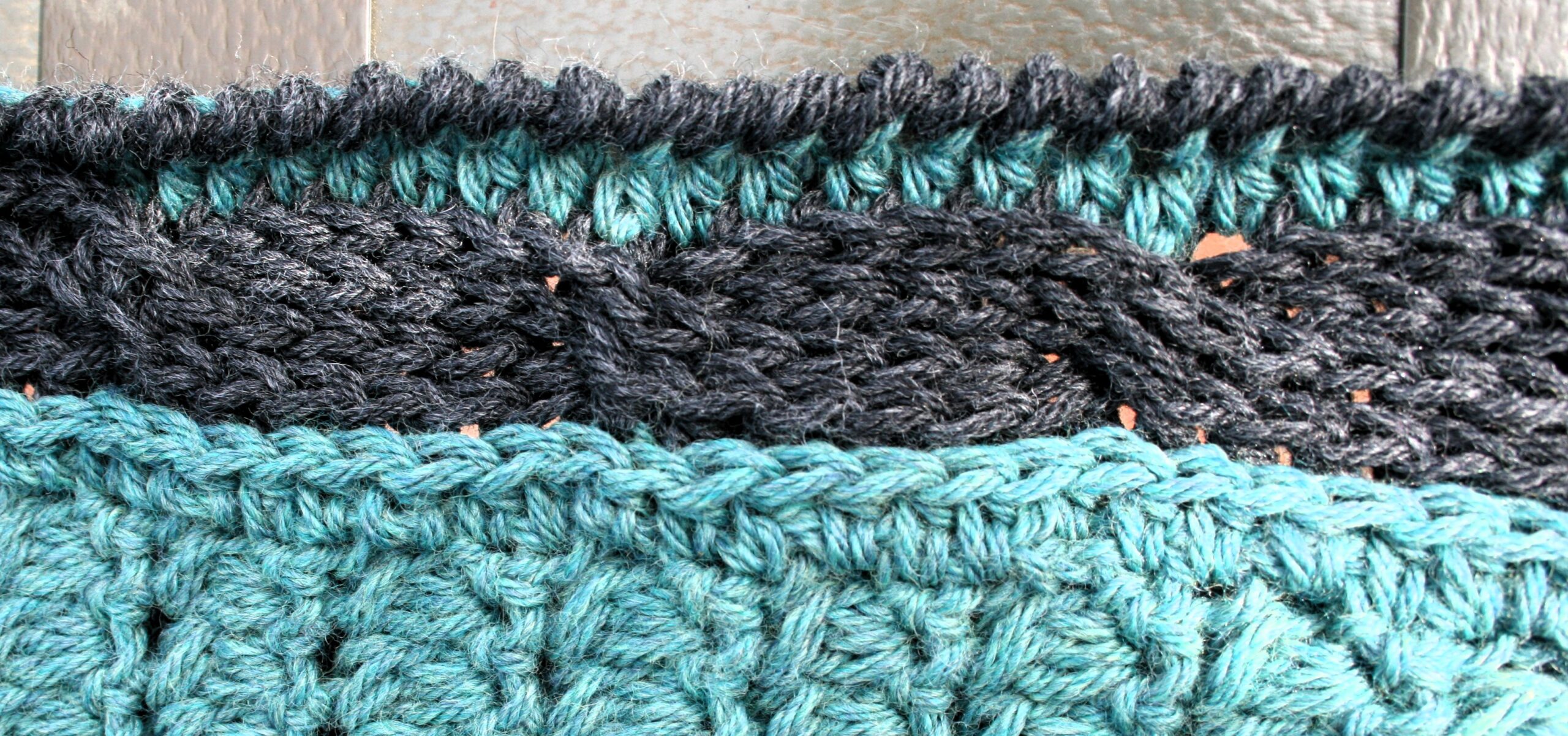
What brings this throw to life however is the edging, featuring a horizontal cable in a contrasting color.

So way it was made

I created the original of this design for a long time friend. We reconnected with just as they were moving across the country. The throws that followed were made for others that hold a special place in my heart.

Walking Pathways Throw

It has taken me a while to actually get this design written and out in the world. This is mostly because the horizontal cable is not completely straight forward to write. I have managed to complete a visual post about it (see it here). You will also find a link to a video to help explain to further.

Some of my students have taken up the stitch pattern of the body, loving the subtle texture. They have played with varying stripes of color. It really does lend itself to many possibilities.

Main fabric of Walking Pathways Throw

The name comes from my personal walk of figuring out midlife. All the differing paths this journey of life has been taking me on.

The Pattern

Walking Pathways Throw by Linda Dean

A relatively simple 2 row repeat gets an eye catching and rhythmic edging of a horizontal cable. Quicker to work than you might think, this throw will be a delight.

Size 46”x  60” (including a 2” boarder all the way around)

Skill intermediate

Gauge 10 CL sts/ 9 rows 4”

Materials

  • K/10 ½ /6.5 mm crochet hook
  • Berroco Vintage  medium weight, 52% Acrylic, 40% Wool, 8%Nylon yarn (3.5oz/100g/218yd/200m) per ball; 12 skeins MC #5189 Charcoal and 2 skeins (divided in half) of CC #5194 Breezeway

Special Stitches

Foundation Double Crochet Cluster (FCL): Yo, insert hook in chain/base of previous stitch, yo, pull up a loop, ch 1 (creates base of current stitch), yo, pull through 2 loops, [yo, insert hook into chain/base of current stitch, yo, pull up a loop, yo, pull through 2 loop] twice, yo, pull through 4 loops.

Double Crochet Cluster (CL): [Yo, insert hook into st, yo, pull up a loop, yo, pull through 2 loops] rep 3 times, yo, pull through all 4 loops on hook.

Standing Half Double Crochet (Shdc): Yo, hold yo on hook, insert hook into indicated stitch, yo, pull up a loop, yo pull through all 3 loops on hook.

Reverse Single Crochet (Rsc): Working in the opposite direction as normal, insert hook into next stitch and complete a single crochet.

Let’s Start The Main Body

Row 1:

Version1: With MC, chain 205, CL in 5th ch from hook, [sk 1 ch, CL in next ch] rep across until 2 chs rem, sk 1 ch, dc in last st, turn. -100 CL, 2 dc

Version 2: With MC, ch 4, FCL in 4th ch from hook, FCL 99 times, Fdc. -100CL, 2 dc

Row 2: Ch 1, sc in each st across, turn.

Row 3: Ch 3, CL next st, CL in each st across until 1 st rem, dc in last st, turn.

Rows 4-119: Rep Rows 2 & 3, 58 times. Do not fasten off.

Let’s Start the Edging

Rnd 1: Working down edge, sc in the ends of the rows evenly across to corner, 3 sc in corner, sc in unused loops of foundation chain to corner, 3 sc in corner, sc in ends of rows evenly across to corner, 3 sc in corner, sc across last row 3 sc in last st, sl st to join, fasten off.

Work Horizontal Braid using 4 different balls of CC- each ball will need to be at least 26 grams in weight. For a step by step of how to work the braid, please check out this post, which will have a link to a video if needed. To ensure that the corners do not cup, make note of the corners in this post as well.

Braided Edging featuring a horizontal cable

Let’s start the Braid…or Cable

Rnd A: With CC, join to any st on edge with a Shdc, hdc in next 6 sts, remove hook from loop and bring yarn to front of fabric. Work Rnd B

Rnd B: With CC, join to back bar first hdc of Rnd A  with a Shdc, hdc in back bar of each hdc across, remove hook from loop and bring yarn to front of fabric. Work Rnd C

Rnd C: With CC, join to back bar of first hdc of Rnd B with a Shdc, hdc in back bar of each hdc across, hdc in next 7 sts of edging Rnd 1, remove hook from loop and bring yarn to front of fabric. Work Rnd D

Rnd D: With CC, join to back bar of first hdc of Rnd C with a Shdc, hdc in back bar of each hdc across, remove hook from loop and bring yarn to front of fabric. Work Rnd A1

This is where you can start repeating

Rnd A1: Pick up working loop of Rnd A, working in back bar of hdc of Rnd D hdc in each st across, hdc in next 7 sts of edging Rnd 1, remove hook from loop and bring yarn to front of fabric. Work Rnd B1

Rnd B1: Pick up working loop of Rnd B, working in back bar, hdc in each st across, remove hook from loop and bring yarn to front of fabric. Work Rnd C1

Rnd C1: Pick up working loop of Rnd C, working in back bar of hdc of Rnd B hdc in each st across, hdc in next 7 sts of edging Rnd 1, remove hook from loop and bring yarn to front of fabric. Work Rnd D1

Rnd D1: Pick up loop of Rnd D, working in back bar of hdc, hdc in each st across, remove hook from loop and bring yarn to from of fabric. Work Rnd A1

Repeat Rnds A1-D1 round, join to the corresponding Round, Fasten off all 4 rounds.

Time to finish this up

Rnd 2: With MC join to back bar of any stitch with a Shdc, working in back bar hdc in each st around, join, fasten off.

Rnd 3: With CC join to any st, ch 1, Rsc around edge, fasten off.

Weave in all ends. Block if desired.

Moogly CAL- The Christine Quilt Block

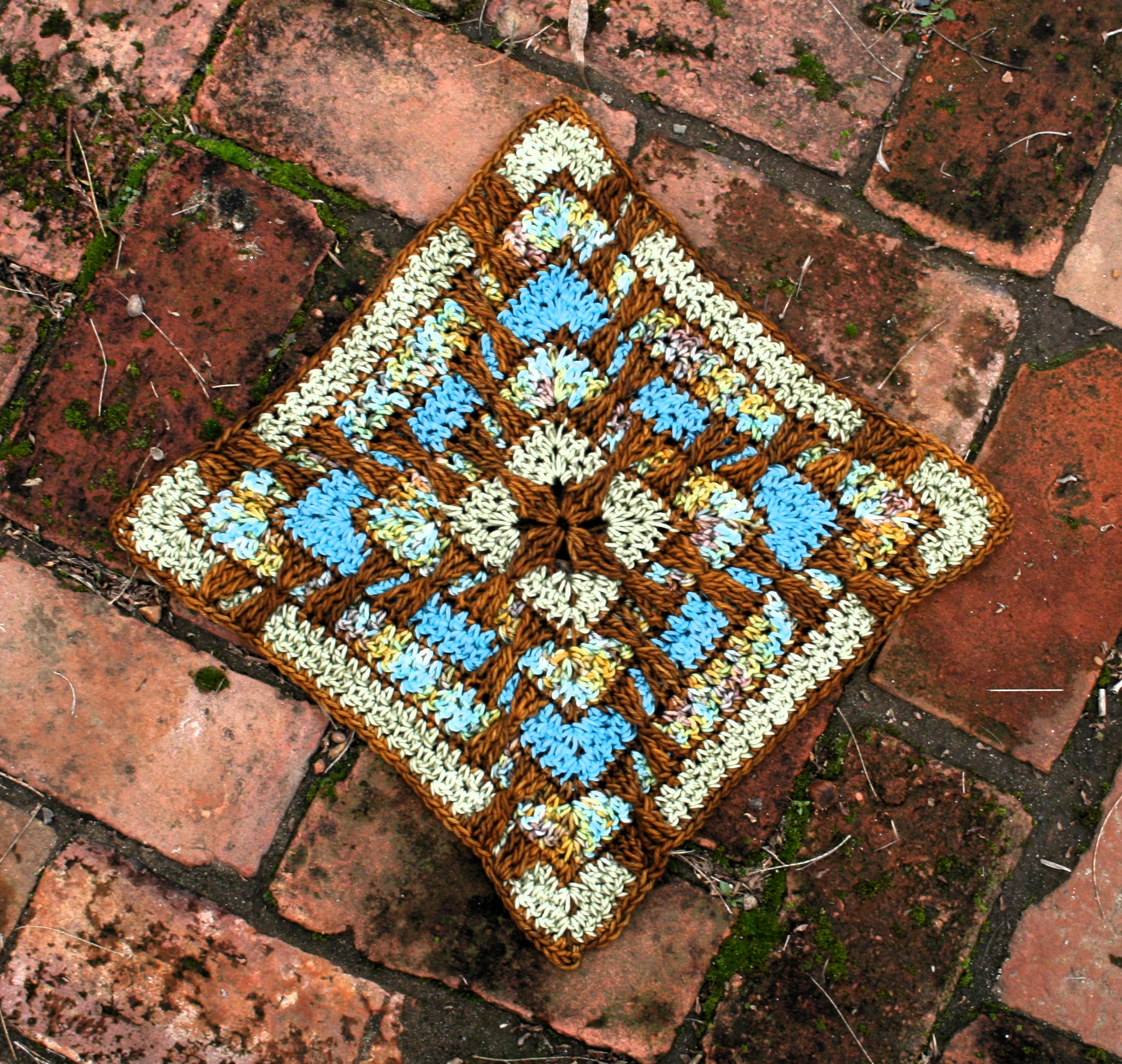
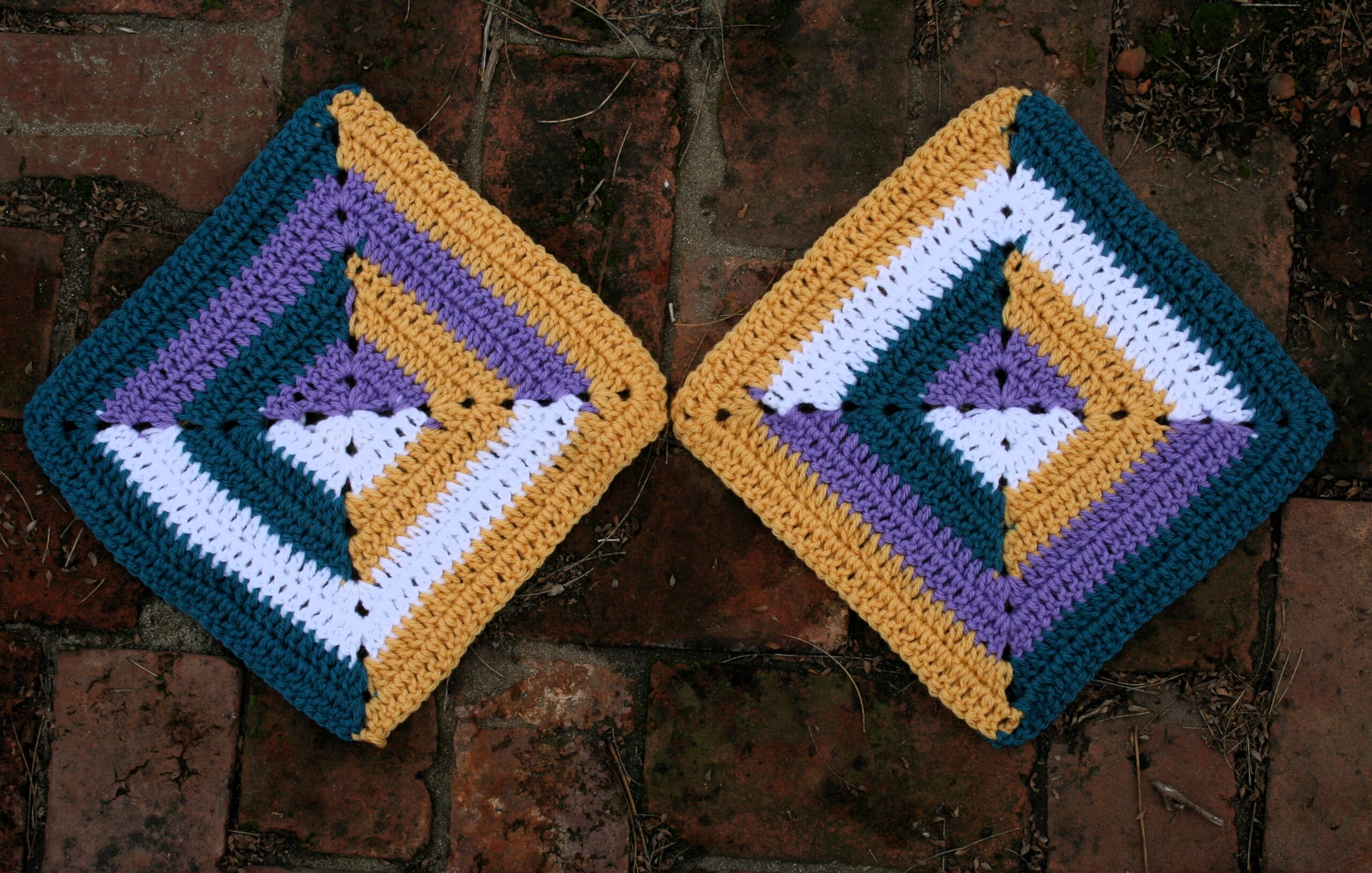
I am so thrilled to join you for another Moogly CAL! This year I am sharing The Christine Quilt Block, a block using simple stitches to create fabulous color blocking.

This square grew out of my playing with the traditional quilt block, the half square triangle. The half square triangle is traditionally only 2 colors, yet is put together in quilts to create many classic designs. I have played with a couple of ways to create this half square triangle in crochet. You can see some ideas of how this 2 tone block can be worked into various design here.

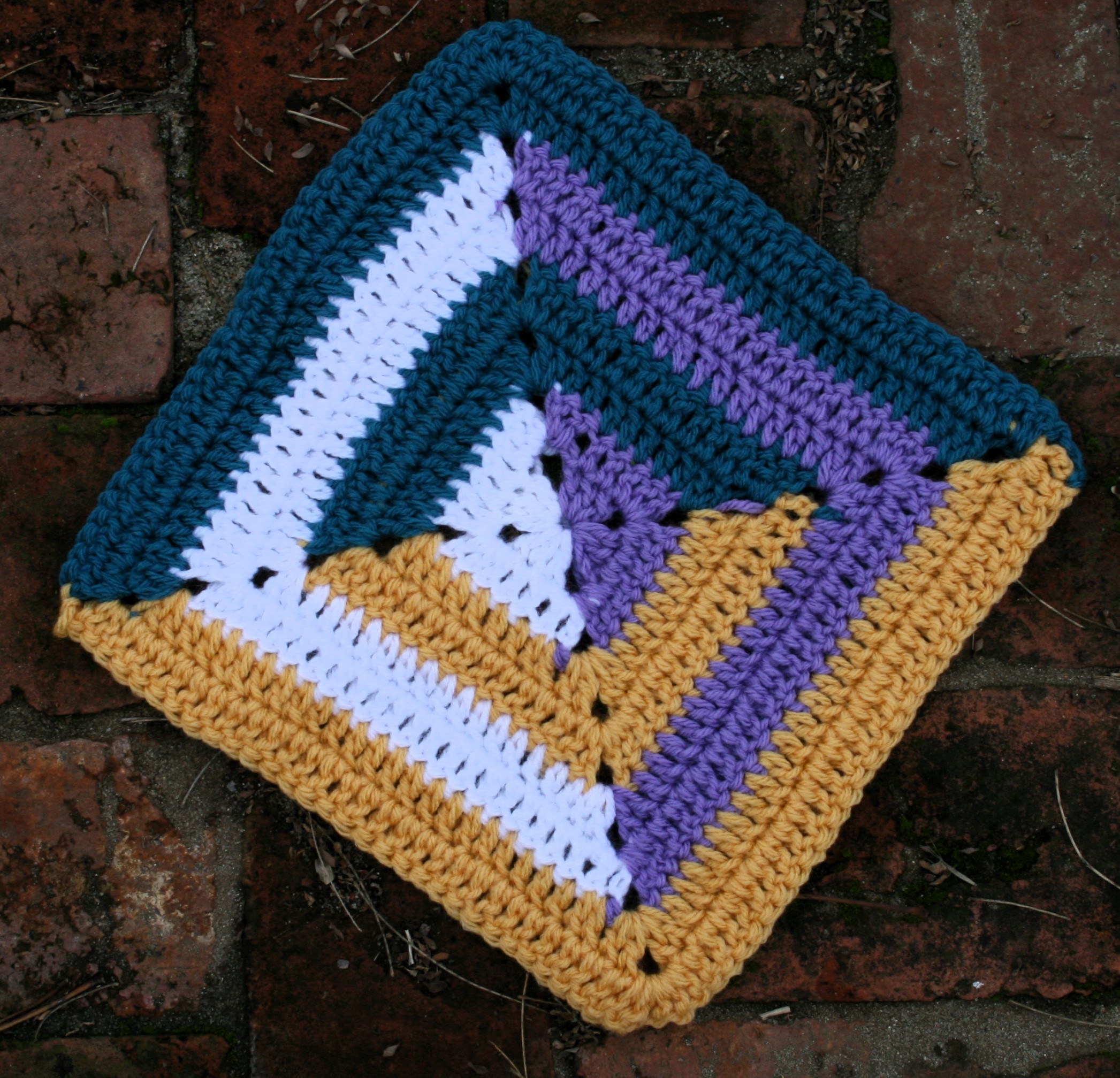
However, for the CAL I took this technique in a little different direction, using more than 2 colors. I found that I couldn’t decide which color placement I preferred. So I have 2 options for you to check out. One has the same colors per side, and the other rotates them.

This block is worked with 2 colors per round, and turning after joining the round. Don’t fasten off and join, you would create a half square triangle in 2 colors.

I will admit that this square was inspired by one of my students, Christine. Just like the block, she is generous with many sides to herself that add color to a world of gray. It also happens that she has quilting in her skill set. Thus I can tease about having to have things perfectly worked, and square.

Love to have you join me

If you feel inclined to see more of my work throughout the year sign up for my monthly newsletter. It is where I share my crochet journey. Or, join me in person at my various teaching locations. …Or both, is an option too.

Can’t wait to see what you come up with in this design! And don’t miss any other Moogly CAL blocks, follow them for 2025 here.

The Christine Quilt Block

A bit more symmetrical with the color placement

Red Heart With Love medium weight 100% acrylic yarn colors:

  • (A) #1538 Lilac,
  • (B) #1001 White,
  • (C) #1623 Mallard,
  • (D) #1207 Cornsilk

J/10/6.00mm crochet hook

Sdc= Standing double crochet. (If you don’t feel comfortable with this technique, substitute with Slip stitch in indicated stitch, chain 3)

A little more abstract in the color placement

Rnd 1: With A, Ch 4, 2 dc in 4th ch from hook, ch 2, 3 dc in same ch, ch 1, change to B, ch 1, (3 dc, ch 2, 3 dc) in same ch, ch 2, sl st to join, turn. – 12 dc (3 dc per side), 4 ch-2 sps

Rnd 2: Sl st in ch-2 sp, ch 3, dc in same sp, dc in each dc across to ch-2 sp (2 dc, ch 2, 2 dc) in ch-2 sp, dc in each dc across to ch-2 sp, 2 dc in ch-2 sp, ch 1, change to A, ch 1, 2 dc in same ch-2 sp, dc in each dc across to next ch-2 sp, (2dc, ch 2, 2dc) in ch-2 sp, dc in each dc across, 2 dc in ch-2 sp, ch 2, join, turn. Fasten off both colors. –28 dc (7 dc per side), 4 ch-2 sps

Lets change colors

Rnd 3: With C, Sdc in to any solid color ch-2 sp corner, dc in same sp, dc in each dc across, (2dc, ch 2, 2dc) in next ch-2 sp, dc in each st across, 2 dc in next ch-2 sp, ch 1, change to D, ch 1, 2 dc in same sp, dc in each st across, (2 dc, ch 2, 2dc) in next ch-2 sp, dc in each dc across, 2 dc in next ch-2 sp, ch 2, join, turn. –44 dc (11 dc per side), 4 ch-2 sps

Rnd 4: Sl st in ch-2 sp, ch 3, dc in same sp, dc in each dc across to ch-2 sp (2 dc, ch 2, 2 dc) in ch-2 sp, dc in each dc across to ch-2 sp, 2 dc in ch-2 sp, ch 1, change to C, ch 1, 2 dc in same ch-2 sp, dc in each dc across to next ch-2 sp, (2dc, ch 2, 2dc) in ch-2 sp, dc in each dc across, 2 dc in ch-2 sp, ch 2, join, turn. Fasten off both colors. –60 dc (15 dc per side), 4 ch-2 sps

Back to the original colors….if you desire

Rnd 5: With A, Sdc in any solid color ch-2 sp corner (note you can start the color above the same placement of A, or on the opposite side from A in the first round for a different effect), dc in same ch-2 sp, dc in each dc across, (2dc, ch 2, 2dc) in next ch-2 sp, dc in each st across, 2 dc in next ch-2 sp, ch 1, change to B, ch 1, 2 dc in same sp, dc in each st across, (2 dc, ch 2, 2dc) in next ch-2 sp, dc in each dc across, 2 dc in next ch-2 sp, ch 2, join, turn. –76 dc (19 dc per side), 4 ch-2 sps

Rnd 6: Sl st in ch-2 sp, ch 3, dc in same sp, dc in each dc across to ch-2 sp (2 dc, ch 2, 2 dc) in ch-2 sp, dc in each dc across to ch-2 sp, 2 dc in ch-2 sp, ch 1, change to A, ch 1, 2 dc in same ch-2 sp, dc in each dc across to next ch-2 sp, (2dc, ch 2, 2dc) in ch-2 sp, dc in each dc across, 2 dc in ch-2 sp, ch 2, join, turn. Fasten off both colors. –92 dc (23 dc per side), 4 ch-2 sps

Another color change

Rnd 7: With C, Sdc in any solid color ch-2 sp corner (note you can start the color above the same placement of C, or on the opposite side from C in the third round for a different effect), dc in same ch-2 sp, dc in each dc across, (2dc, ch 2, 2dc) in next ch-2 sp, dc in each st across, 2 dc in next ch-2 sp, ch 1, change to D, ch 1, 2 dc in same sp, dc in each st across, (2 dc, ch 2, 2dc) in next ch-2 sp, dc in each dc across, 2 dc in next ch-2 sp, ch 2, join, turn. –108 dc (27 dc per side), 4 ch-2 sps

Rnd 8: Sl st in ch-2 sp, ch 3, dc in same sp, dc in each dc across to ch-2 sp (2 dc, ch 2, 2 dc) in ch-2 sp, dc in each dc across to ch-2 sp, 2 dc in ch-2 sp, ch 1, change to C, ch 1, 2 dc in same ch-2 sp, dc in each dc across to next ch-2 sp, (2dc, ch 2, 2dc) in ch-2 sp, dc in each dc across, 2 dc in ch-2 sp, ch 2, join, turn. Fasten off both colors. –124 dc (31 dc per side), 4 ch-2 sps

The Biker Hooded Poncho- I Do Love You Enough to Work In Black

So, working in black yarn is a trial. This is because it can often be difficult to see the stitches. However when my young adult son asked for a hood poncho in black, how can I really say no? SO I hope you enjoy this working in black poncho pattern.

I have some tips that help to work in black, such as placing a white item (maybe a sheet, pillowcase, or even paper) behind the area I am working. Using some direct lighting, possibly over my shoulder, helps too. Another tip to use large hooks and create a drapey fabric.

This poncho is worked from the neck downward, in the round in a spiral fashion. The first round is worked in a foundation single crochet to have a bit more stretch than a typical beginning chain.

The stitch pattern is a simple single crochet, chain 1, skip 1 stitch. This stitch can sometimes be referred to as the “linen” stitch or “moss” stitch.

The Biker Hooded Poncho by Linda Dean

Skill Intermediate

Gauge 16 sc+ch1 sts/16 rows=4”

Materials

  • K/10 ½ /6.5 mm crochet hook
  • Berroco Vintage medium weight 52% Acrylic/40% Wool/8% Nylon yarn (218yrds/200m/3.5oz/100g) 10 skein color: #5145 Cast Iron

Special Stitches

Fsc: Foundation single crochet (This technique creates a foundation chain and a row of single crochet stitches in one) –

Step 1:Place a slip knot on hook, ch 2, insert hook in 2nd ch from hook and draw up a loop; yarn over and draw through one loop on hook (the “chain”); yarn over and draw through 2 loops on hook (the “single crochet”).

Step 2:Insert hook into the “chain” of the previous stitch and draw up a loop, yarn over and draw through one loop on hook (the “chain”), yarn over and draw through 2 loops on hook (the “single crochet”). Repeat for the length of foundation.

Start the Working in Black Poncho Pattern

Rnd 1: [Fsc 22 times, ch 2] 4 times, sl st to top of first st to join.

Now we start the stitch pattern

Rnd 2: Ch 1, sc in same st, {ch 1, sk 1, [sc in next st, ch 1, sk 1] across to ch-2 sp, (sc, ch 2, sc) in ch-2 sp} rep around, do not join.

Rnd 3: Sc in next ch-1 sp, {ch 1, sk 1, [sc in next ch-1 sp, ch 1, sk 1] across to ch-2 sp, (sc, ch 2, sc) in ch-2 sp} rep around.

Now we just keep repeating….

Rnds 4-78: Rep Rnd 3.

Rnd 79: {Working in back loops only, sc in each sc and ch across to ch-2 sp, (sc, ch 2, sc) in ch-2 sp} rep around.

Rnds 80-81: {Working in back loops only, sc in each sc across to ch-2 sp, (sc, ch 2, sc) in ch-2 sp} rep around. Fasten off.

Working in black poncho pattern- Hood

Row 1: Working on the opposite side of the foundation chain, join at any point opposite the ch-2 sp, ch 1, sc in same sp, [ch 1, sk 1, sc in next st] across to same st as join, turn.

We work the same stitch pattern, but now we work it back and forth instead of in the round- note the beginning and ending changes

Row 2: Ch 1, sc in same st, sc in next ch-1 sp, [ch 1, sc in next ch 1 sp] around to last st, sc in last st, turn.

Row 3: Ch 1, sc in same st, ch 1, [sc in next ch-1 sp, ch 1] across to last 2 sts, sc in last st, turn.

Some more repeating

Rows 4-70: Rep Rows 2-3. Fasten off.

Fold the last row in half so that the last st and first st are together. Seam along row.

Hood Edging

Rnd 1: Working in the edge of the rows of hood, with RS facing, join to Row 1, sc in each row end around, do not join.

Rnds 2-4: Working in the back loop of sts, sc in each st around. Fasten off.

Granny Square – Some Ideas and New Approaches.

Granny Squares never really go out of fashion, but there are times they are all the rage. We are entering the rage time.

There are many ways to work a traditional granny square. They can be worked as one color or many. They can be work as join-as-you-go or sewn together later. Even the relatively simple stitch pattern as some variation.

I have stumbled across some techniques that I find handy when creating granny squares. When working in one color I prefer either working in the continuous round, or working half a corner and joining with a crochet stitch instead of a chain (this places the working yarn in the center of the corner without having to slip stitch across).

When working different colors each round I have found that joining with standing stitches really helps to give a nice clean look.

If you would like to try a hand at the granny square, check out this free pattern for my Granny Mug Jacket.

Granny Square Free Pattern

Granny Mug Jacket         by Linda Dean

Embrace autumn and crochet classics with this Granny Square Mug Jacket. This design is simple, classic, and stylish all wrapped together.

Size 3” tall x 9” wide  Skill beginning Materials G/6/4.00mm crochet hook, 4 colors Jamieson’s Naturally Shetland Double Knitting yarn Gauge Motif=3″x3″

Motif (make 3)

Rnd 1: Ch 4, 2 dc in 4th ch from hook, ch 2, [3 dc in same st, ch 2] 3 times, join, fasten off. 

Rnd 2: Join to any ch-2 sp, ch 3, 2 dc in same st, ch 2, 3 dc in same sp, ch 1, [(3 dc, ch 2, 3 dc) in next ch-2 sp) ch 1] 3 times, join, fasten off.

Are you changing colors?

Rnd 3: Join to any ch-2 sp, ch 3, 2 dc in same st, ch 2, 3 dc in same sp, 3 dc in ch-1 sp [(3 dc, ch 2, 3 dc) in next ch-2 sp), 3 dc inch-1 sp] 3 times, join, fasten off.

Lets get ready to join

Rnd 4: Join to any ch-2 sp, ch 1, (sc, ch 2, sc) in same sp, sc in each st across to ch-2 sp, [(sc, ch 2, sc) in ch-2 sp, sc in each st across to ch-2 sp] 2 times, join, fasten off.

Join Motifs together creating a strip.

Weave in ends. Block as desired.

Two Different Closures

Edging

Loop Closure

Joint to any ch-2 corner, to work down the long edge, ch 1, sc in same sp,  sl st in each st along long edge to other corner, sc in corner, ch  15, sk entire short edge of rectangle, sc in next corner, sl st  across long edge of rectangle, sc in corner, ch 5, sl st to first sc. Fasten off.

Button Closure

Join to any ch-2 corner to work down the short edge, ch 1, sc in same corner, sc in next 2 sts, ch  10,  sc in next 6 sts, ch 10,  in rem sts on side to corner, sl st in each st around rectangle to first sc, join.  Fasten off.

Sew two  ½” buttons on the opposite side of the loops.

Info about the photo

So whenever I put up photos that show my kitchen counters, I get questions. It is a granite countertop, but the most questions come up about my back splash. It is actually tin that is treated to look like copper, and comes from the company American Tin Ceiling. I have had it for several years, it is easy to maintain and cheaper then tile, not to mention easier to install. No, I get no kick backs from this company, but I usually get a lot of questions.