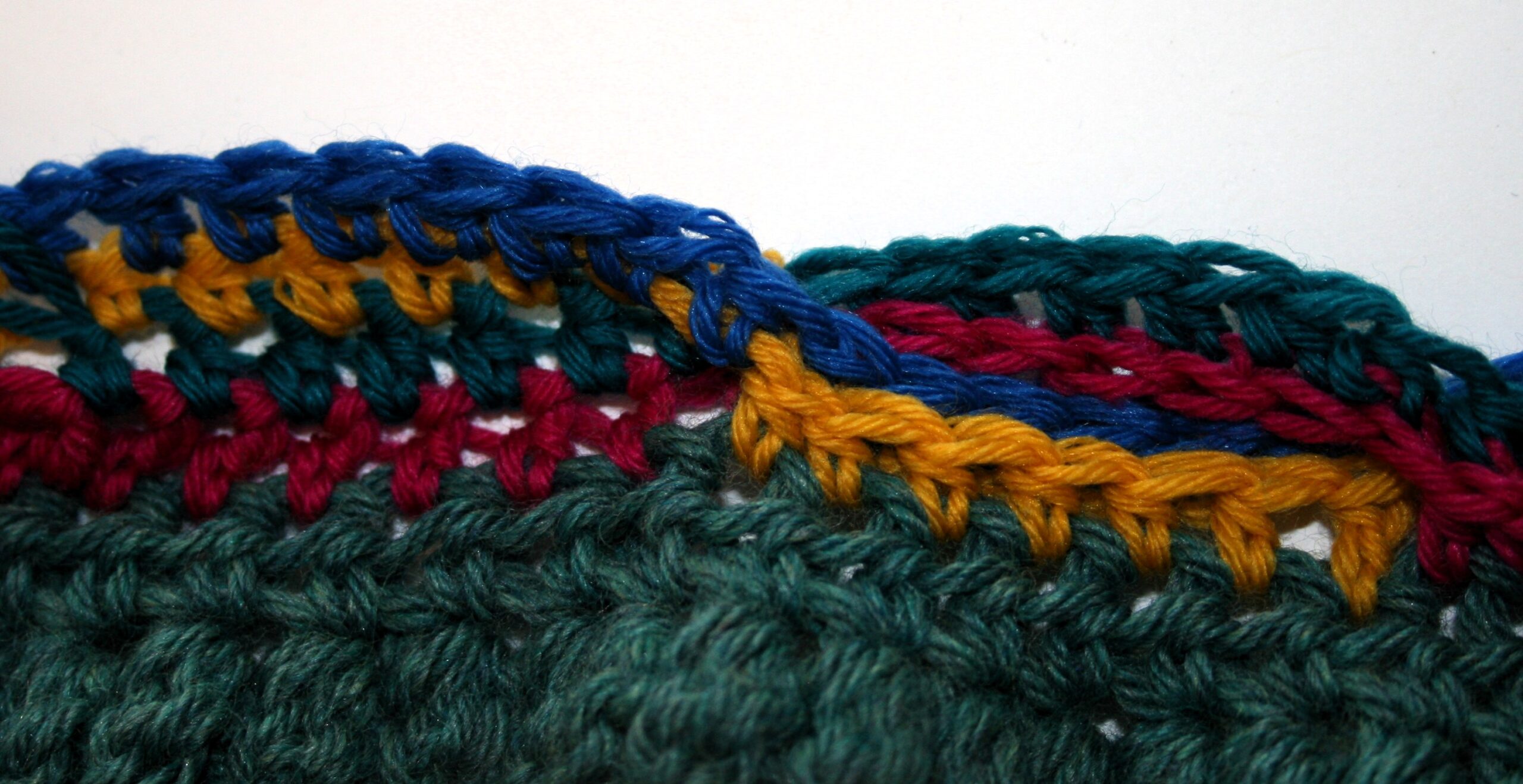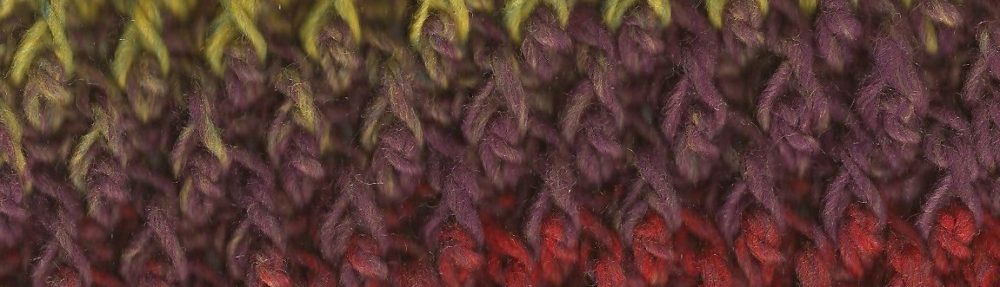
Braided Horizontal Cables

Braided Horizontal Cables are pretty straight forward to create if you have a couple of stitches in your tool box.

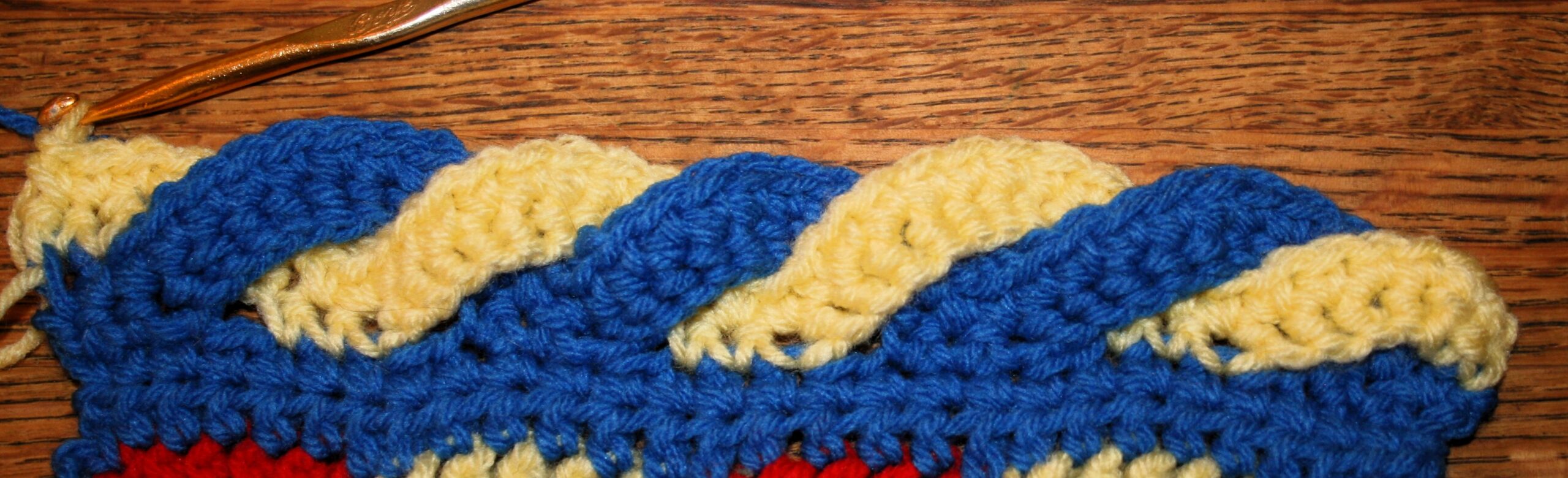
This type of cable is created by making arches, and “weaving” a subsequent arches through the original. The arches are created using Foundation stitches. The sample I am giving below will utilized Foundation Single Crochet Stitches, but after you understand the concept, you can utilize other foundation stitches. Just make sure the arch is large enough to fit the “woven” strand through.

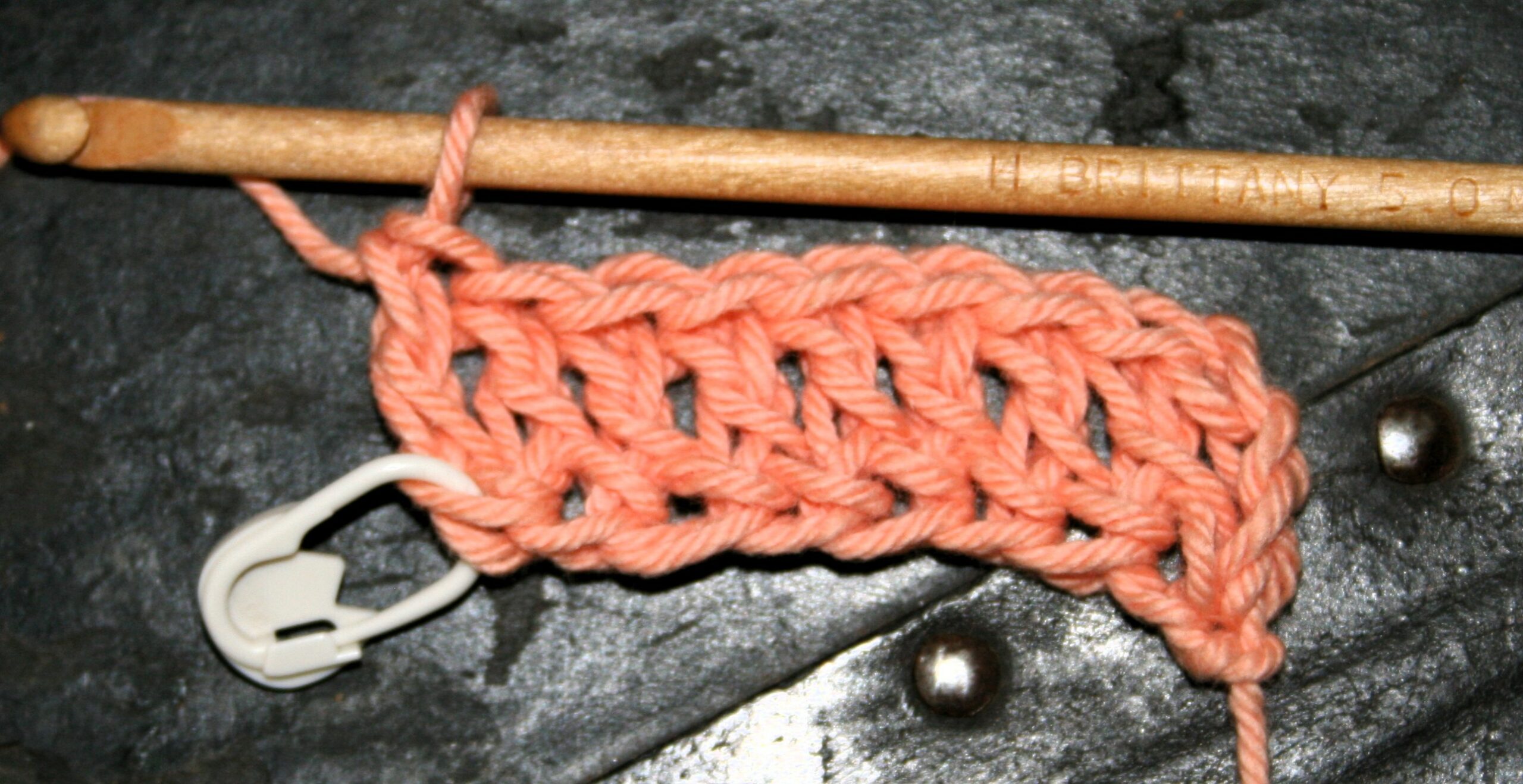
Create a base fabric to start.

Ch 27, sc in the 2nd ch from hook, sc in each ch across, turn. -27 sc

“Wave/Arch”

Special Stitches

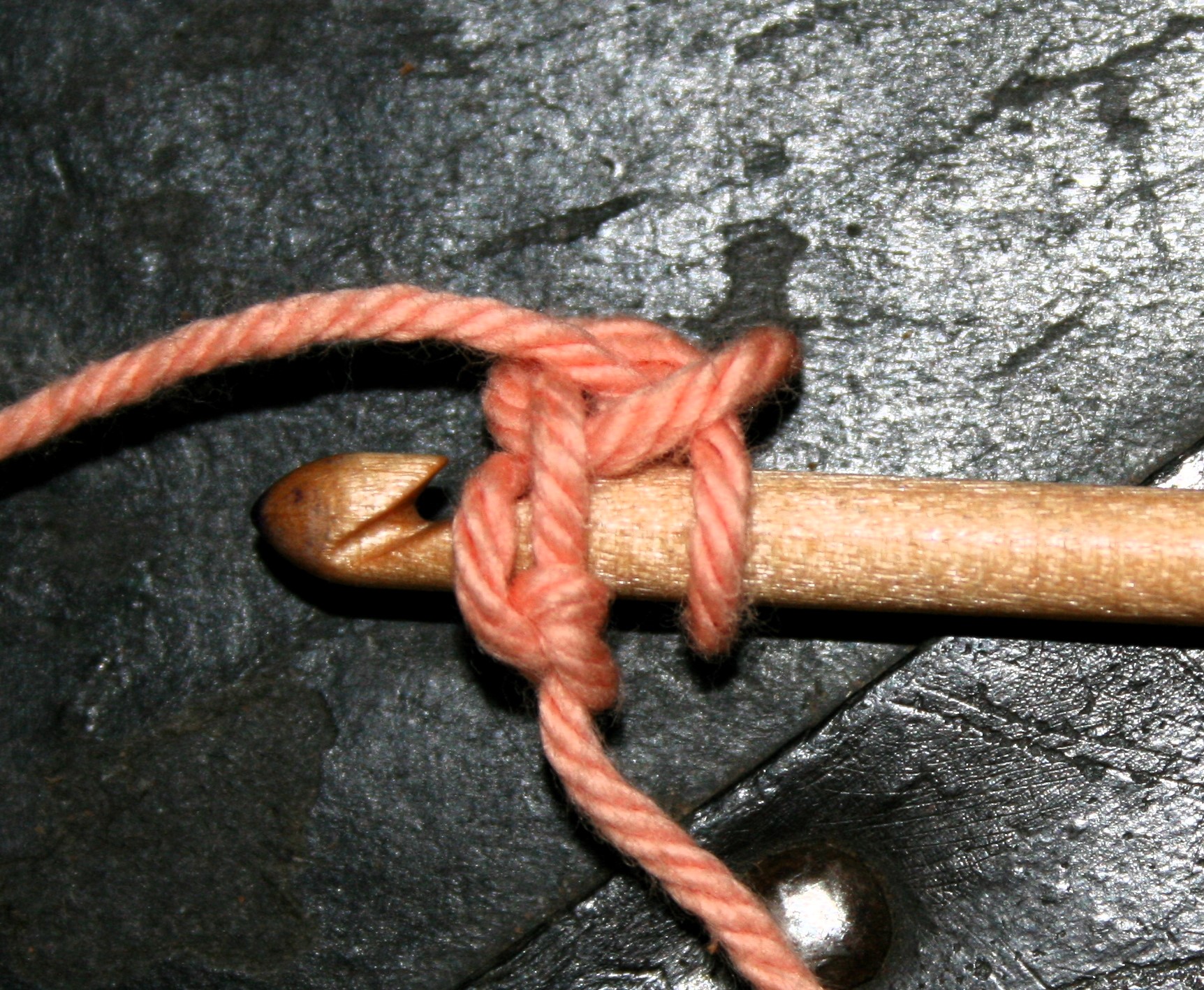
Foundation Single Crochet (fsc): Chain 2, insert hook in the second chain from hook, yarn over, pull through a loop, chain 1 (note this chain, pinch it, as this is where subsequent stitches are worked), yarn over, and pull through both loops on the hook. Insert hook into the pinched chain, yarn over, pull through a loop, chain 1 (pinch this one as it is the place the next subsequent stitch will be worked), yarn over, pull through both loops on hook. (For some nice videos checkout Moogly or One Dog Woof)

Extended Single Crochet (esc): Insert hook in indicated stitch, yarn over, pull up a loop, chain 1, yarn over, pull through both loops on hook.

Joined Single Crochet (Jsc): Insert hook into the chain of the last Foundation stitch created, yarn over, pull up a loop, insert hook into the next stitch of the row, yarn over, pull up a loop, yarn over, pull through 3 loops on hook.

Let’s Start!

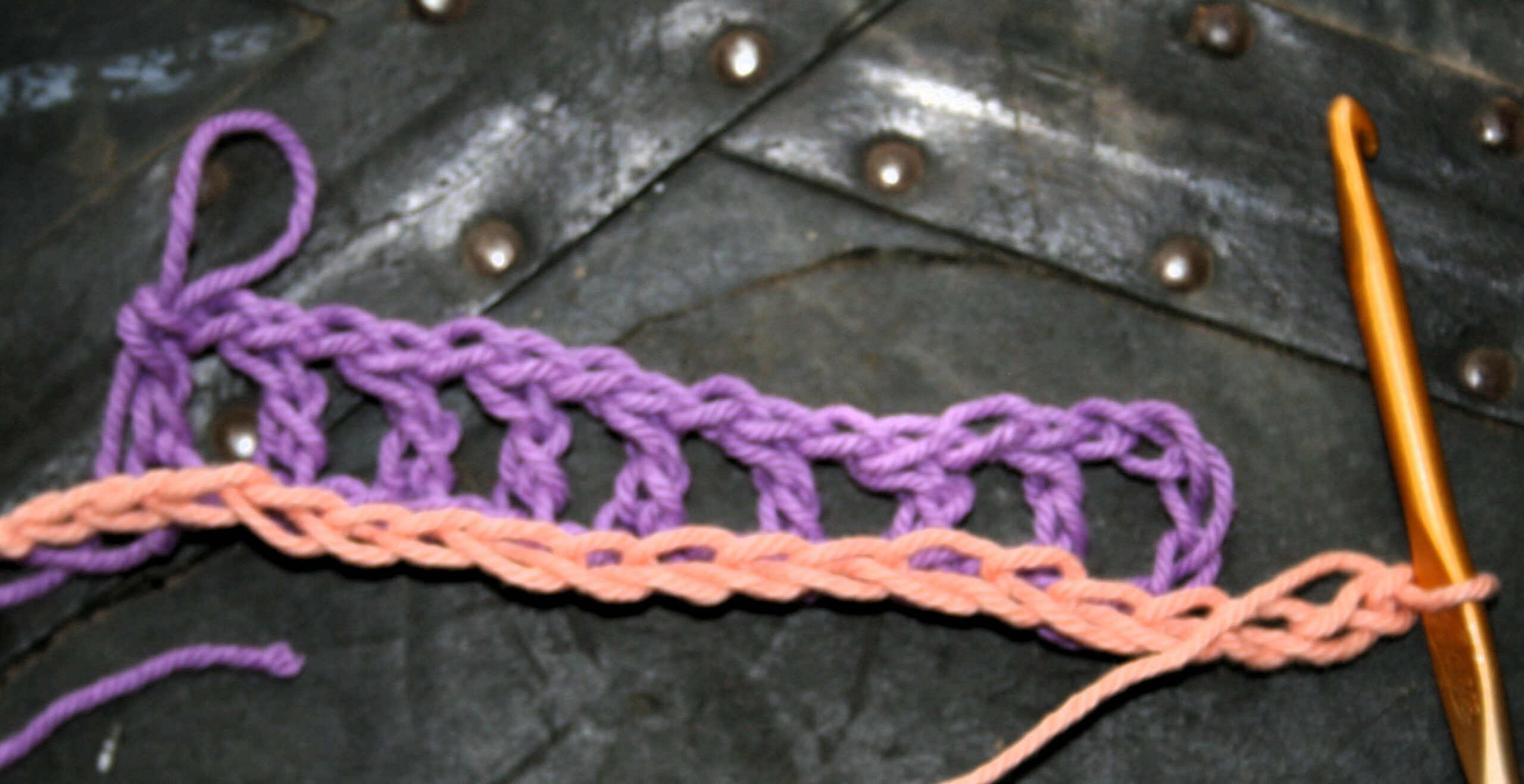
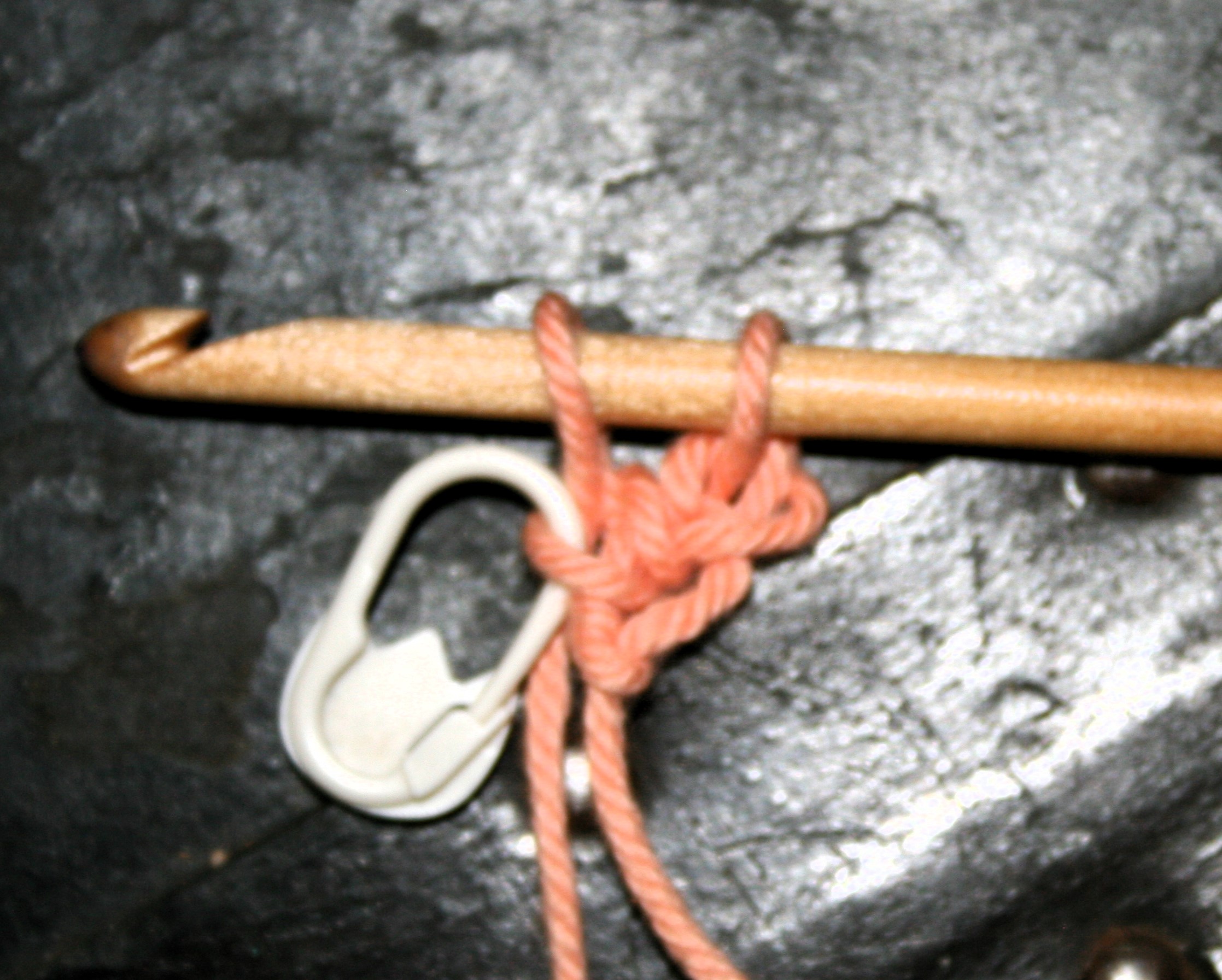
Row 1: Ch 1, sc in same st, sc in next st, [esc in next st, 9 fsc, skip 5 sts, Jsc in next st, sc in next st] three times, sc in last st, turn. -3 “arches” made

Row 2: Ch 1, sc in each st across, change color, turn.

Notice how the second row basically just follows the row above.

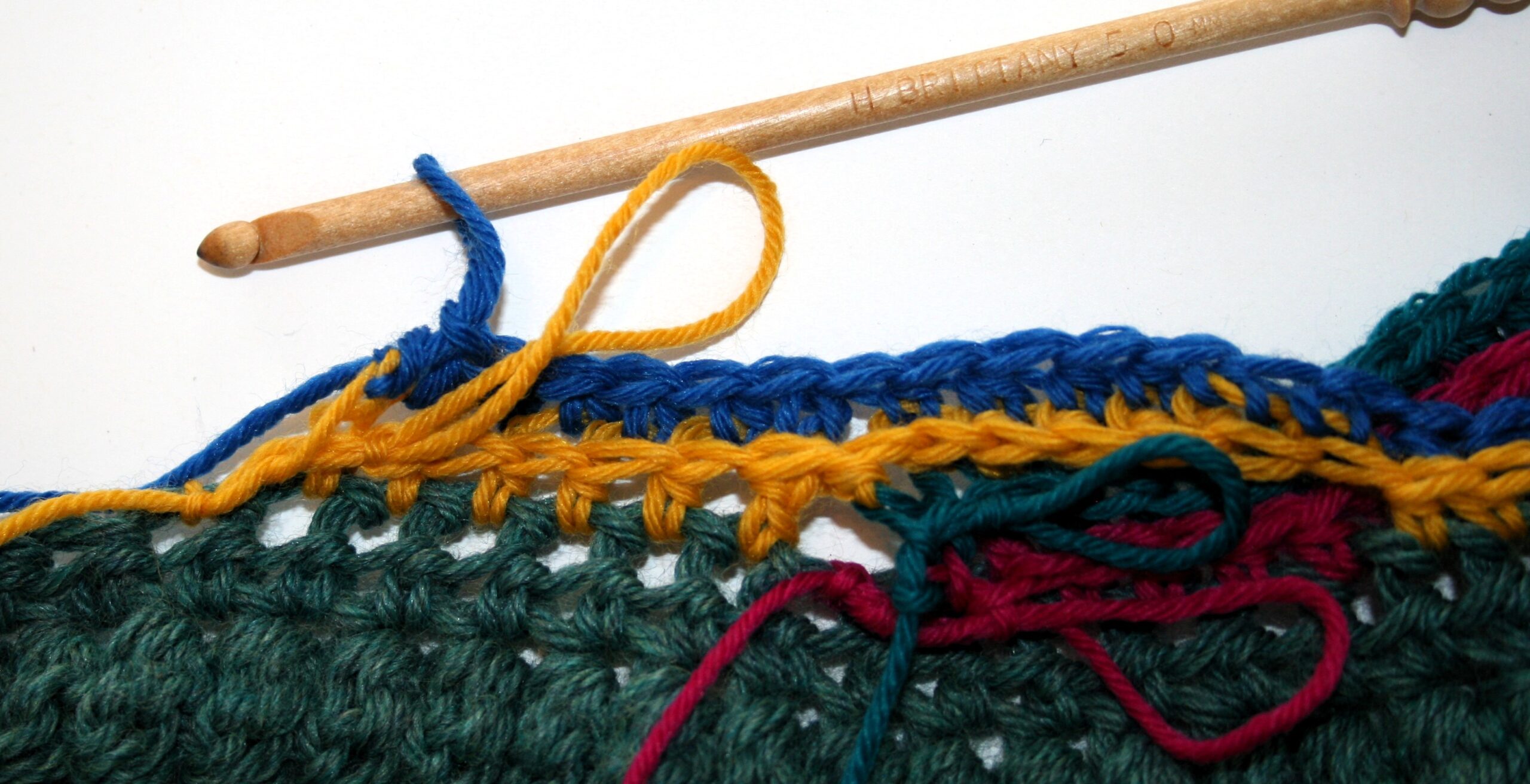
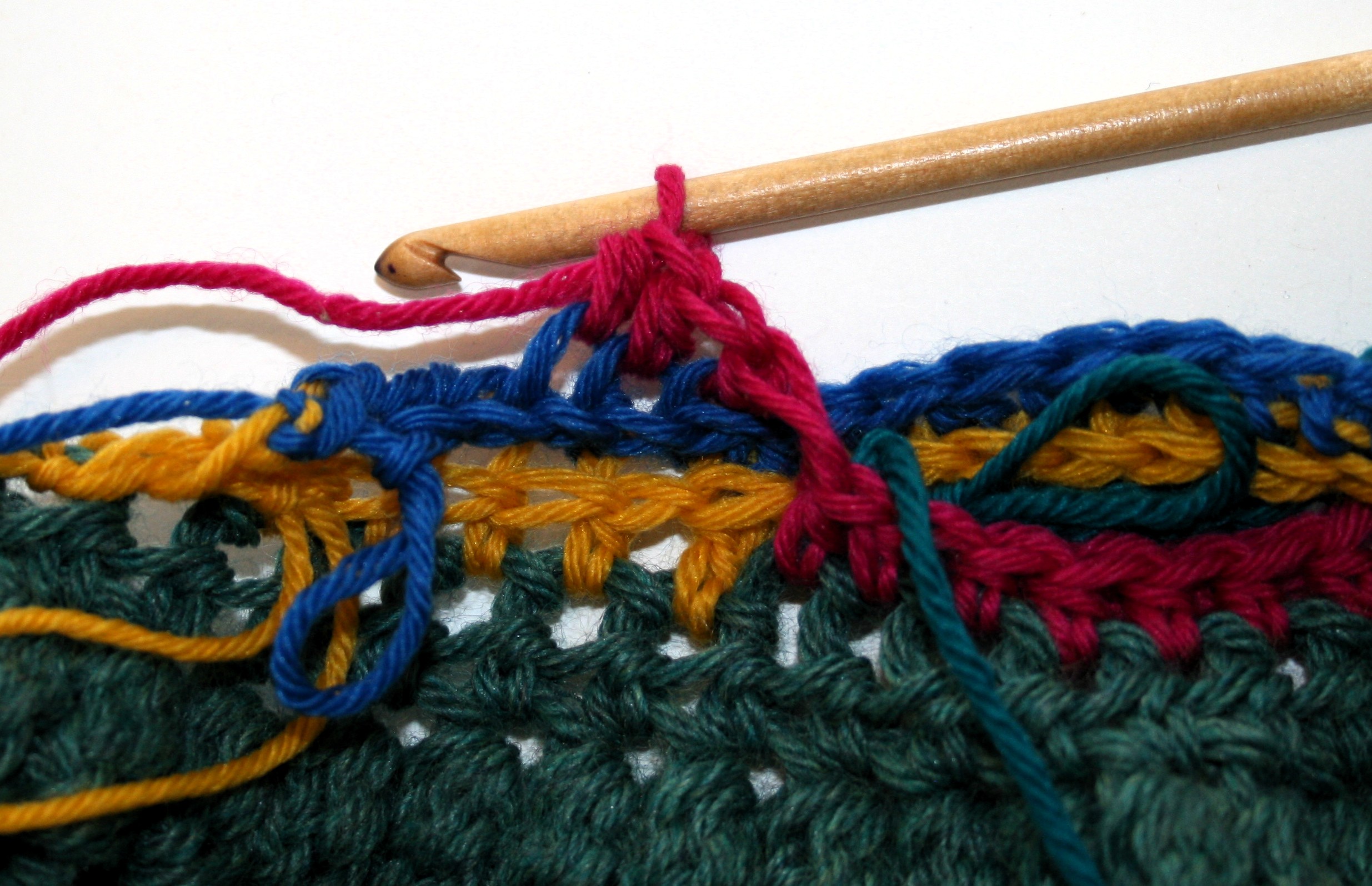
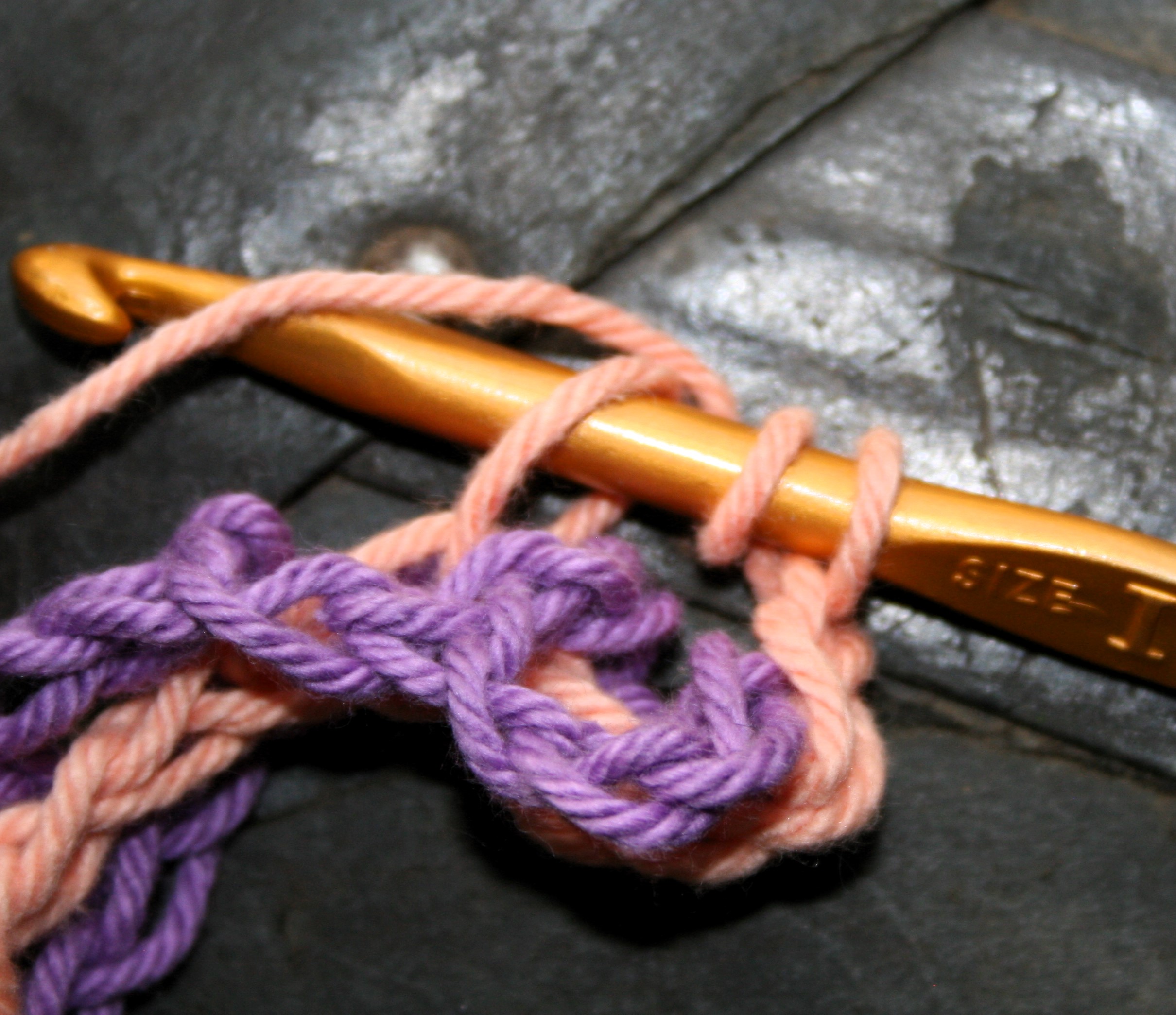
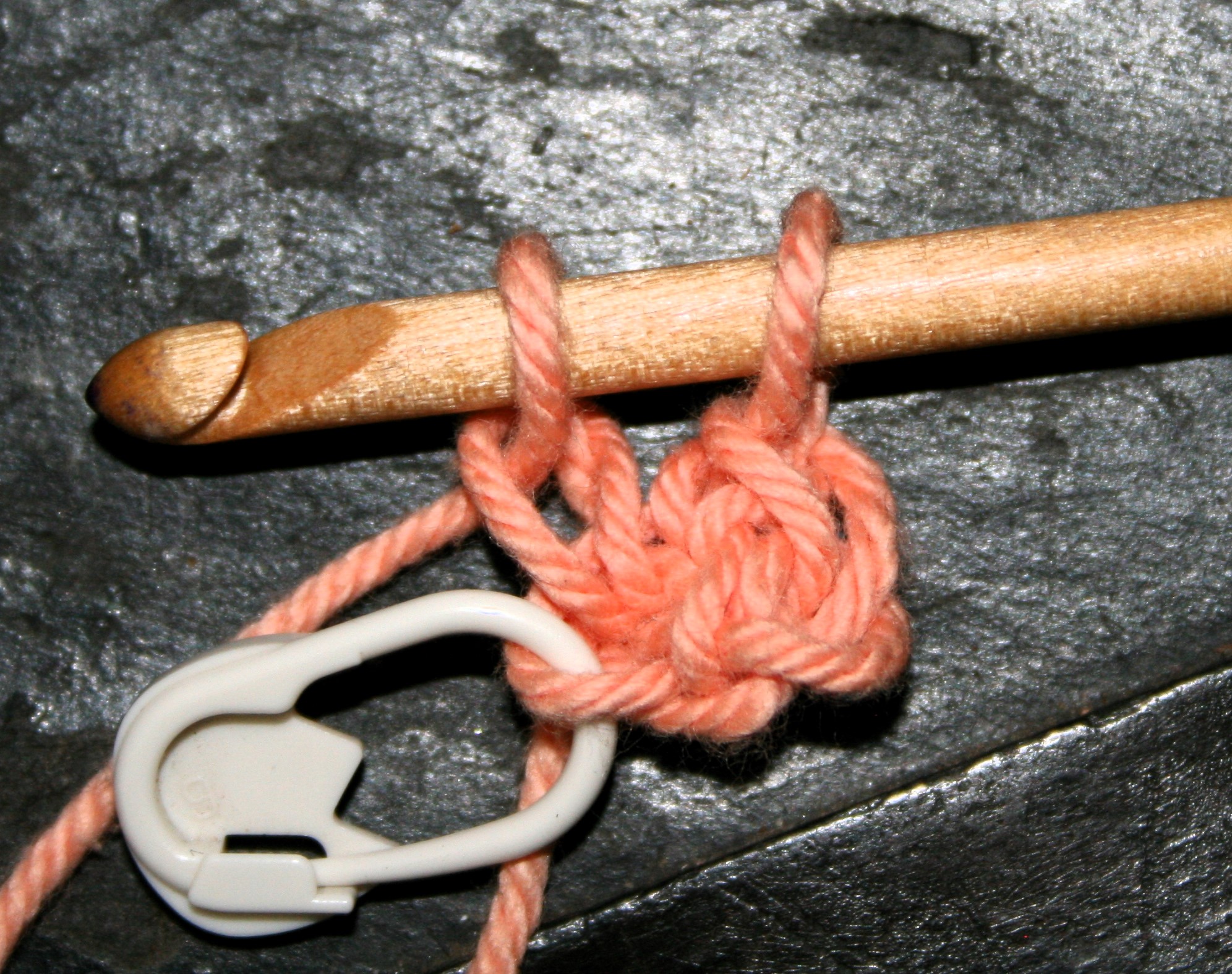
Weave the second arch through the first. You want to be mindful of where the working yarn is located before working the joining single crochet. Do not “trap” the working yarn under the foundation stitches just created.

Pay Attention Here

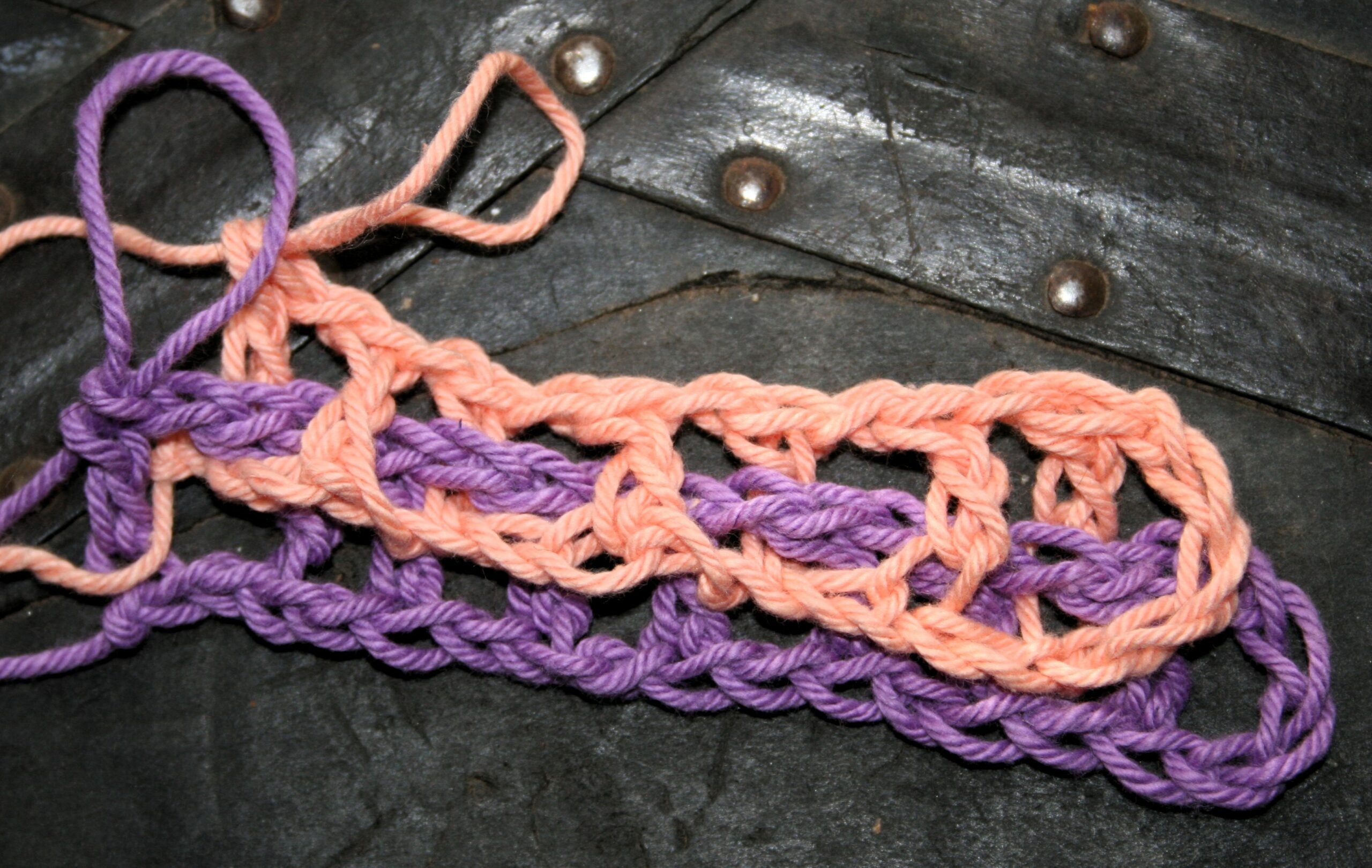
Row 3: Ch 1, sc in same st, esc in next st, 4 fsc, working in front of “arch”,
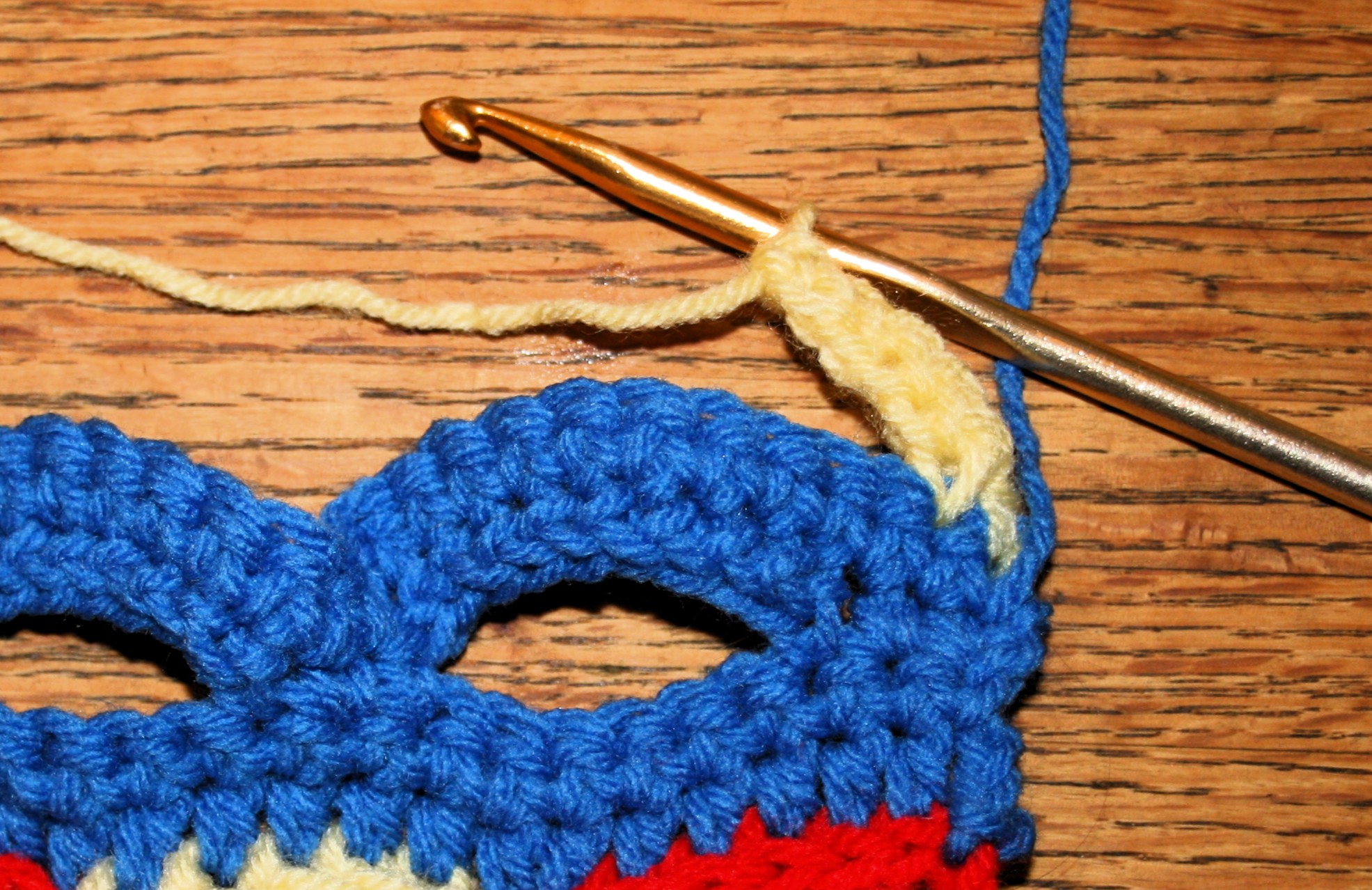
skip 1 st on join row, Jsc in next st, sc in next st, esc in next st,
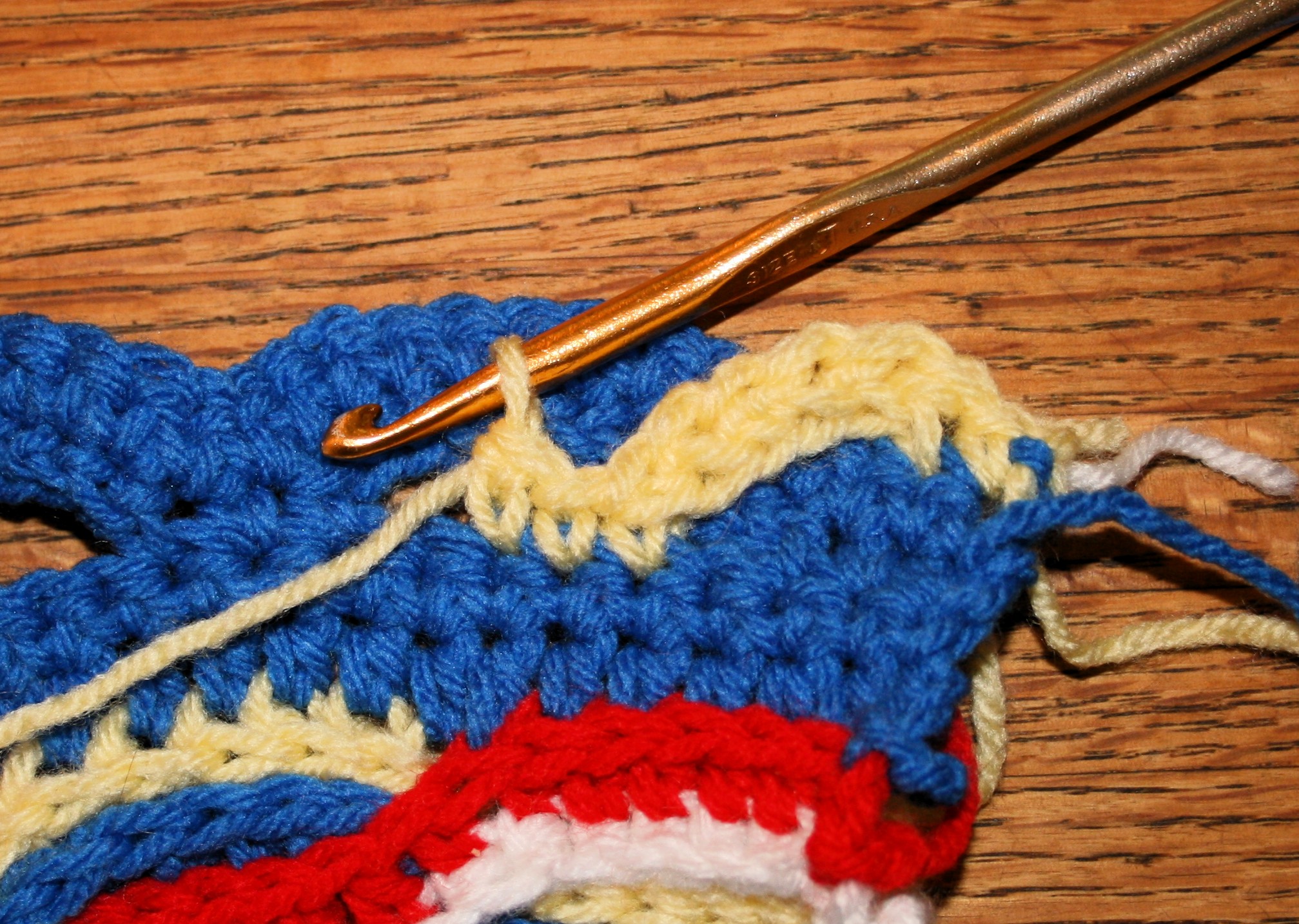
[9 fsc, push fsc under arch, working in front of “arch”: NOTE: ensure that working yarn is not “trapped” under the fsc stitches when working the Jsc,
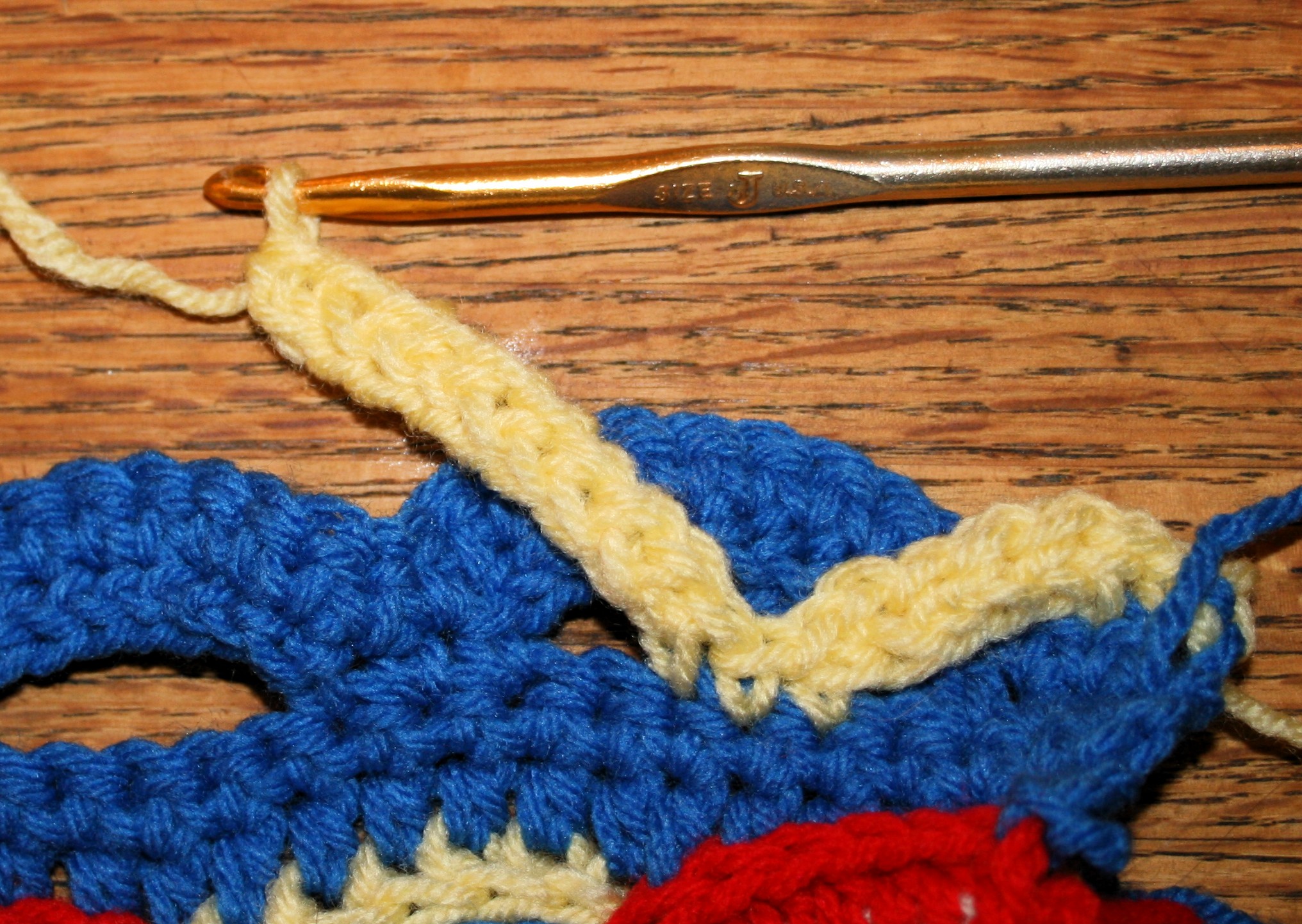
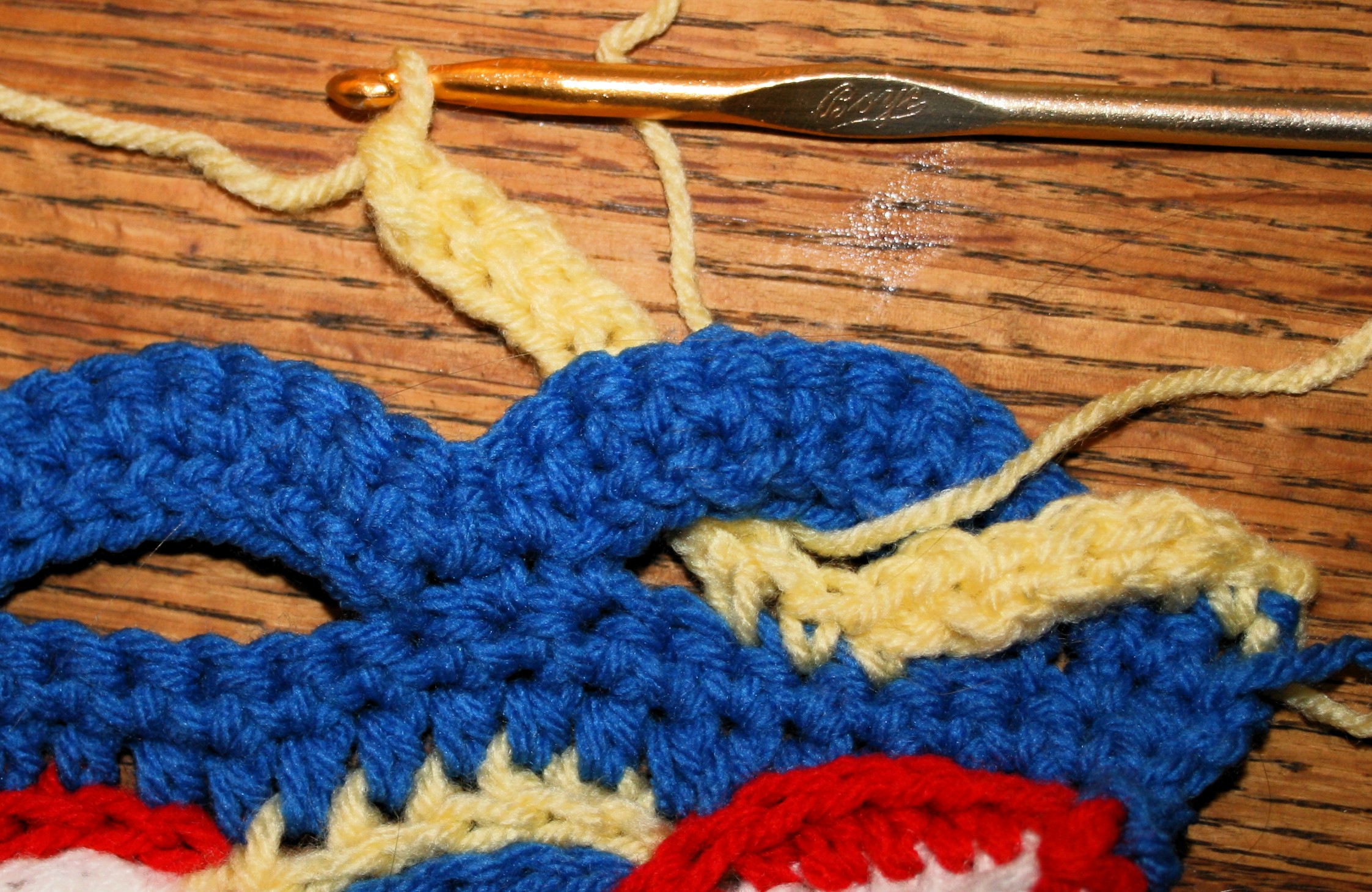
skip 1 st on join row, Jsc in next st, sc in next st, esc in next st] 2 times,
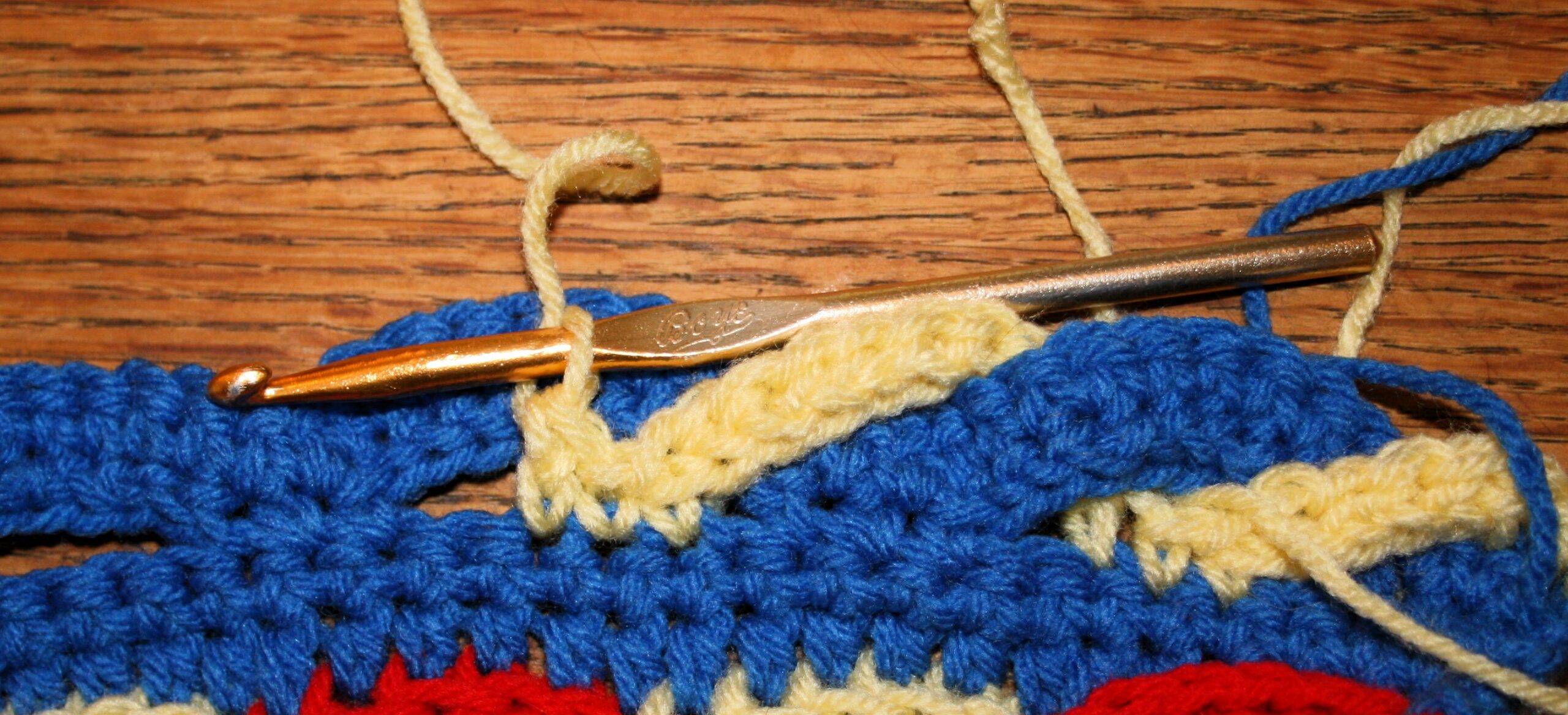
4 fsc, push fsc under arch, working in last 2 sts atop last row, Jsc in next st, sc in last st, turn.
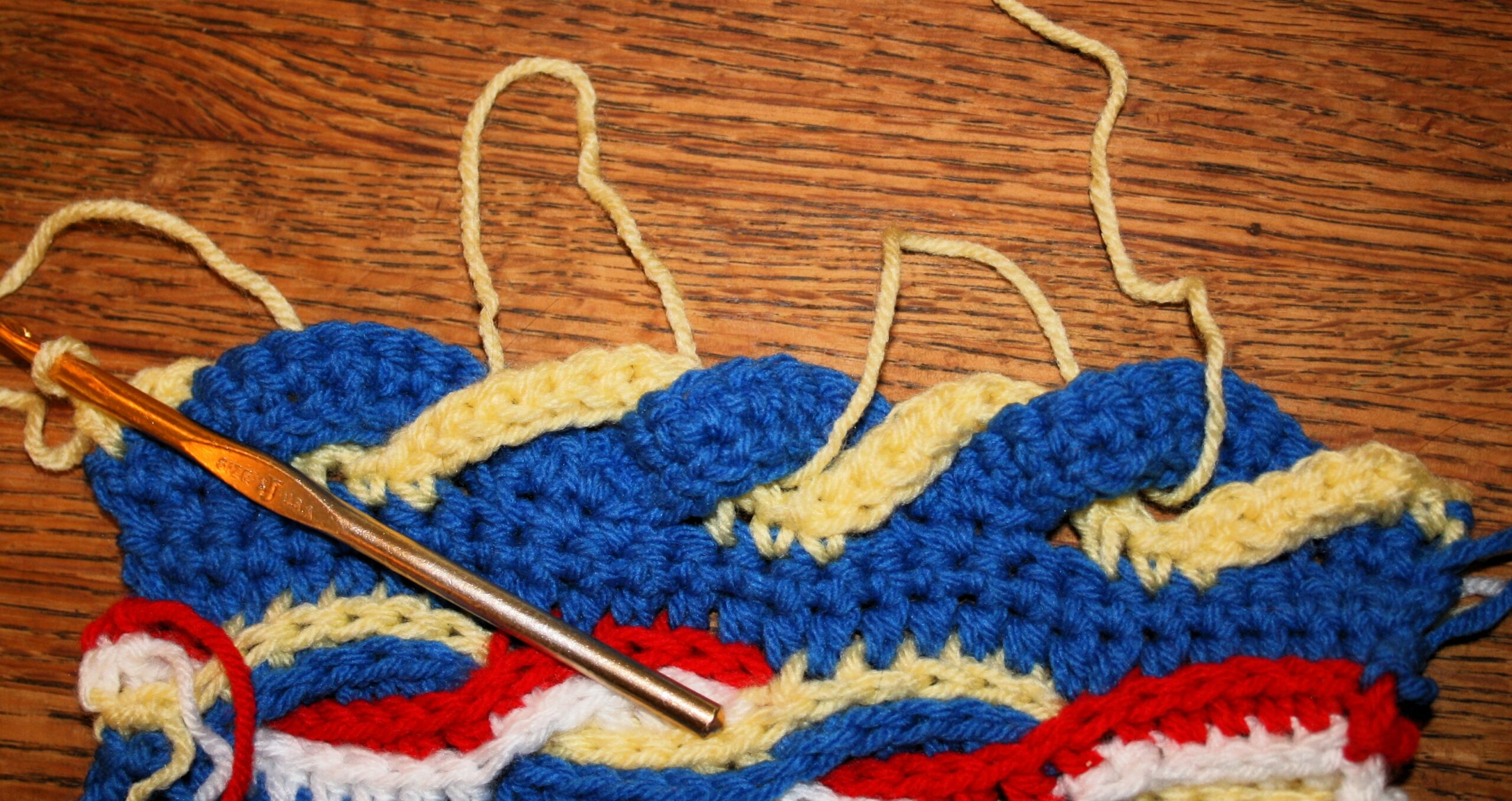
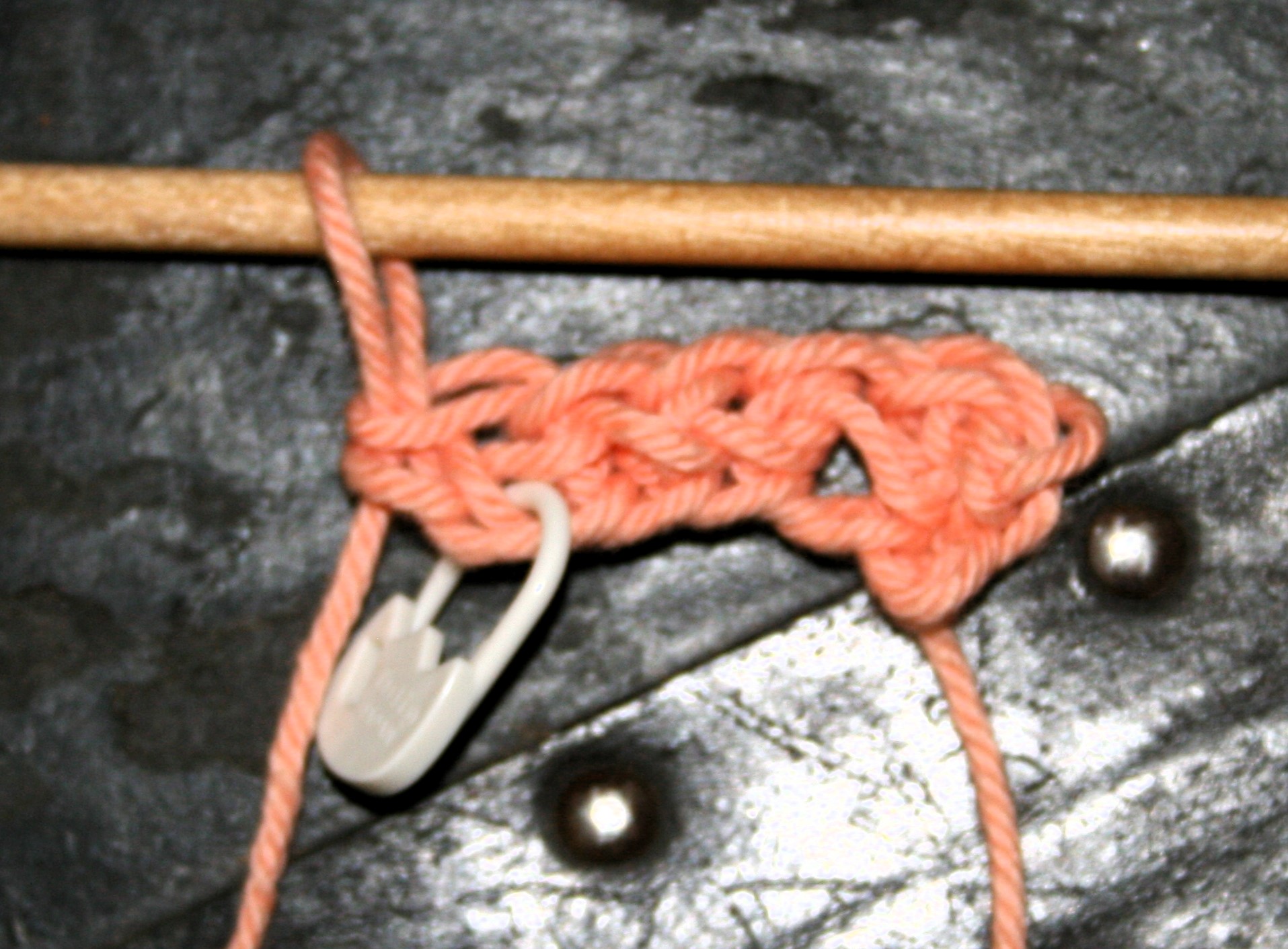
“Push” or “pull” the foundation stitches through the opposite arch to change the cable direction.

Row 4: Ch 1, sc in each st across, change color, turn.  

Once again, the row above just follows the previous row.

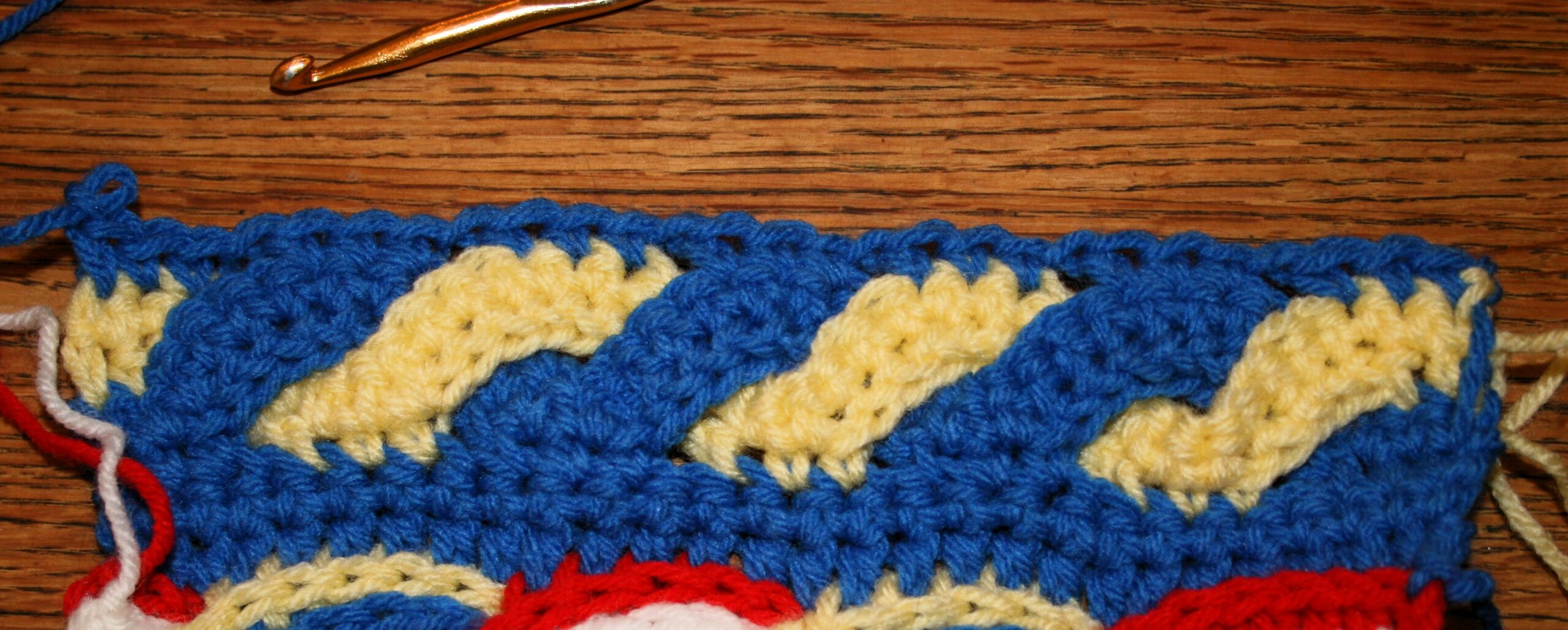
Make it an edging or an entire fabric. Just add a joining row to add more.
Row 5: Joining row: Ch 1, sc in same st, sc in next 2 sts, ch 1, [skip next 4 sts of next “arch”, sc in next 3 sts, ch 1] 5 times, skip next 4 sts of next “arch”, sc in next 3 sts, turn.  : NOTE: the precise number of stitches skipped is not critical, as long as the fabric lays flat and the “arches” lay even.
Horizontal Cables in Crochet

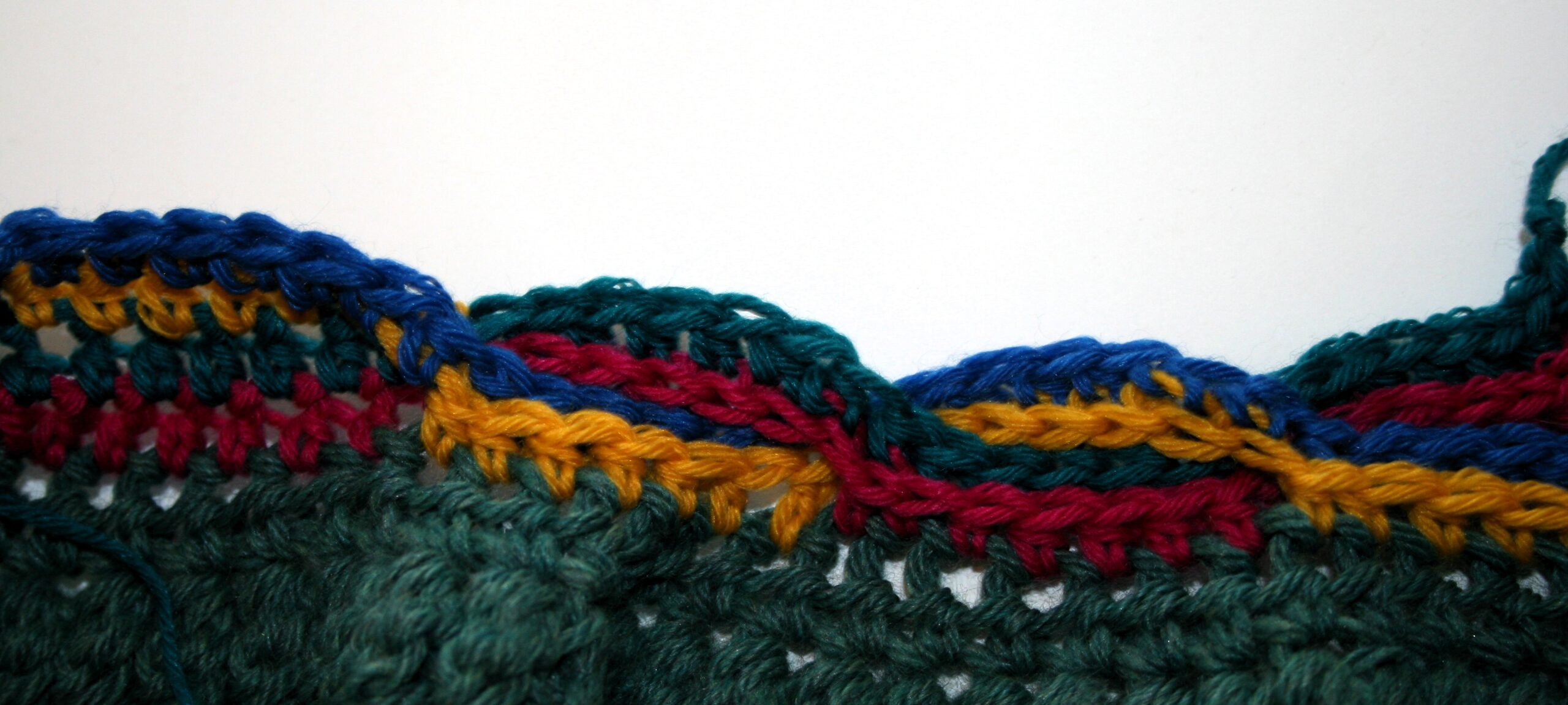
The most common cables in crochet are created horizontally. This is because it is the most straight forward. Notice I did not say easiest, it is not something that a beginner feels successful tackling. However, it is worked by skipping stitches and then working into the stitches that are skipped. Usually with a front post stitch.

But did you know there were vertical cables? These cables may actually be easier to work, but have a little more housekeeping to keep things in order. Instead of skipping stitches, you are working multiple rows at the same time.

To create a 2 x 2 cable, meaning that it appears that 2 lines are crossing over 2 others, you need to work 4 rows at the same time. This is where the house keeping comes in.

These rows can be created with any basic stitch. I do think that the half double crochet lends itself well to a dynamic effect. Especially when the subsequent rows are worked in the famous third bar, or back bar of the stitch. This creates an effect that looks like “chains” for the visible lines of the row.

Notice the differing look between the standard hdc stitch and working in the third/back bar

Starting Row 1

To begin, join and work a set number of stitches. Pull the loop up, remove the hook and move the working loop and working yarn to the front of the fabric. Join the second row atop the same joined stitch of the first row. Work across the stitches just worked for Row 1 of the cable. Once again pull the loop up, remove the hook, and move the working loop and working yarn to the front of the fabric.

Begin Row 2

Now we start to cable. Join the third yarn atop the same place as the joins for Rows 1 and 2. Work across the stitches of Row 2, now work a set number of stiches on the base fabric, the same place that Row 1 was being worked. This creates a step down. Make sure the yarns from Rows 1 and 2 are to the front of the fabric. Pull up the loop, remove the hook, and make sure the working loop and working yarn are in front of the fabric.

“Stepping down” Row 3

Join the fourth yarn at top the same point of the other three rows and work all the way across Row 3. Once again, pull up the loop, remove the hook, and keep the working loop and working yarn in the front of the fabric.

The rows “step down” onto the base fabric

Horizontal Cables crossing

Time to cross. Now pick up the working loop from Row 1. Work the next stitch on atop the next direct stitch of Row 4. If you were working forward on the row this stitch would be directly above it, and in this case 2 rows above. Work across Row 4, now step down and work the set number of stitches on the base fabric. Pull up the loop again, remove the hook and make sure the working loop and working yarn in the front of the fabric again.

The row on the base fabric now crosses atop the next stitch

Essentially you just went up and then down, by beginning working atop Row 4 and then dropping down to bas fabric again. Setting up the next cross.

Row 2 just follows Row 1. Pull up the loop, remove the hook, make sure the working loop and working yarns are in the front of the fabric. Move back to “Row 3” which is the live loop the is on the base fabric behind you working direction.

Repeat the process you just did for Row 1. Up atop the stitch, across the row and down to the base fabric, pull up the loop, remove the hook. Pull everything forward and pick up the loop of the next row, Row 4, and this row just follows what was just worked.

Housekeeping

Once you get into the rhythm it flows along. The only housekeeping being ensuring that all of the yarn doesn’t become too twisted as you work along. If you need to set the fabric down before finishing off, use stitch markers to put in these “pulled up loops”. Honestly, if you feel like the stitches or yarn are not behaving for you placing stitch markers in the loops as you remove the hook help you to keep everything in place.

I find that this video my Marly Bird is really helpful in understanding the technique.

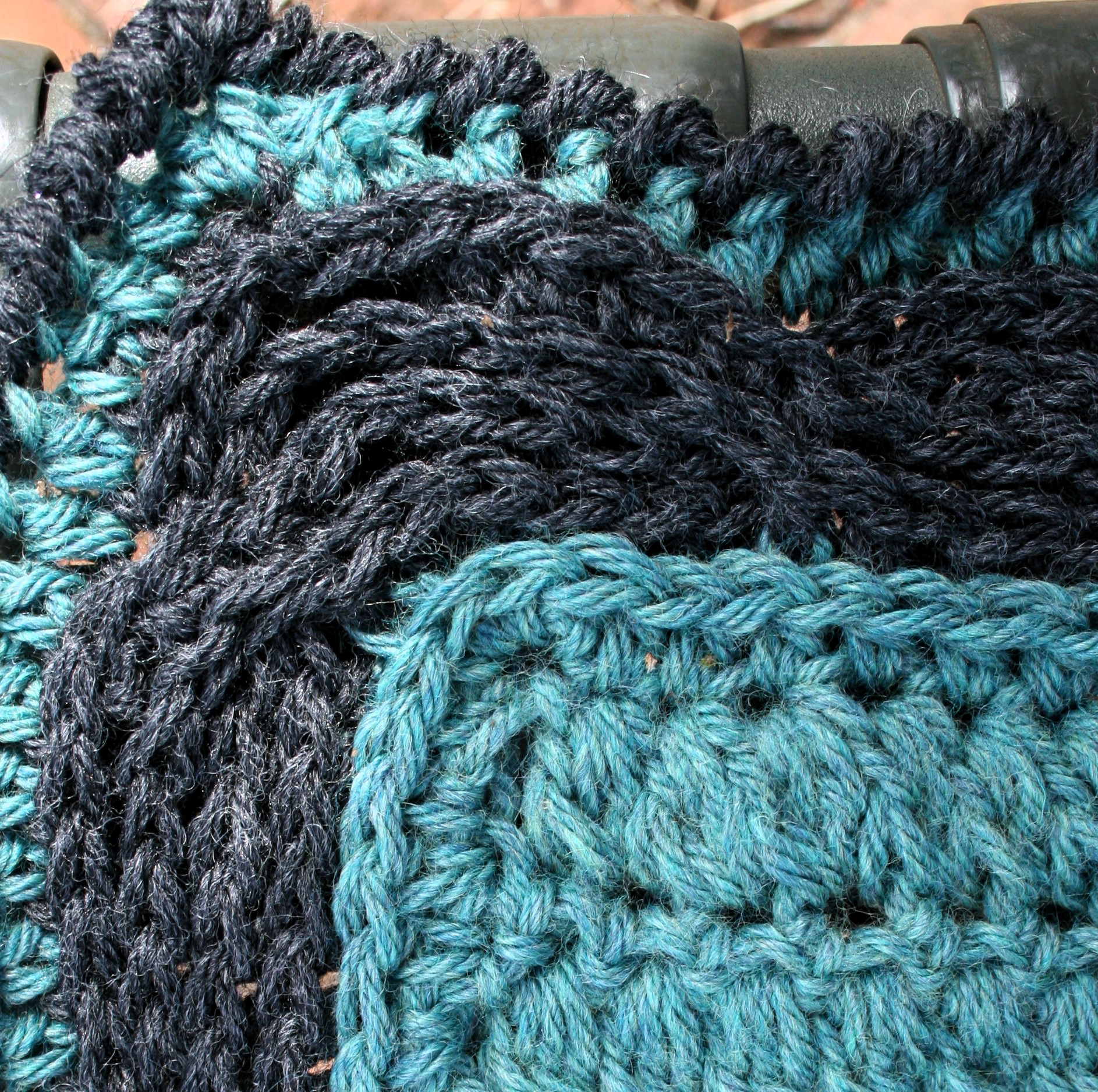
Horizontal cables corners

I have really enjoyed using the technique for edgings, especially around blankets. It gives a nice finished statement. I just have to be mindful in turning the corners. To ensure that they lay flat, I need to add “turning corner” stitches in the cable. This may mean that in the base row I work 3 stitches in the corner. I count them in my “base” number between the twists. For each subsequent rows I add the “turning corner” of 3 stitches in the center stitch of the 3 stitches below. This may mean that I am working more stitches than I usually do in the last rows. Between the twist there may be more, but it is not greatly noticed and helps the fabric not buckle.

Intermeshing Crochet- Weaving of 2 Fabrics

Intermeshing crochet is essentially the creating of two crochet mesh fabrics. The fabrics are woven together at the time of creation; creating new visual effects.

There are a couple of different ways to begin the fabric. Started differently the weaving of the meshes being worked the same. Weaving is created by working double crochet stitches either in front or behind the mesh square of the other fabric.

The two mesh fabrics will actually be different sizes. One mesh will have an additional one column of “open mesh” windows in comparison to the other. This is to allow for an offset to the “front/back” of these stitches. This process ensures that the double crochet stitches will be centered in the “open mesh” of the opposite fabric.

Reading the patterns are harder than the stitches

The greater challenge to this technique is actually in the pattern reading. There are currently 3 popular methods to explaining patterns in Intermeshing. One is the standard written pattern that is found in other crochet fabrics, and the other two are charts.

One chart has two graphs, one for even rows, and one for odd rows of the pattern. This type of charting allows you to visually identify what the work should look like at each step. The second chart offers a quick short hand of how many stitches are worked and of what type (either front of back).

Make Intermeshing Crochet

Start by creating a first row of open mesh fabric. An even numbered chain iis created in the main color, double crochet in the 6th chain from the hook, [ch 1, sk 1 ch, dc in the next ch] across. Remove hook from fabric and set aside.

Begin the second mesh fabric one of two ways. Create a chain that is 2 chains shorter than the main color chain. At this point you have a choice to make; weave the chain through or lay it atop the open mesh of the main color mesh Row 1. Neither is right or wrong, but will give you a slightly different visual end effect of the fabric. Weaving through will give you a pattern of alternating color, while laying atop will give you a line of straight color.

A double crochet stitch will again be worked in the 6th chain from the hook, but depending on the pattern this double crochet will either be worked in front of or behind the main color fabric and lining up with the second “open mesh” window of the piece.

Continue in pattern of either front or back across. At this point the fabric will be turned. Pay careful attention to what your pattern states here, as you are now going to remove your hook from the contrasting color yarn and work the next row of main color. The pattern will denote which side of the fabric the contrasting color fabric loop and yarn should be on (either the front of back of the fabric). This ensures that it is in the correct placement when that color row is started.

The Main color is only ever worked into the Main color, while the Contrasting color is only ever worked into the Contrasting color. Double crochet stitches will only ever be worked into double crochet stitches. Being mindful of these two truths will help you decipher where you are in the design.

Creating Foundation Stitches in Crochet

Changing most foundation rows into a Foundation Stitches can be done relatively easy.

A Foundation Stitch in crochet is when you create the chain and the stitch at the same time, instead of creating a chain and working into it. It creates a stitch with beginning with more stretch, and you do not have to count chains.

Row of Foundation Double Crochet

Starting

To start you will need to create a chain that is the equivalent of the turning chain for the stitch used, plus 1 more. Meaning if you are creating a single crochet foundation row, a single crochet typically uses a chain 1 to turn a row, so you would chain 1 + 1 more thus having a chain 2.

If you were creating a double crochet the typical turning chain is a chain 3, and then you would add 1 more chain. So to work a Foundation Double crochet chain 4.

Then begin working the stitch in the first chain created, this is the chain nearest the slip knot. After “anchoring” (yo and pull through a loop) in this chain, create a chain 1. This chain 1 is going to be the base of the stitch and where you will start working the next stitch, so I pinch this point, but inserting a stitch marker can help as you are learning to find the location again. After creating this chain 1, continue working the remaining steps for the desired stitch.

The “chain 1” that is marked or pinched, is where you will start the next stitch, insert your hook here under 2 loops for a nicer finished edge. “anchor” the stitch, and then chain 1 again, moving marker to or pinching this new chain, and finishing the stitch. Once again, this newly marker chain is where you will work the next stitch.

After you understand this concept of “anchoring”, create a chain, and finish a stitch; essentially creating the chain at the bottom of the stitch (much like an extended stitch but instead of adding height it is used as a base for the stitch), you can modify many differing foundation rows.

Creating Foundation Stitches- Single Crochet

  • Chain 2
  • Insert hook into 2nd chain from hook
  • Yarn over, pull up a loop
  • Chain 1 (mark or pinch this chain)
  • Yarn over, pull through 2 loops on hook.
  • *Insert hook into marked or pinched chain
  • Yarn over, pull up a loop,
  • Chain 1 (move marker to or pinch this chain)
  • Yarn over, pull through 2 loops on hook.
  • Repeat from * until desired length

Foundation Double Crochet

  • Chain 4
  • Yarn over, insert hook into 4th chain from hook
  • Yarn over, pull up a loop
  • Chain 1 (mark or pinch this chain)
  • [Yarn over, pull through 2 loops on hook] twice
  • *Yarn over, insert hook into marked or pinched chain
  • Yarn over, pull up a loop
  • Chain 1 (move marker to or pinch this chain)
  • [Yarn over, pull through 2 loops on hook] twice
  • Repeat from * until desired length

Hiding Behind Crochet- Crochet Together

Sometimes I feel like I am hiding behind my crochet, but crochet together with others can make a difference. Crochet can be an ice breaker, and open up discussions with new people. Yet crochet can be a shield to avoid difficult situations.

It might seems a bit odd to think that this simple hobby/craft/art can be used in emotional ways. I have secretly been doing it for years.

I feel a bit naked talking about it, showing more vulnerability and such. However I think crochet is an avenue for bringing people together, and in that train of thought honestly works best.

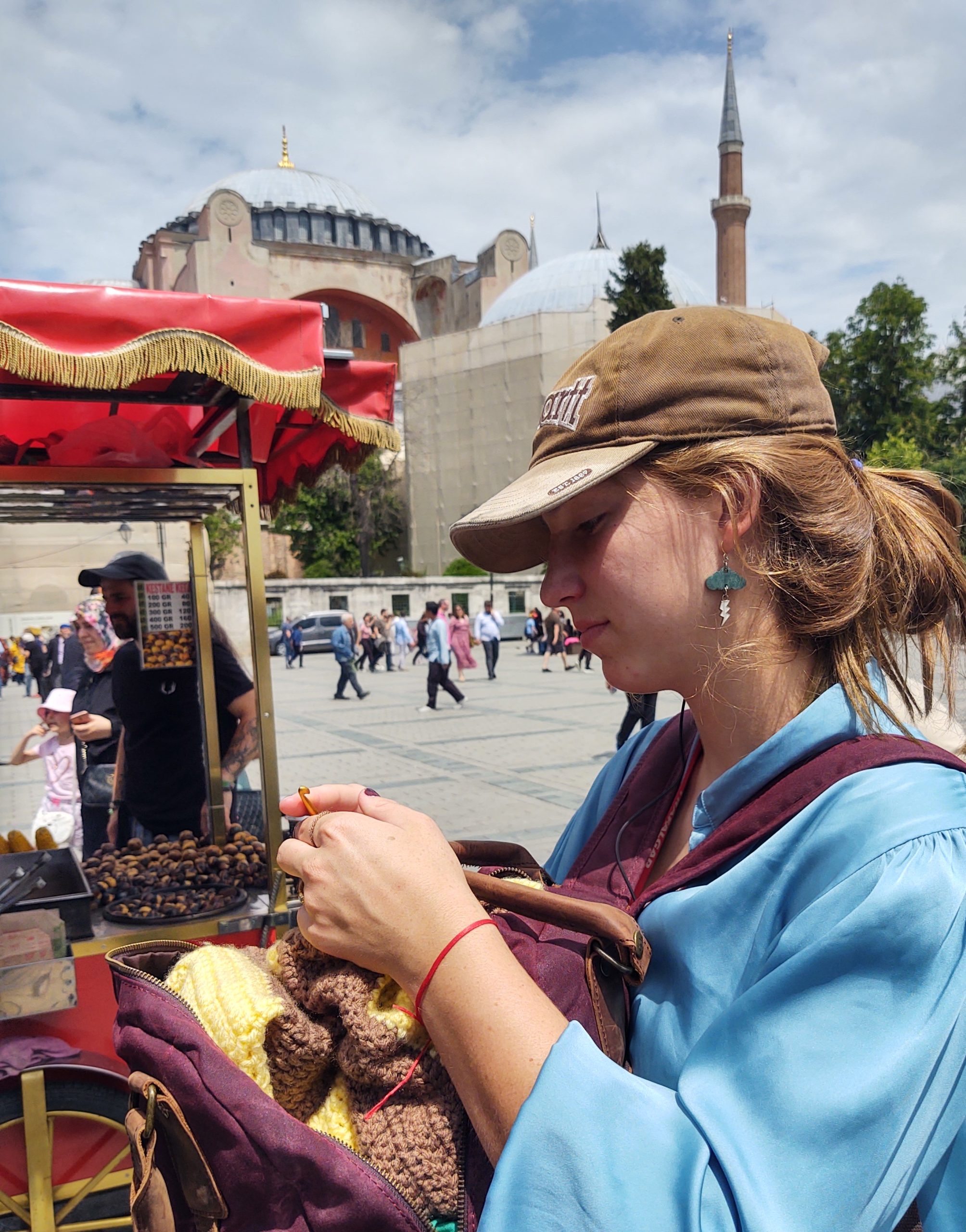
Found some crochet in Istanbul….my daughter pulls out some crochet while waiting in line to enter the Hagia Sophia

I seek out crochet when I travel to help build bridges and feel a connection to the places I visit. Fortunately crochet is everywhere, and even if we don’t speak the same language the language of crochet is the same. These are tricks I use as ice breakers. I find out that we have more in common then we have as differences.

I am always amazed by the art that I find. Everyone is quick to point out their mistakes and reluctant to take the compliment. This must be a universal trait. It is fun to see the different way they put their stitches together, and get inspired by their work.

On the other hand, I bring my crochet to events that I might feel uncomfortable in. Situations that might be awkward or difficult are perfect for crochet. In these cases I might still be trying to find a new friend by putting forth my flag to find others that share the craft. Almost like a little passcode to a fellow member of an underground organization.

Hopefully I can find someone that will help make the situation less anxious.  

I guess I am trying to say that crochet is my way of finding my people and adding feeling of belonging when I need it. I am sure that this works for others as well. Hopefully, they can see me crocheting at the table in the coffee shop and feel that their people are there too. Making them feel welcome. (If you need some new tips on different crochet techniques, check out some of these.)

I always advocate for crochet world dominance. Maybe it is because I want to feel like I can always belong.